
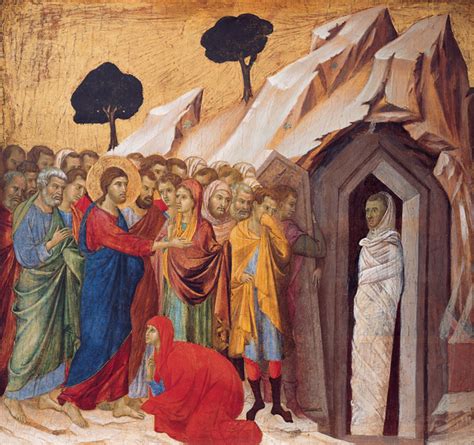
John 11:11-16
11 He said these words, and afterwards he told them, “Our friend Lazarus has fallen asleep, but I’m proceeding to wake him up.”
12 That is why the disciples said to him, “Lord, if he has fallen asleep, he will be rescued.”
13 But Jesus had been speaking about his death, yet they thought he was speaking about the resting of sleep.
14 So Jesus then told them plainly, “Lazarus died.
15 I rejoice for you that I wasn’t there so that you may believe. But let’s go to him.”
16 Then Thomas (the one called “Twin”) said to his fellow disciples, “Let’s go too so that we may die with him.”
end game
Thomas speaks like a man whose hope has collapsed under the weight of reality as he understands it. News of Lazarus’ death has reached him, and with that news any remaining expectation of rescue disappears. The journey back to Judea now seems pointless. Lazarus is gone, and returning to the place where Jesus was nearly stoned feels like walking straight into a grave. His words carry the bleak logic of someone who believes death ends every story. If Lazarus has died, then the only thing awaiting them in Judea is the same fate. Death, in Thomas’ mind, is the final boundary that cannot be crossed.
Jesus speaks from an entirely different horizon. He does not soften the truth or pretend Lazarus is still alive in some hidden realm. He acknowledges death for what it is, yet He refuses to grant it the authority Thomas assumes it has. Jesus rejoices—not in Lazarus’ death, but in the opportunity to reveal that death is not the end. He names death as sleep, not to diminish its seriousness, but to declare its reversibility. Sleep can be interrupted. Sleepers can be awakened. The dead can be raised.
This is the difference between despair and divine confidence. Thomas sees a sealed tomb; Jesus sees a sleeping friend. Thomas sees danger and futility; Jesus sees the moment when the glory of God will break through the darkness. Thomas believes the story has ended; Jesus knows the story is about to open into resurrection.
The contrast exposes the heart of Christian hope. Death is real, but it is not ultimate. It is an enemy, but not an unconquerable one. Christ does not deny its power; He overthrows it. His words in this moment anticipate the greater victory He will accomplish in His own resurrection and extend to all who belong to Him. Where human eyes see an ending, the Son of God sees the beginning of new life.
The prayer that rises from this truth is full of gratitude and longing: Lord, thank You for the promise of rescue found in Christ. Thank You that death is not the end, and that the One who calls the dead to rise will one day call every sleeping saint to life again.


