
John 10:11-13
11 “I am the proper shepherd. The proper shepherd lays down his soul for the sheep.
12 The hired hand, since he is not the shepherd and doesn’t own the sheep, leaves them and runs away when he notices a wolf coming. The wolf then seizes and scatters them —
13 because he is a hired hand and doesn’t care about the sheep.
Qualified and caring
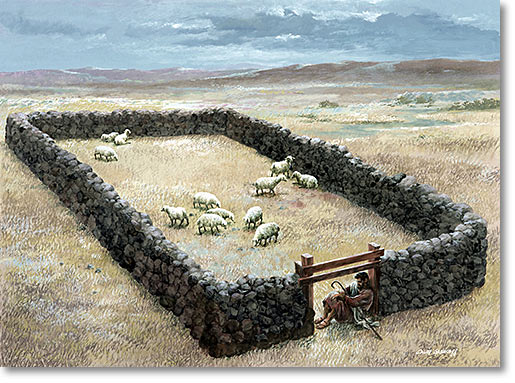
The shift in imagery between “gate” and “shepherd” in John 10 is not a change of metaphor but a deepening of the same pastoral picture. In a typical Judean sheepfold, the shepherd himself would lie across the opening at night. His body became the gate. No sheep could wander out without crossing over him, and no predator could enter without confronting him first. The gate was not a structure; it was a person. Only the most trusted shepherd performed this role, because it required vigilance, courage, and sacrificial commitment.
Jesus draws on that practice to explain His relationship to God’s people. He is the gate because He places Himself between the flock and every danger. He is the shepherd because He knows the sheep, calls them by name, and leads them out to pasture. These are not competing images but complementary ones. The gate protects; the shepherd guides. Both roles reveal His suitability—His καλός nature—not merely in the sense of moral goodness but in the sense of being the proper, fitting, qualified shepherd.
His qualification is not theoretical. He is not a hired hand who watches the flock only for wages. A hired hand runs when the wolf appears because the sheep are not his. Jesus stays because the sheep belong to Him. He cares for them with the care of ownership, affection, and covenant responsibility. His willingness to lay down His life is not an act of desperation but the ultimate demonstration that He is the true shepherd of Israel. Later in the chapter, He will ground this qualification even deeper in His relationship with the Father—mutual knowledge, shared authority, and unified purpose.
This is why the healed man’s story stands immediately before this teaching. The religious leaders who cast him out acted like hired hands—protecting their status, abandoning the wounded, and refusing to recognize the voice of the true shepherd. Jesus, by contrast, sought the man out, welcomed him, revealed Himself, and received his worship. The shepherd-gate metaphor explains that contrast. One group climbed over the wall to seize authority; the other entered through the gate because He is the gate.
The flock is safe because the shepherd is both protector and guide, both boundary and leader, both gate and guardian. His care is not abstract. It is personal, costly, and rooted in His identity as the One sent by the Father.
Lord, thank You for caring for Your people with the vigilance of the gate and the tenderness of the shepherd.


