Two women who took charge

20181209

John 12:1-3

Joh 12:1 That was why – six days before the Passover – Jesus came to Bethany where Lazarus was, the one Jesus had raised from the dead.

Joh 12:2 That was why they made a banquet for him there; Martha was managing it, and Lazarus was one of those reclining at the table with him.

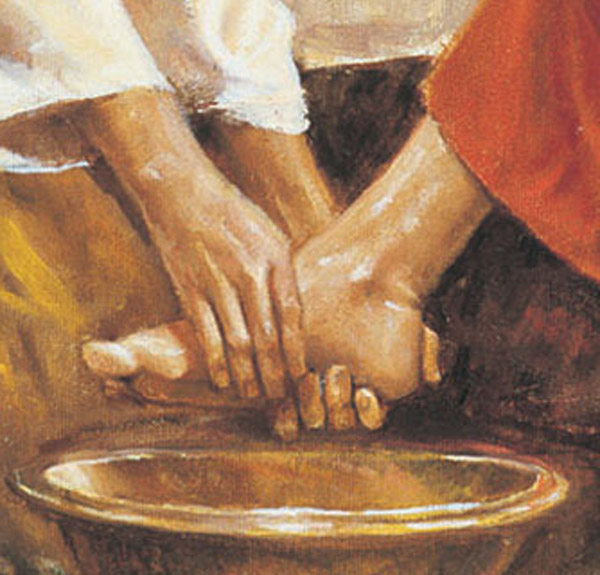
Joh 12:3 That was why Mary took a litra1 of perfume, pure and expensive nard,2 anointed Jesus’s feet, and wiped his feet with her hair. So the house was filled with the fragrance of the perfume.

Two women who took charge

Mary and Martha reappear in this scene, but not as passive figures in the background. The previous chapter introduced them in the rawness of grief and the astonishment of resurrection. Now they stand again beside Jesus, not in mourning but in service and devotion, each taking responsibility in her own way as the household hosts a banquet in His honor.

Martha’s role is often reduced to the image of a busy servant, yet the text suggests something far more substantial. The verb διακονέω can refer not only to serving food but to overseeing the entire operation of a meal—administration, coordination, and leadership. This banquet was not a small family dinner. It required many hands, and those hands needed direction. Martha was managing a complex event, ensuring that everything ran smoothly for the guests gathered to honor Jesus. Her service was not menial; it was skilled, intentional, and essential.

Mary, too, stepped into a leadership role, though of a different kind. She offered a costly, intimate act of devotion by anointing Jesus’ feet with expensive perfume. This was not a spontaneous gesture but a deliberate act of love and recognition. Jesus later explained its meaning: she was preparing Him for burial. In a moment charged with tension—when the shadow of the cross was lengthening—Mary acknowledged what others were unwilling to face. Her gift was prophetic, tender, and courageous. She honored Him while He was still with them, recognizing that His time was short.

Together, these sisters demonstrate two forms of taking charge: Martha through capable administration, Mary through sacrificial devotion. Both acts were needed. Both honored Christ. Both revealed hearts attuned to the significance of the moment.

Their example reminds the church that leadership takes many shapes. Some lead by organizing, coordinating, and ensuring that the work of ministry happens with excellence. Others lead by acts of devotion that awaken spiritual awareness in those around them. Both kinds of leadership matter deeply in the kingdom of God.

A prayer rises naturally from this reflection:
Lord, thank You for those who step up and take charge. Thank You for the leaders in our lives.

1The Roman λίτρα, or pound, was a weight of 12 ounces in a Roman measure, about 325 grams.

2Oil from a fragrant plant native to India.

Posted in leadership | Tagged | Leave a comment

Set apart for sacrifice

20181208

John 11:54-57

Joh 11:54 That was why Jesus no longer walked publicly among the Jews but went away from there to the less populated area near the desert, to a town called Ephraim, and he stayed there with the disciples.

Joh 11:55 Now the Jewish Passover was near, and many went up to Jerusalem from the less populated area to set themselves apart before the Passover.

Joh 11:56 That was why they were looking for Jesus and asking one another as they stood in the temple: “What do you think? He won’t come to the festival, will he?”

Joh 11:57 The chief priests and the Pharisees had given orders that if anyone knew where he is, he should report it so that they could arrest him.

Set apart for sacrifice

The raising of Lazarus became the turning point. Up to that moment, the religious leaders had opposed Jesus, questioned Him, and tried to trap Him, but His latest miracle pushed them past the point of restraint. Bringing a man four days dead back to life was too public, too undeniable, and too threatening. They convinced themselves that eliminating Jesus was necessary for the preservation of the nation. In their minds, His death would prevent unrest, satisfy Rome, and secure their own positions. What they framed as national responsibility was, in truth, fear disguised as piety.

Word spread quickly. Influential members of the Sanhedrin instructed the public to watch for Jesus’ appearance in Jerusalem. The people wondered whether He would dare show Himself again. The city was tense with expectation. Some hoped to see Him; others hoped to seize Him. The atmosphere resembled a manhunt more than a religious festival.

Reading about William Tyndale brings an interesting parallel. Tyndale, hunted by ecclesiastical authorities for translating Scripture into English, fled from place to place, always one step ahead of arrest. His work had to be done in hiding, in exile, in constant danger. He prolonged his life and ministry by avoiding the reach of those who wanted him silenced.

Jesus, however, did not avoid His fate. He did not flee from Jerusalem, though He could have. He did not hide His identity, though secrecy might have spared Him. He set His face toward the city where prophets died, knowing full well what awaited Him. His death was not an accident of politics or a miscalculation of timing. It was the purpose for which He came. He would die for the nation—not in the way Caiaphas imagined, but in the way God had ordained. And He would die for all nations, for all who would be gathered into one people through His sacrifice.

He consecrated Himself for that moment. He walked toward the cross with full awareness, full willingness, and full love. The fate sealed by His obedience became the salvation of the world.

A prayer rises from this reflection:
Lord, thank You for setting Yourself apart for a sacrifice that sealed Your fate and bought forgiveness for us.

Posted in atonement, the cross | Tagged | Leave a comment

Political reasons

20181207

John 11:45-53

Joh 11:45 That was why many of the Jews who came to Mary and experienced what he did believed in him.

Joh 11:46 But some of them went away to the Pharisees and said to them what Jesus had done.

Joh 11:47 That was why the chief priests and the Pharisees gathered the Sanhedrin together and were saying, “What are we going to do because this man is doing many sign miracles?

Joh 11:48 If we let him act this way, everyone will believe in him, and the Romans will come and lift both our place and our nation.”

Joh 11:49 But one of them, Caiaphas, who was high priest that year, said to them, “You know nothing at all!

Joh 11:50 You’re not considering the fact that it is to your advantage that one man should die in behalf of the people rather than the whole nation perish.”

Joh 11:51 But he did not say this from himself, but being high priest that year he prophesied that Jesus was about to die in behalf of the nation,

Joh 11:52 and not in behalf of the nation only, but also to gather together the scattered children of God into one.

Joh 11:53 That was why from that day on they plotted to kill him.

Political reasons

The Sanhedrin appears in the narrative as a religious council, yet the reasons they offer for condemning Jesus reveal a very different set of priorities. Their concerns are not centered on doctrine, Scripture, or fidelity to God’s covenant. Instead, the first objection raised is entirely political: fear that Rome will intervene, remove their national autonomy, and dismantle the fragile stability they enjoyed. Their anxiety is not about truth but about survival—specifically, the survival of their political position and national structure.

Caiaphas then adds what John identifies as a prophecy, yet even this prophetic word is shaped by political calculation. He argues that Jesus’ death would serve as a necessary sacrifice to preserve the nation, to satisfy Rome’s expectations of order, and to maintain the pax romana. His reasoning is not theological but strategic. He imagines that eliminating Jesus will prevent Rome from perceiving a threat and thereby protect the people—and, by extension, the authority of the ruling class. The irony is profound: the high priest speaks a true prophecy, but his motives are rooted in political expediency rather than spiritual discernment.

This moment exposes a sobering reality. Religious language can easily become a cloak for political fears. Convictions that appear deeply spiritual may in fact be shaped by cultural pressures, national anxieties, or personal interests. The Sanhedrin believed they were defending their faith, but in truth they were defending their power. Their theological objections were secondary; their political calculations were primary.

This raises a searching question for every generation: how many ideas held with religious fervor are actually political theories dressed in sacred clothing? How often do fears about cultural change, national identity, or social influence masquerade as spiritual convictions? The danger is subtle, because political concerns can feel righteous when wrapped in religious language. Yet the kingdom of God is not preserved by political maneuvering, nor is the gospel advanced by aligning it with national interests.

The call of Christ is to seek first the kingdom of God, a kingdom not built by human power or protected by political strategy. Faithfulness requires the discernment to separate genuine devotion from disguised self‑interest, and to recognize when fear—not truth—is shaping belief.

A fitting prayer rises from this reflection:
Lord, give the good sense to seek Your kingdom, and to keep political ideas separate from that pursuit.

Posted in insight, kingdom of God | Tagged | Leave a comment

come out here

20181128

John 11:41-44

41 That was why they lifted the stone. Then Jesus lifted his eyes up and said, “Father, I am giving thanks to you because you have heard me.

42 But I know that you always hear me, instead – because of the crowd standing around here I said this, so that they may believe that you sent me.”

43 After he said this, he screamed with a loud voice, “Lazarus, come out here!”

44 The dead man came out with the feet and the hands tied with linen strips and with his face wrapped in a cloth. Jesus said to them, “Untie him and let him go.”

come out here

Jesus’ command to Lazarus was simple, direct, and filled with authority: δεῦρο ἔξω—“come out.” It was not a summons from heaven or a call to descend from some conscious realm above. It was a command addressed to a man lying in a tomb, a man whose body had succumbed to death, whose consciousness had ceased, whose life had ended. Jesus did not use the verbs for “come down” (καταβαίνω, κατέρχομαι) because Lazarus was not alive somewhere else. He was asleep in death, resting in the silence of the grave until the voice of the Son of God awakened him.

This moment reveals the true condition of all who die. Scripture consistently describes death as sleep—not because it is peaceful, but because it is temporary. Sleep implies awakening. The dead are not active, not aware, not watching from afar. They rest in the dust, awaiting the word of Christ that will call them back to life. Lazarus’ experience becomes a pattern, a preview of what will happen to every believer. The hope of the Christian faith is not found in death itself, nor in some disembodied existence, but in rescue from death—in the resurrection that Christ alone can accomplish.

The power of Jesus’ command at that tomb in Bethany points forward to the day when He will speak again, not to one man but to all who sleep in the earth. His voice will pierce every grave, every sea, every forgotten resting place. No barrier will hinder Him. No decay will resist Him. The same authority that summoned Lazarus will summon the entire redeemed family of God.

Those who are alive at His coming will be transformed instantly, changed by the same word that awakens the dead. Those who sleep will rise at that word, restored to life by the One who is the Resurrection and the Life. All will stand together, alive forever, because Christ has spoken.

A prayer rises naturally from this hope:
Lord, we who are alive await Your word to transform us. Those who are asleep await the same word.

Posted in resurrection, sleep of death | Tagged | Leave a comment

no matter how long

20181128

John 11:37-40

37 But some of them said, “Wouldn’t he who was able to open the blind man’s eyes also have made it so that this person would not die?”

38 Then Jesus, deeply moved inside himself again, came to the tomb. But it was a cave, and a stone was lying against it.

39 Jesus said, “Take away the stone.” Martha, the dead man’s sister, told him, “Lord, there is already a stink because it is four days.”

40 Jesus said to her, “Didn’t I say to you that if you believed you would see the glory of God?”

no matter how long

Mary had remained in the house, surrounded by neighbors who had come to mourn with her. Martha, having spoken with Jesus, returned to bring her sister out to Him. When Mary arrived, the gathered crowd followed, sensing that something significant was unfolding. Their expectations were shaped by the promises of Scripture and the hope of Israel. They knew a resurrection was coming at the last day, and perhaps they assumed Jesus’ presence would bring comfort as they waited for that distant hope.

But Jesus directed their attention to a specific tomb—the resting place of Lazarus. Martha, ever practical and honest, reminded Him that the body had already begun to decay. Four days in the grave meant the finality of death had fully settled in. Her words were not doubt so much as realism. She knew what death does. She knew what a tomb becomes.

Jesus pressed her to keep believing. He wanted her to understand that no condition of the dead—no length of time, no degree of decay, no circumstance of burial—can hinder His power. The God who formed humanity from dust is not limited by what dust becomes. The One who breathed life into Adam is not constrained by the state of a corpse. Whether a body lies intact, or broken, or scattered, or long dissolved, the promise remains unchanged: the dead will rise at His command.

This moment at Lazarus’ tomb becomes a declaration for all generations. Nothing will obstruct the resurrection. No grave is too old. No body is too far gone. No circumstance is beyond the reach of the One who is the Resurrection and the Life. The miracle that follows is a sign pointing to the day when every believer—wherever they lie, however long they have slept—will hear His voice and come forth.

The hope of the church rests on this certainty. Christ does not merely comfort the grieving; He overturns the cause of grief. He does not simply stand beside tombs; He empties them. The raising of Lazarus is a preview of the universal resurrection, a promise sealed by Christ’s own victory over death.

A prayer rises naturally from this truth: Thank You, Lord, for the promise to raise the dead, for the assurance that no grave is beyond Your reach, and for the hope that rests securely in Your power and Your word.

Posted in resurrection | Tagged | Leave a comment

he cares, he conquers

20181128

John 11:31-36

31 The Jews also, who were with her in the house comforting her saw that Mary got up quickly and went out. They followed her, supposing that she was going to the tomb to cry there.

32 As soon as Mary came to where Jesus was and saw him, she fell at his feet and said to him, “Lord, if you had been here, my brother would not have died!”

33 That was when Jesus saw her crying, and the Jews who had come with her crying, he was deeply moved in his spirit and shook himself.

34 “Where have you put him?” he asked. “Lord,” they told him, “come and see.”

35 Jesus wept.

36 That was why the Jews said, “See how much he cared about him!”

he cares, he conquers

God has opened a window into His own heart in the scene at Lazarus’ tomb. The tears of Jesus are not symbolic or staged; they reveal something true about the very being of God. The Son shows the Father, and in the Son’s weeping, the Father’s compassion is made visible. Human grief is not met with divine indifference. The sorrow felt at the death of loved ones is echoed in the heart of the One who created them. The Lord of life does not stand aloof from the pain death inflicts. He enters it, feels it, and grieves with His people.

Yet His compassion is never separated from His power. The same Christ who weeps is the Christ who conquers. He does not merely sympathize with the brokenness of the world; He overthrows it. His tears at the tomb are followed by a command that shatters the silence of death. Lazarus comes forth, not because death is weak, but because Christ is stronger. The miracle becomes a sign of the greater resurrection still to come, when all who sleep in the dust will hear His voice and rise.

This is the hope given to every believer. Death is real, but it is not final. It wounds, but it cannot claim victory. Those who sleep in Christ are not lost; they are held. The One who wept at a single grave will one day stand over every grave and call His people to everlasting life. The resurrection is not a distant dream but a promised event, secured by the One who has already defeated death in His own rising.

The glimpse God gives into His heart is therefore both tender and triumphant. He cares deeply for His people in their sorrow, and He has already determined to undo the cause of that sorrow forever. The God who weeps is the God who raises.

A fitting prayer rises from this truth: Thank You, Lord, for caring about Your people in their grief. Thank You for the promise of resurrection and the assurance that death will not have the last word.

Posted in Jesus Christ, resurrection, second coming | Tagged | Leave a comment

You need to see this

John 11:27-30

27 She said to him “Absolutely, Lord, I believe you are the Messiah, the Son of God, the one coming into the world.” 28 After saying this, she went back and called her sister Mary, saying in private, “The Teacher is here and is calling for you.” 29 As soon as Mary heard this, she got up quickly and was coming to him. 30 Jesus had not yet come into the village but was still in the place where Martha had encountered him.


You need to see this

Martha’s confession had already revealed a heart anchored in resurrection hope, and Jesus had just unfolded the breathtaking truth that He Himself would raise the dead. When He asked whether she believed this, her response was not hesitant or polite. It was firm, wholehearted, and immediate. She did not simply agree; she affirmed with conviction that everything He said was true. Her faith rose to meet His revelation.

And then she moved. She went straight to Mary. Whatever Jesus was about to do, Mary needed to be there. Martha understood that the moment ahead was not merely about their brother—it was about the glory of Christ. She wanted her sister to witness it, to stand in the presence of the One who holds authority over life and death. Her urgency reflects a heart that grasps the significance of what is unfolding. When resurrection power is about to be displayed, those who love Jesus should be gathered close.

This scene becomes a quiet parable for the church. The next great event in God’s redemptive timetable is the resurrection of the dead and the return of Christ. That moment will not be hidden in a small village; it will encompass the whole world. The dead in Christ will rise, and the living will be transformed. The glory revealed at Lazarus’ tomb was a sign pointing toward that final day when every grave will yield its redeemed.

If that day is approaching—and Scripture insists it is—then now is the time for urgency. Not panic, not frenzy, but purposeful movement. Martha went quickly to Mary because Mary needed to encounter Jesus before the miracle. In the same way, believers today are called to go to those who need to meet Christ before the resurrection dawns. The gospel is not a message to be stored away for safer times. It is a summons to bring others into the presence of the One who will raise the dead.

The church lives between promise and fulfillment, between the sign at Bethany and the final trumpet. The hope of resurrection fuels mission. It shapes priorities. It awakens compassion. It sends believers toward others with the same earnestness Martha showed toward her sister.

A prayer rises naturally from this truth: Lord, we long for Your return and the resurrection You promised. Until that day, make us faithful messengers who bring others to You while there is still time.

Posted in evangelism, resurrection, witness, written on the Appalachian Trail | Leave a comment

Resurrection faith

John 11:23-26

23 “Your brother will rise again,” Jesus told her. 24 Martha said to him, “I know that he will rise again in the resurrection at the last day.” 25 Jesus said to her, “I am that resurrection and that life. The one believing in me, even if he dies, will live again. 26 “Everyone who is living and believing in me will certainly not die permanently. Do you believe this? “

Resurrection faith

Lazarus’ resurrection stands as one of the great sign-miracles of John’s Gospel, a moment designed not merely to comfort a grieving family but to reveal the identity and mission of Jesus. What happened outside that tomb in Bethany was not an isolated act of compassion; it was a preview of the final day when Christ will summon every believer from the grave. The raising of Lazarus points forward to the resurrection of all who belong to Him. It declares that Jesus is not simply a healer of the sick but the Lord of life and death, the One who will call the dead to rise at the last trumpet.

When Jesus speaks to Martha, His words reach far beyond her immediate sorrow. He describes a future in which two groups of believers will stand together in glory: those who have died and will be raised, and those who will be alive at His coming and will never taste death at all. Both groups will share the same destiny—life in the presence of the risen Christ. His promise is not vague or symbolic. It is concrete, bodily, and certain. The resurrection He describes is not a spiritual metaphor but the climactic act of God in history.

Jesus’ question to Martha—“Do you believe this?”—is not a gentle aside. It is the central question of Christian faith. A belief system without resurrection may offer moral guidance or emotional comfort, but it cannot offer hope. It cannot defeat death. It cannot sustain the soul in the face of loss. Faith that stops short of resurrection is thin, brittle, and unable to bear the weight of human suffering. But faith anchored in the coming resurrection is vibrant and strong. It is the faith Scripture calls us to embrace: trust in the Christ who will raise the dead, renew creation, and make all things new.

This is the faith that carried Martha through her grief. It is the faith that has sustained the church through centuries of loss. And it is the faith that shapes the longing of believers today. The resurrection is not an optional doctrine; it is the heartbeat of Christian hope, the promise that Christ will finish what He began and that death will not have the final word over any of His people.

A prayer rises naturally from this truth: Lord, we anxiously await Your return and the resurrection You promised.

Posted in faith, resurrection, written on the Appalachian Trail | Tagged | Leave a comment

ladies in the background

20181201

John. 11:17-22

17 That was why after Jesus arrived, he found him already having been in the tomb four days.

18 But Bethany was near Jerusalem (about fifteen stadia1 away).

19 Many of the Jews had come to Martha and Mary to comfort them about their brother.

20 That was why as soon as Martha heard that Jesus was coming, she went to meet him, but Mary remained seated in the house.

21 That was why Martha said to Jesus, “Lord, if you had been here, my brother wouldn’t have died.

22 Even now I know that whatever you ask from God, God will give you.”

ladies in the background

Martha’s actions fit the expectations of her culture. With guests in the home and grief filling the air, Mary remained seated as decorum required, while Martha rose to meet Jesus. This was not a sign of lesser devotion but simply the accepted pattern of hospitality and mourning. Yet within that ordinary framework, something extraordinary appears. Martha, often remembered as the one preoccupied with household tasks, steps forward with a depth of faith that shines through her sorrow.

Her reputation has long been shaped by the earlier scene in which she was busy serving while Mary sat at Jesus’ feet. That moment has caused many to imagine her as the practical sister, the one in the background, the one whose hands were always full and whose heart was perhaps less contemplative. But this passage reveals a woman who understands profound spiritual realities. She knows Jesus’ unique relationship with the Father. She knows He can ask and the Father will hear. She knows that even in the face of death, divine power is not exhausted. Her grief is real, yet it does not eclipse her trust.

Martha stands before Jesus with a heart that refuses to surrender to despair. She acknowledges the loss, feels the weight of it, and still speaks words of confidence in Christ’s authority. Her faith is not naïve; it is forged in sorrow. She believes that Jesus can alter what seems unalterable, that He can reach into the finality of death and bring life. Her confession becomes one of the clearest declarations of who Jesus is: the Christ, the Son of God, the One who has come into the world.

In this moment, Martha is not a background figure. She is a model of courageous faith, a witness to the truth that quiet servants often carry deep spiritual insight. Her trust in Christ rises from the midst of mourning and becomes a testimony that still strengthens the church.

A prayer naturally follows: Lord, thank You for the women who labor unseen, who serve faithfully, who believe deeply, and who shine brightly for Your kingdom even when others overlook them.

1A stadia is about 600 feet.

Posted in Martha, wisdom | Tagged | Leave a comment

end game

20181128

John 11:11-16

11 He said these words, and afterwards he told them, “Our friend Lazarus has fallen asleep, but I’m proceeding to wake him up.”

12 That is why the disciples said to him, “Lord, if he has fallen asleep, he will be rescued.”

13 But Jesus had been speaking about his death, yet they thought he was speaking about the resting of sleep.

14 So Jesus then told them plainly, “Lazarus died.

15 I rejoice for you that I wasn’t there so that you may believe. But let’s go to him.”

16 Then Thomas (the one called “Twin”) said to his fellow disciples, “Let’s go too so that we may die with him.”

end game

Thomas speaks like a man whose hope has collapsed under the weight of reality as he understands it. News of Lazarus’ death has reached him, and with that news any remaining expectation of rescue disappears. The journey back to Judea now seems pointless. Lazarus is gone, and returning to the place where Jesus was nearly stoned feels like walking straight into a grave. His words carry the bleak logic of someone who believes death ends every story. If Lazarus has died, then the only thing awaiting them in Judea is the same fate. Death, in Thomas’ mind, is the final boundary that cannot be crossed.

Jesus speaks from an entirely different horizon. He does not soften the truth or pretend Lazarus is still alive in some hidden realm. He acknowledges death for what it is, yet He refuses to grant it the authority Thomas assumes it has. Jesus rejoices—not in Lazarus’ death, but in the opportunity to reveal that death is not the end. He names death as sleep, not to diminish its seriousness, but to declare its reversibility. Sleep can be interrupted. Sleepers can be awakened. The dead can be raised.

This is the difference between despair and divine confidence. Thomas sees a sealed tomb; Jesus sees a sleeping friend. Thomas sees danger and futility; Jesus sees the moment when the glory of God will break through the darkness. Thomas believes the story has ended; Jesus knows the story is about to open into resurrection.

The contrast exposes the heart of Christian hope. Death is real, but it is not ultimate. It is an enemy, but not an unconquerable one. Christ does not deny its power; He overthrows it. His words in this moment anticipate the greater victory He will accomplish in His own resurrection and extend to all who belong to Him. Where human eyes see an ending, the Son of God sees the beginning of new life.

The prayer that rises from this truth is full of gratitude and longing: Lord, thank You for the promise of rescue found in Christ. Thank You that death is not the end, and that the One who calls the dead to rise will one day call every sleeping saint to life again.

Posted in resurrection, sleep of death | Tagged | Leave a comment