
John 11:45-53
Joh 11:45 That was why many of the Jews who came to Mary and experienced what he did believed in him.
Joh 11:46 But some of them went away to the Pharisees and said to them what Jesus had done.
Joh 11:47 That was why the chief priests and the Pharisees gathered the Sanhedrin together and were saying, “What are we going to do because this man is doing many sign miracles?
Joh 11:48 If we let him act this way, everyone will believe in him, and the Romans will come and lift both our place and our nation.”
Joh 11:49 But one of them, Caiaphas, who was high priest that year, said to them, “You know nothing at all!
Joh 11:50 You’re not considering the fact that it is to your advantage that one man should die in behalf of the people rather than the whole nation perish.”
Joh 11:51 But he did not say this from himself, but being high priest that year he prophesied that Jesus was about to die in behalf of the nation,
Joh 11:52 and not in behalf of the nation only, but also to gather together the scattered children of God into one.
Joh 11:53 That was why from that day on they plotted to kill him.
Political reasons
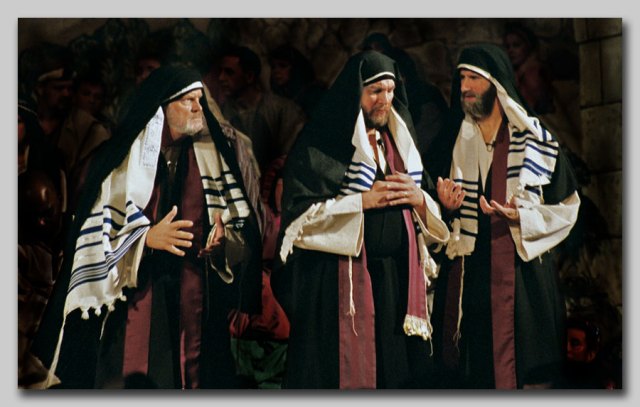
The Sanhedrin appears in the narrative as a religious council, yet the reasons they offer for condemning Jesus reveal a very different set of priorities. Their concerns are not centered on doctrine, Scripture, or fidelity to God’s covenant. Instead, the first objection raised is entirely political: fear that Rome will intervene, remove their national autonomy, and dismantle the fragile stability they enjoyed. Their anxiety is not about truth but about survival—specifically, the survival of their political position and national structure.
Caiaphas then adds what John identifies as a prophecy, yet even this prophetic word is shaped by political calculation. He argues that Jesus’ death would serve as a necessary sacrifice to preserve the nation, to satisfy Rome’s expectations of order, and to maintain the pax romana. His reasoning is not theological but strategic. He imagines that eliminating Jesus will prevent Rome from perceiving a threat and thereby protect the people—and, by extension, the authority of the ruling class. The irony is profound: the high priest speaks a true prophecy, but his motives are rooted in political expediency rather than spiritual discernment.
This moment exposes a sobering reality. Religious language can easily become a cloak for political fears. Convictions that appear deeply spiritual may in fact be shaped by cultural pressures, national anxieties, or personal interests. The Sanhedrin believed they were defending their faith, but in truth they were defending their power. Their theological objections were secondary; their political calculations were primary.
This raises a searching question for every generation: how many ideas held with religious fervor are actually political theories dressed in sacred clothing? How often do fears about cultural change, national identity, or social influence masquerade as spiritual convictions? The danger is subtle, because political concerns can feel righteous when wrapped in religious language. Yet the kingdom of God is not preserved by political maneuvering, nor is the gospel advanced by aligning it with national interests.
The call of Christ is to seek first the kingdom of God, a kingdom not built by human power or protected by political strategy. Faithfulness requires the discernment to separate genuine devotion from disguised self‑interest, and to recognize when fear—not truth—is shaping belief.
A fitting prayer rises from this reflection:
Lord, give the good sense to seek Your kingdom, and to keep political ideas separate from that pursuit.


