
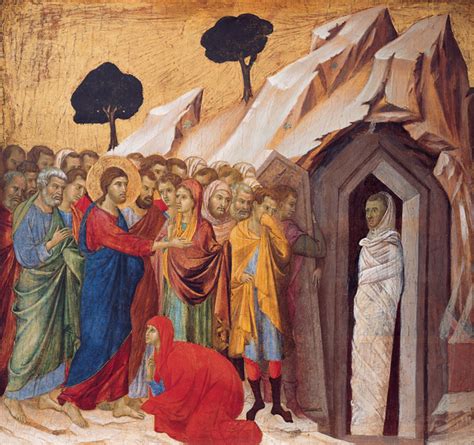
John 11:37-40
37 But some of them said, “Wouldn’t he who was able to open the blind man’s eyes also have made it so that this person would not die?”
38 Then Jesus, deeply moved inside himself again, came to the tomb. But it was a cave, and a stone was lying against it.
39 Jesus said, “Take away the stone.” Martha, the dead man’s sister, told him, “Lord, there is already a stink because it is four days.”
40 Jesus said to her, “Didn’t I say to you that if you believed you would see the glory of God?”
no matter how long
Mary had remained in the house, surrounded by neighbors who had come to mourn with her. Martha, having spoken with Jesus, returned to bring her sister out to Him. When Mary arrived, the gathered crowd followed, sensing that something significant was unfolding. Their expectations were shaped by the promises of Scripture and the hope of Israel. They knew a resurrection was coming at the last day, and perhaps they assumed Jesus’ presence would bring comfort as they waited for that distant hope.
But Jesus directed their attention to a specific tomb—the resting place of Lazarus. Martha, ever practical and honest, reminded Him that the body had already begun to decay. Four days in the grave meant the finality of death had fully settled in. Her words were not doubt so much as realism. She knew what death does. She knew what a tomb becomes.
Jesus pressed her to keep believing. He wanted her to understand that no condition of the dead—no length of time, no degree of decay, no circumstance of burial—can hinder His power. The God who formed humanity from dust is not limited by what dust becomes. The One who breathed life into Adam is not constrained by the state of a corpse. Whether a body lies intact, or broken, or scattered, or long dissolved, the promise remains unchanged: the dead will rise at His command.
This moment at Lazarus’ tomb becomes a declaration for all generations. Nothing will obstruct the resurrection. No grave is too old. No body is too far gone. No circumstance is beyond the reach of the One who is the Resurrection and the Life. The miracle that follows is a sign pointing to the day when every believer—wherever they lie, however long they have slept—will hear His voice and come forth.
The hope of the church rests on this certainty. Christ does not merely comfort the grieving; He overturns the cause of grief. He does not simply stand beside tombs; He empties them. The raising of Lazarus is a preview of the universal resurrection, a promise sealed by Christ’s own victory over death.
A prayer rises naturally from this truth: Thank You, Lord, for the promise to raise the dead, for the assurance that no grave is beyond Your reach, and for the hope that rests securely in Your power and Your word.

 Devotions