not a mere teacher

20181123

John 10:19-21

19 A schism again happened among the Jews because of these words.

20 Many of them were saying, “He has a demon and is insane. Why are you listening to him?”

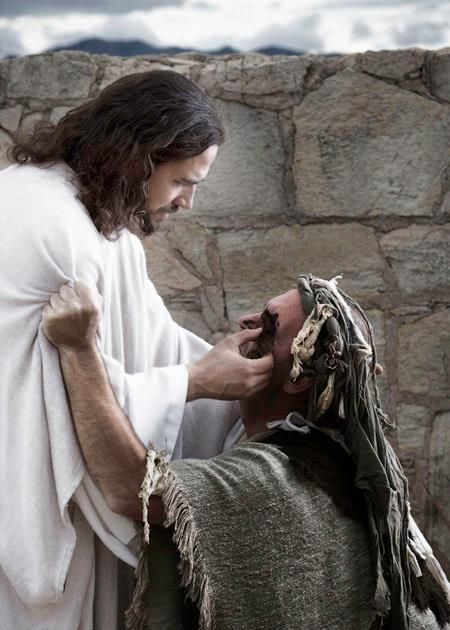
21 Others were saying, “These aren’t the words of someone who is demon-possessed. A demon cannot open the eyes of the blind can it?”

not a mere teacher

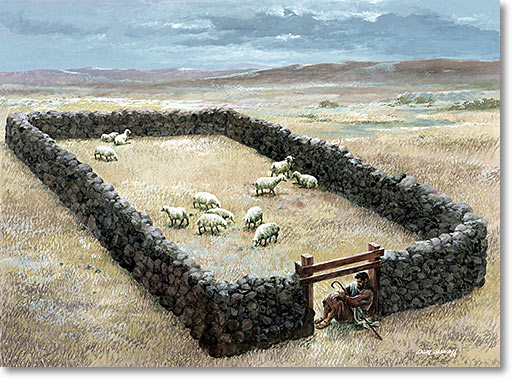
Jesus is not someone who can be brushed aside as a mere good teacher. He demands much more of us than that. It was very right that a schism developed among the Jews of his day. He demanded much more of them than any rabbi would have dared. He claimed to be the Father’s Son, gate of God’s sheep. He spoke of his own impending death on the cross as a decision he had made – even before it happened. He even claimed to have the right to come out of the tomb.

If Jesus was not who he said he was, he was just what these skeptical Jews were claiming he was, a possessed lunatic. But if the cross was God’s idea, and the tomb is empty – he can only be the Lord of all.

Lord of all, we submit to your authority. We surrender to your right to decide our future.

Posted in Jesus Christ, Uncategorized | Tagged | Leave a comment

his right to die

20181122

John 10:14-18

14 “I am the proper shepherd. I know the ones who are mine, and the ones who are mine know me,

15 just as the Father knows me, I also know the Father, and I lay down my soul for the sheep.

16 But I have other sheep who are not from this sheep pen; I must lead them also, and they will listen to my voice. Then there will become one flock, one shepherd.

17 This is why the Father loves me, because I lay down my soul so that I may take it up again.

18 No one takes it from me, but I lay it down on my own. I have the right to lay it down, and I have the right to take it up again. I have received this command from my Father.”

his right to die

In this interesting continuation of the gate/shepherd/sheep parable, Jesus carries the allegory out. There is still a connection with the parable, because three characters still remain: the owner, the proper shepherd, and the sheep.

Jesus repeats and augments his statement about laying down his soul. The soul is the life on loan from God. To lay her down (ψυχή is a feminine noun, so all the pronouns are actually “her”) is to die willingly, to take her up again is to be raised to life again. Jesus was not talking about the so-called immortal soul. If it were immortal, he could not lay it down. He is talking about his part of divine plan for our salvation – his voluntary death on the cross.

Jesus also shows the Father’s part in the plan, in loving the Son, but also in giving him the right (ἐξουσία) to die and be resurrected.

Jesus also talks about the other sheep that he must lead (ἄγω). He’s talking about all those who will become part of God’s flock after his resurrection. That is us.

Lord, thank you for your love and grace that brought salvation to the rest of us.

Posted in Jesus Christ, plan of God, the cross | Tagged | Leave a comment

Qualified and caring

20181120

John 10:11-13

11 “I am the proper shepherd. The proper shepherd lays down his soul for the sheep.

12 The hired hand, since he is not the shepherd and doesn’t own the sheep, leaves them and runs away when he notices a wolf coming. The wolf then seizes and scatters them —

13 because he is a hired hand and doesn’t care about the sheep.

Qualified and caring

How can Jesus be a gate and a shepherd? He hasn’t changed metaphors. The gate is the shepherd who watches the sheep when they are enclosed in the pen. Only the most trusted shepherd is qualified to perform this task. Jesus explains here that he qualifies because he is not a mere hired hand. He does not desert his post when he notices a wolf. He cares about God’s people. They are his people too.

I used the word proper for καλός here because Jesus was stressing his suitability for this special task. He will go on to give another reason for his qualification – his relationship to the Father.

Lord, thank you for caring for us.

Posted in Jesus Christ, protection | Tagged | Leave a comment

Focus on the gate

John 10:7-10

7 Jesus said again, “I am honestly telling you, I am the gate for the sheep.
8 All who came before me are thieves and bandits, but the sheep didn’t listen to them.
9 I am the gate. If anyone enters by me, he will be rescued and will come in and go out and find pasture.
10 The thief comes only to steal and kill and destroy. I have come so that they may have life and have it in excess.

Focus on the gate

I was tempted to follow the CSB in verse 10, and not render ὁ κλέπτης as definite. I kept the expression “The thief,” because it contains the definite article, but I can understand why the CSB translators chose to render it “A thief.” Jesus is not talking about Satan here. He had already identified the thieves as false shepherds.

Satan is very real, and his influence in destroying people’s lives should not be underestimated. But the focus of this text is not Satan; it is Jesus. He offers permanent safety, freedom and fulfillment. Our only hope for eternal life is the gate.

Lord, rescue us.

Posted in eternal life, freedom, Jesus Christ | Tagged | Leave a comment

first the gate

John 10:1-6

1 “I am honestly telling you, the one not entering the sheep pen by the gate but comes in some other way is a thief and a bandit.
2 The one who is entering by the gate is the shepherd of the sheep.
3 The gatekeeper opens it for him, and the sheep listen for his voice. He calls his own sheep by name and leads them out.
4 When he has brought all his own outside, he goes ahead of them. The sheep follow him because they recognize his voice.
5 They will never follow a stranger; instead they will run away from him, because they don’t recognize the voice of strangers.”
6 Jesus gave them this illustration, but they did not understand what he was saying to them.

first the gate

John tells this story immediately after a story in which the supposed leaders of God’s people excommunicated a blind man because he dared to question their status before God. The blind man believed in Jesus as the Son of Man (read Messiah), and worshiped him. He had been healed by Jesus, and saw his healing as positive proof that Jesus was who he said he was.

In that context, it is clear what Jesus means when he speaks of a true shepherd as one who enters by the gate. He was by the same illustration, condemning the false shepherds of his day, and endorsing those shepherds who would lead in his name. Later, Jesus will identify himself as the good (or proper) shepherd (10:11). But in this analogy, he is the gate. The proper shepherds are the ones who lead by first coming through the proper gate.

I think the foundational application of this text is that all who dare to lead the church should have a genuine relationship with Christ themselves.

LORD, before we dare to lead, show us how to genuinely follow you.

Posted in genuineness, Jesus Christ, leadership | Tagged | Leave a comment

disabilities and judgment

John 9:34-41

34 They answered and said to him, “You were born completely in sin, and are you teaching us?” Then they threw him out.
35 Jesus heard that they had thrown the man out, and when he found him, he asked, “Do you believe in the Son of Man?”
36 That person answered and said, “Who is he, Lord, that I may believe in him?”
37 Jesus answered, “You have seen him; in fact, he is the one speaking with you.”
38 “I believe, Lord!” he said, and he worshiped him.
39 Then Jesus said, “I came into this world to execute judgment; the results will be the ones not seeing will see and the ones seeing will become blind.”
40 Some of the Pharisees who were with him heard these things and asked him, “We aren’t blind too, are we?”
41 Jesus said to them, “If you were blind, you wouldn’t have sin. But now that you say, ‘We are seeing,’ your sin stays.

disabilities and judgment

I have been limping around for a long time now due to what my doctor says is a torn meniscus in one knee. Until just recently, the pain was such that I had to wear a brace and use crutches. Something interesting happened in my mind. I felt self-conscious when walking. I felt like some people around me were trying to avoid me because of the limp. I know it is merely a physical disability, but what I know and what I feel are two different things.

This man who had been born blind knew the discrimination all his life. Even now, that he had the good fortune to come across Jesus and be restored, he still knows it. People looked at his disability as a judgment from God.

But Jesus used this opportunity to teach us all that the real judgment is upon the ones who discriminate. It is those who proudly dismiss the formerly blind man who are being condemned. The real judgment that Jesus is involved in today is upon those who reject who Jesus is. God’s grace is being poured out on those who seek to see, and depend on God’s revelation in Christ.

Lord, we believe, and worship you.

Posted in discernment, judgment, revelation | Tagged | Leave a comment

the amazing thing

John 9:24-33

24 That was why they summoned the man who had been blind a second time and said to him, “Give glory to God. We know that this man is a sinner.”
25 That was why that person answered, “If he’s a sinner, I don’t know. One thing I do know: I was blind, and now I am seeing!”
26 That was why they said to him, “What did he do to you? How did he open your eyes?”
27 He answered them, “I said it to you already and you didn’t listen. Why do you want to hear it again? You don’t want to become his disciples too, do you?”
28 They insulted him, and said “You’re that person’s disciple, but we’re Moses’s disciples.
29 We know that God has spoken to Moses. But this person– we don’t know where he’s from.”
30 The man answered them, “Well, here is the amazing thing!; You don’t know where he is from, and yet he opened my eyes.
31 We know that God doesn’t listen to sinners, but if anyone is God-fearing and does what he wants, he listens to him.
32 From the age past, no one has ever heard of someone opening the eyes of a person born blind.
33 If this person were not from God, he wouldn’t be able to do anything.”

the amazing thing

The man who had been made to see by Jesus was grateful for his miracle. But the amazing thing that he could not understand is why these disciples of Moses did not accept Jesus. Surely these religious experts could recognize the hand of God?

But still today there are many who read of Jesus’ miraculous works and insightful teaching in the New Testament, yet refuse to accept that he is who he said he was.

How many people does Jesus have to heal before this sinful world will accept him? That there are not more believers in this world is truly an amazing thing!

Lord, draw people to yourself through your words, by the power of your Holy Spirit, before it is too late.

Posted in Bible, miracles | Tagged | Leave a comment

why we don’t ask

John 9:17-23

17 That’s why they said to the blind man again, “What do you say about him, since he opened your eyes? ” But he said “He’s a prophet.” 18 The Jews did not believe this about him — that he was blind and received sight — until they summoned the parents of the one who had received his sight. 19 They asked them, “Is this person your son, the one you say was born blind? How is it that he now sees? ” 20 That was why his parents answered, “We know this person is our son and that he was born blind, 21 But we don’t know how he now sees, and we don’t know who opened his eyes. Ask him; he has reached maturity. He will speak for himself.” 22 His parents said these things because they were afraid of the Jews, since the Jews had already agreed that if anyone confessed him as the Messiah, he would be expelled from the synagogue. 23 This is why his parents said, “He has reached maturity; ask him.”

why we don’t ask

When the Lord does a work in a person’s life, others will recognize that work. But society will pressure them to deny the author of that work. The person might even be praised for his new-found self control, consideration of others, or insight. But few will dare infer from this changed character that Jesus is the one who did the changing. Like this man’s parents, so many will jump to any conclusion than the most obvious one. In today’s text, it was fear of reprisal from the authorities which kept those parents from testifying the truth. Sometimes it is simply peer pressure.

At any rate, it is best to follow their advise any way. The best person to ask about why he is being sanctified is the person himself. But even he may not have a satisfactory answer.

Lord, work your mysterious work among us, and give us an answer for those who ask why.

Posted in sanctification | Tagged | Leave a comment

don’t give up on sceptics

John 9:12-16

12 They said to him, “Where is he?” He said, “I don’t know.”
13 They brought the once blind man to the Pharisees.
14 But it was a Sabbath on the day that Jesus made the mud and opened his eyes.
15 That was why the Pharisees asked him again how he received his sight. “He put mud on my eyes,” he told them. “I washed and I can see.”
16 That was why some of the Pharisees said, “This person is not from God, because he doesn’t keep the Sabbath.” But others were saying, “How can a sinful man perform such signs?” And there was a schism among them.

don’t give up on sceptics

John draws attention to the division among the Pharisees over Jesus. He actually uses the word σχίσμα, which serves quite well to describe the nature of the division. The Pharisees were die-hard literalists. They wanted to believe that healing came from God, but could not understand Jesus’ willingly coloring outside the lines, by ignoring Sabbatarian regulations.

That schism wasn’t resolved that day. It percolated in the minds of people like Saul of Tarsus, and led some of them to eventually profess faith in Christ. His acts of kindness spoke more loudly than their preconceptions.

Don’t give up on sceptics. It may be that the godly life you live and your unexplained actions will cause some of them to question their long-held presuppositions.

LORD, show us how to love the lost so much that they dare to believe our testimony about you.

Posted in evangelism, kindness, love | Tagged | Leave a comment

I see — I want to see Jesus

John 9:6-12

6 After he said these things he spat on the ground, and made some mud from the saliva, and smeared the mud on his eyes.
7 Then he told him,”leave, wash in the pool of Siloam” (which means “Sent”). So he left, washed, and came back seeing.
8 His neighbors and those who had seen him before as a beggar said, “Isn’t this the one who used to sit begging?”
9 Some said, “He’s the one.” Others were saying, “No, but he looks like him.” He kept saying, “I’m the one.”
10 So they said to him, “Then how were your eyes opened?”
11 He answered, “The man called Jesus made mud, smeared it on my eyes, and told me, ‘Leave for Siloam and wash.’ After I went away and washed I received sight.”
12 They said to him, “Where is that person?” He said, “I don’t know.”

I see — I want to see Jesus

We are only part-way through the story of this blind beggar and his encounter with Jesus. Note that he has not seen Jesus at this point. He could not see when Jesus touched him, and when he returned with sight, he could not find Jesus.

In a very real sense, this man’s encounter parallels ours. He went through a time of testing in which he had received sight, but could not see Jesus. He was forced to decide whether Jesus was who he said he was. Believers in Christ spend their lives waiting for him to return and verify their faith. We only know that he has touched us, and that his touch has made a difference. He has given us sight, and that sight makes us long to see him.

LORD, help us to lead all the blind beggars to you.

Posted in faith, second coming | Tagged | Leave a comment