only Jesus: assurance of God’s hope

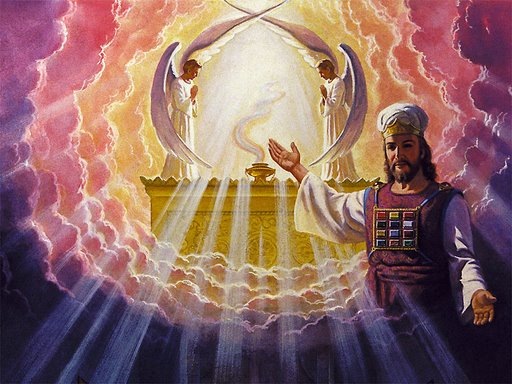
anchorHebrews 5:11-6:20.   The author of Hebrews challenged his readers to live up to their profession.  To him, it was not enough for a person to claim to be a Christian, then live a life of arrested development.  The Christian life is one of growth, faith and patience.  It is a process that God brings us through.  It involves constant change.  Through it all, Christ and the destiny he offers abides in the true believer as an anchor, keeping the ship from drifting off.  He is our high priest, taking us through the process of salvation that begins (on our part) with repentance, and concludes at the throne of eternal judgment.  As we go through the process, he wants us to become skilled in the word of righteousness, so that we can assist others to trust him.

LORD, forgive our immaturity.  Help us to grow in your word as we remain solidly fixed to Christ, our hope.

Posted in commitment, discipleship, faith, forgiveness, growth, Jesus Christ, judgment, perseverance, scriptures, witness | Tagged , | Leave a comment

only Jesus: source of God’s grace

jesus-priest-foreverHebrews 4:14-5:10.  Jesus is one of us.  He understands us.  He knows what makes us tick.  When we fail, he knows why.  We can come to him, pleading for mercy and grace again,  because he is able to sympathize with our weaknesses.  He does not tolerate or condone sin, but he can forgive and restore.  He is our great high priest.  He was called by his Father for that very purpose.  Only he was given that priesthood for eternity.  He “became the source of eternal salvation to all who obey him” (9).

LORD, thank you that you have provided a source of eternal grace for us.

Posted in church, confession, forgiveness, grace, Jesus Christ, mercy | Tagged , | Leave a comment

only Jesus: provider of God’s rest

restingHebrews 3:7-4:13.  Moses offered a promised land and took his people to a place of rest, but they were not able to enter God’s rest because of their disobedience.  Now Jesus offers God’s Sabbath rest.  This is the rest of grace, which will lead to eternal life. But some are tempted to turn back to Moses, forsaking the hope of this rest.  We are encouraged to “strive to enter” Christ’s rest, “so that no one may fall by the same sort of disobedience.” Forsaking Christianity for a works based righteousness is abandoning the hope of eternal life. 

LORD, we trust in Jesus, who has made it possible for us to enter your Sabbath rest. We praise you for your grace.

Posted in dependence upon God, grace, Jesus Christ, obedience, works | Tagged , | Leave a comment

only Jesus: builder of God’s house

Jesus-1Hebrews 3:1-6.  The author of Hebrews urges his Jewish brothers not to cling to the traditions associated with Moses and slip away from their confidence in Christ.  Just as some were tempted to get sidetracked on worshipping angels (chapters 1-2), so many were being tempted to return to a Judaism without its Messiah.  Moses is compared to Jesus here.


  1. Moses “was faithful in all God’s house” as a servant.  He predicted what God was going to do later, through Christ.
  2. Jesus “is faithful over God’s house” as a Son who fulfilled and is fulfilling those predictions.  We are that house, if we “hold fast our confidence and our boasting in our hope.” 

Instead of worshipping Moses, believers should be like Moses – longing to see the Son when he comes in his glory.

LORD, make us faithful in your house, and confident in our hope – a hope that we put in Jesus alone.

Posted in church, confidence, faithfulness, Jesus Christ, kingdom of God | Tagged | Leave a comment

only Jesus: source of God’s salvation

images (1)Hebrews 2.  When God sent his message of salvation by his angels – those who obeyed were delivered.  Now God has sent his message of ultimate salvation by his own Son.  Those who neglect Christ’s great salvation will find no escape.


  1. We do not yet see the world to come under subjection to Christ, but we have been told of his suffering, by which he has sanctified us (1-11a).
  2. We are not yet free from our lifelong slavery and the temptation that comes with it, but we have been told of his propitiation for our sins, his faithfulness as our high priest, and his bringing us all together into the congregation as brothers (11b-18).

LORD, we believe your message about Jesus – what he has done, is doing, and will do for our complete salvation.  We put our trust in him – and him alone.

Posted in church, commitment, deliverance, Jesus Christ, sanctification, submission, trust, worship | Tagged | Leave a comment

only Jesus: heir of God’s universe

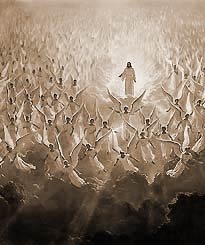
jesus and his angelsHebrews 1.  Jesus has some things in common with angels.  He is a messenger – the word angel means messenger.  He is the Son of God.  Angels are also called sons of God by virtue of having been created by God.  The author of Hebrews wanted to make it clear that Christians should not worship angels.  They should not be confused with Christ.  He is the heir of the universe, and angels are his servants and ours.


  1. Only Jesus bears the “exact imprint” of God’s nature and holds the universe together by the word of his power (4).
  2. Only Jesus made purification for sins and now sits at God’s right hand with his authority (4,13).
  3. Only Jesus is to be worshipped by angels (6.).
  4. Only Jesus has inherited the throne of the universe for eternity (8-12).

LORD, we pledge undivided loyalty to your ONLY SON, heir of the universe.  We will join the angels in worshipping him.

Posted in angels, Jesus Christ, worship | Tagged | Leave a comment

responding to heaven’s king

Matthew 28 19


Matthew 28 

Matthew does not describe the resurrection itself. He assumes it. To him, it is the most certain reality in the world. Instead, he turns our attention to the responses that first Easter morning—responses that still echo in every generation.

The Angel and the Earthquake (1–10)

At dawn, the earth shakes again. An angel descends with such force and brilliance that the great Roman guards—trained, armed, disciplined—collapse like dead men. The angel rolls away the stone, not to let Jesus out, but to let the world see that He is already gone. The stone is now useless, a silent monument to a victory already won.

The women—Mary Magdalene and the other Mary—also tremble. But unlike the soldiers, their fear does not paralyze them. They step forward. They look inside. They listen. They obey. And as they run to tell the disciples, Jesus Himself meets them. Their instinct is worship. Their worship does not hinder their obedience; it fuels it.

The Soldiers and the Lie (11–15)

The guards, who saw the same angel and the same empty tomb, respond differently. They reject the truth staring them in the face. They choose a lie that protects their position. They conspire with the chief priests to bury the resurrection under bribery and deception.

The first witnesses of the resurrection become the first evangelists of unbelief.

The Disciples and the Commission (16–20)

The disciples gather in Galilee as Jesus instructed. When they see Him, they worship. But Matthew adds a striking detail: “some doubted.” Even in the presence of the risen Lord, faith and uncertainty coexist in the same hearts.

Jesus does not rebuke them. He commissions them.

He entrusts His global mission to worshippers who still wrestle with doubt. He sends them into the world with His authority, His command, and His promise.

Matthew does not record their response.
You and I are that response.
Our obedience—or disobedience—becomes the next chapter of the story.


Prayer

Lord Jesus, we have seen heaven’s King. Give us the courage to worship You with reverence and to obey You with joy. May our lives testify that the tomb is empty, that death has been defeated, and that You reign forever. Strengthen our trembling faith, and make us faithful to Your commission. Amen.


“Go therefore and make disciples…” (Matthew 28:19)

Posted in church, commitment, courage, kingdom of God, obedience, witness, worship | Tagged | Leave a comment

the death of heaven’s king

Matthew 27 54


Matthew 27:27–66 

Matthew wants us to feel the weight of what Jesus endured—not only the physical agony, but the profound abandonment that surrounded His death. The One who deserved honor received mockery. The One who deserved worship received scorn. The One who had always known perfect fellowship with His Father now entered the darkness of forsakenness—for us.

Mocked as a King (27–30)

Jesus is the rightful King of the Jews—the promised Son of David, the true ruler of God’s people. Yet the Roman soldiers treat His kingship as a joke. They strip Him, dress Him in a scarlet robe, twist thorns into a crown, and kneel before Him in cruel imitation of worship. They spit on Him. They strike Him. They mock the very authority that He will one day exercise over all nations.

The One who deserved a throne receives a cross.

Mocked as the Son of God (31–43)

As Jesus hangs on the cross, the insults intensify. Even the criminals crucified beside Him join in the mockery. They challenge Him: “If You are the Son of God, come down from the cross!” They do not understand that the very reason He stays on the cross is that He is the Son of God.

The Father could have intervened. Heaven could have split open. Legions of angels could have swept down in an instant. But love held Him back. Love for us. Love that chose our salvation over His Son’s rescue.

The Son is forsaken so that sinners may be welcomed.

Vindicated After Death (44–56)

Only after Jesus breathes His last does the Father display His power. The earth shakes. Rocks split. Tombs open. Holy ones are raised. Creation itself testifies that something cosmic has happened.

And the hardened Roman centurion—trained to ignore suffering, accustomed to death—suddenly sees clearly. Terrified, he declares the truth that everyone else missed:

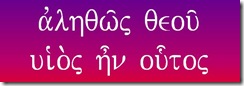
“Truly this was the Son of God!”

The One who seemed defeated is revealed as victorious. The One who appeared abandoned is shown to be beloved. The One who died in weakness rises in power.

Burial and Waiting (57–66)

Jesus is laid in a borrowed tomb. A stone is rolled into place. Guards are posted. The world grows silent. It looks like the end.

But heaven is preparing a beginning.


Prayer

Lord Jesus, knowing the pain, shame, and abandonment You endured for us, we pledge not to add to Your grief by dishonoring Your name. You were mocked as King so we could be welcomed into Your kingdom. You were forsaken as the Son so we could be adopted as children. You were buried in darkness so we could rise in Your light. Teach us to live in grateful obedience, honoring the One who suffered in our place. Amen.


“Truly this was the Son of God!” (Matthew 27:54)


Posted in compassion, Jesus Christ, witness | Tagged | 1 Comment

the innocence of heaven’s king

Matthew 27 22


Matthew 27:1–26 

Matthew slows the narrative so we cannot miss the central truth: Jesus is innocent, yet every human hand around Him participates in condemning Him.

Judas, the very man who betrayed Him, suddenly feels the crushing weight of what he has done. He returns the silver to the chief priests and elders, confessing, “I have sinned by betraying innocent blood.” Even the conspirators recognize the truth—this money cannot go back into the temple treasury. It is tainted. It is blood money. So they buy a field with it, a place that will forever carry the name “Field of Blood.” Judas, unable to bear the guilt he unleashed, ends his own life. His tragedy becomes a dark mirror of what sin does when it is left without hope.

Meanwhile, Jesus stands before Pilate. The governor is stunned. Accused men beg, argue, defend themselves. Jesus does none of this. His silence is not weakness—it is sovereignty. Pilate’s wife sends an urgent message: “Have nothing to do with that righteous man.” Even she sees what the religious leaders refuse to acknowledge.

Pilate tries to release Jesus. He offers the crowd a choice between the innocent Christ and Barabbas, a violent rebel. The crowd chooses Barabbas. Pilate washes his hands, declaring, “I am innocent of this man’s blood.” But Matthew wants us to feel the weight of the moment: no one is innocent of Jesus’ blood. Not Judas. Not the priests. Not Pilate. Not the crowd. Not us. His death is the result of human sin—ours included.

And yet, this is the wonder of grace: the Innocent One willingly stands in the place of the guilty. Jesus is condemned so that sinners may be set free.

Pilate’s haunting question still echoes:
“What shall I do with Jesus who is called Christ?”
Every generation must answer it. Every heart must decide.


Prayer

Lord Jesus, you are holy, righteous, and without fault. Yet you allowed yourself to be treated as a criminal, condemned in our place, bearing the weight of our guilt. Thank you for your sacrifice of grace. Teach us to see your innocence clearly, our sin honestly, and your mercy with wonder. Help us answer Pilate’s question with faith, obedience, and love. Amen.

Posted in grace, Jesus Christ, the cross | Tagged | Leave a comment

the lonely night of heaven’s king

Matthew 26 41 Matthew 26:30-75.  Jesus and his disciples had barely any time to reflect on the significance of the Lord’s Supper.  they went to the Mount of Olives, and Jesus predicted again his betrayal, and the fact that his disciples would deny him.  Jesus knew that it was all going to happen that very night, so he prayed earnestly and sorrowfully.  The disciples were unaware.  they slept.  The events of that night caught them off guard.  Before they knew what was happening, Jesus had been arrested by the Sanhedrin.  The disciples scatter.  Peter ends up fulfilling Jesus’ prediction by denying that the he knows Jesus – three times.

LORD, keep us alert and aware of the significance of each day.  May you not find us sleeping when you come to us.

“watch and pray” (26:41).

Posted in discernment, faithfulness, perseverance, prayer | Tagged | Leave a comment