prisoner for the revelation

illustration of gray wire
Photo by izhar khan on Pexels.com

Ephesians 3:1-4 (JDV)

Ephesians 3:1 For this, I, Paul have become the prisoner of Christ Jesus in behalf of you Gentiles.

Ephesians 3:2 You have heard, haven’t you, about the commission of God’s favor that he gave to me for you?

Ephesians 3:3 The mystery was made known to me by revelation, as I have briefly written above.

Ephesians 3:4 By reading this you are able to understand my insight into the mystery of Christ.

prisoner for the revelation

Paul’s language about his imprisonment is never accidental or merely descriptive. He refuses to see himself as the victim of Roman power or as a man trapped by political injustice. Instead, he frames his confinement through the lens of his calling. He is an ambassador of Christ, commissioned to carry a message that confronts the world’s darkness, and because of that commission he now sits in chains. By calling himself a “prisoner of Christ,” he redefines the entire situation. Human authorities may have locked the doors, but Christ is the One who governs his steps. His location is not the result of Roman strength but of divine purpose. His chains are not a contradiction of his mission; they are part of it.

Paul then ties this commission to the revelation of a mystery—God’s long‑hidden plan to unite Jew and Gentile in one new humanity through Christ. This insight was not a private spiritual experience but a truth that reshaped the world. The clearer Paul saw this mystery, the more fiercely the powers of the age resisted him. His suffering increased in proportion to the clarity of his message. The world’s logic says that knowledge should lead to ease, influence, and comfort. But the kingdom of God operates on a different economy. Revelation brings responsibility, and responsibility often brings opposition.

Paul’s life exposes the false assumption that deeper understanding of God will shield believers from hardship. In reality, those entrusted with the gospel often walk a harder road. The message they carry disrupts old loyalties, challenges entrenched systems, and exposes the emptiness of idols. Such a message rarely receives applause. Paul’s suffering, therefore, becomes a mark of authenticity. It demonstrates that he is not tailoring his message to win approval but is faithfully delivering the truth entrusted to him.

This is why he can speak of his chains without shame. They are not evidence of failure but of fidelity. They testify that the gospel he proclaims is powerful enough to provoke resistance and precious enough to endure it. His imprisonment becomes a seal on his ministry, a visible reminder that the cross he preaches is not an abstract idea but a lived reality. In this way, suffering becomes part of the proclamation itself, revealing the costliness of grace and the worth of the One who calls His servants to follow Him, even into hardship.

Lord, give us the strength to endure what is necessary to pass on the truth to our generation.

Posted in gospel, revelation, suffering | Tagged | Leave a comment

being fit together

adult doctor girl healthcare
Photo by Pixabay on Pexels.com

Ephesians 2:21-22 (JDV)

Ephesians 2:21 every building, being fit together1 to him, increases into a temple devoted to the Lord.

Ephesians 2:22 You are also being built together in him for God’s dwelling in the Breath.

being fit togetherPaul’s Ephesian audience lived in a thoroughly Gentile environment, yet they were not unfamiliar with the idea of sacred architecture or restricted access. Ephesus itself was home to the great temple of Artemis, one of the wonders of the ancient world, and its elaborate system of courts and boundaries made Paul’s allusion immediately understandable. When Paul referred to the temple courts of Israel, he was drawing on imagery that even Gentiles could grasp: a sacred space arranged in layers, with increasing holiness as one moved inward, and with clear limits on who could enter. But Paul went further. In verse 21 he chose a term that does more than describe stones being placed next to each other. It evokes the idea of something being joined, fitted, and knit together into a single functioning whole. The same word later appears in his description of the human body, where ligaments hold bones in place and enable coordinated movement. The picture is not static architecture but living unity.

This imagery reaches back to the instructions God gave Moses for constructing the tabernacle. Every detail mattered because the earthly structure mirrored a heavenly reality. The tabernacle—and later the temple—was not merely a building but a visible representation of God’s dwelling among His people. Its design communicated truth about God’s holiness, His nearness, and His order. The pattern was not optional; it was revelation in wood, fabric, and gold.

Paul now applies that same principle to the community of believers. The new temple is not made of stone but of people. God is not simply supervising construction; He is actively shaping the structure. The language suggests intentionality, precision, and purpose. Each believer is placed where God wants, connected to others in ways that allow His presence to be displayed and His work to be carried out.

The image becomes even more vivid when understood as a kind of uniform God puts on. Just as a garment allows a person to be recognized

Lord, remove from us anything that hinders you from doing your great work through us.

1συναρμολογέω

24:16.

Posted in church, discipleship, ministry, unity | Tagged | Leave a comment

open gates

photo of people walking
Photo by Andrey Grushnikov on Pexels.com

Ephesians 2:19-20 (JDV)

Ephesians 2:19 So then you are no longer foreigners and strangers, but fellow citizens with the devotees, and God’s household members,1

Ephesians 2:20 built on the foundation of the missionaries and prophets, with Christ Jesus himself as the cornerstone –

open gatesForeigners and strangers in ancient Israel occupied a unique and often delicate position within the life of the nation. They lived inside Israel’s borders, shared its economy, and benefited from its stability, yet they were not counted among the covenant people. The Mosaic law made clear distinctions between those who belonged to the tribes of Israel and those who did not. Foreigners lacked a tribal inheritance, which meant they had no permanent claim to land, no ancestral territory, and no place within the genealogical structure that shaped Israel’s identity. Their presence was acknowledged and even protected, but their status remained outside the covenantal core.

The law required Israel to treat these outsiders with justice and compassion. Commands to remember Israel’s own history as foreigners in Egypt served as a moral anchor, urging kindness rather than exploitation. Yet protection did not equal full participation. Foreigners could not enter the sacred spaces of the temple, could not offer sacrifices in the same way as Israelites, and could not share in the rituals that marked Israel’s relationship with God. They lived near the worship of the true God but remained observers rather than participants. Their nearness did not translate into belonging.

This arrangement belonged to the era of the old covenant, when Israel’s identity was defined by lineage, land, and law. But the coming of Christ brought a decisive shift. The cross did not merely adjust the boundaries; it erased them. The hostility that once separated Jew and Gentile was put to death in the body of Christ. The dividing wall—symbolic of all the barriers that kept outsiders at a distance—was torn down through His reconciling work.

Now, in the age of the new covenant, Gentiles who trust in Christ are no longer classified as foreigners or strangers. They are welcomed into God’s household with full rights of family membership. They are not guests in someone else’s home but living stones built into the very structure of God’s new temple. Their identity is no longer determined by ancestry or geography but by union with Christ, the cornerstone. What was once restricted to a single nation has become the inheritance of all who believe. The distance has been closed, the exclusion reversed, and the people once far off have been brought near to share fully in the life of God’s redeemed community.

Lord, thank you for opening your gates to include all of us who believe the gospel.

1οἰκεῖος

Posted in Gentiles, reconciliation, unity | Tagged | Leave a comment

erasing the divide

close up photography of a white line
Photo by Pixabay on Pexels.com

Ephesians 2:16-18 (JDV)

Ephesians 2:16 and so that he might reconcile both to God with one body through the cross, killing the hostility.

Ephesians 2:17 He came and proclaimed the good news of peace to you who were far away and peace to those who were near

Ephesians 2:18 because through him we have access in one breath to the Father.

erasing the dividePaul’s summary of Christ’s reconciling work reaches its most personal and universal point here. Access to the Father is no longer tied to birthplace, ancestry, or cultural identity. The old boundary lines that once separated Jew from Gentile, insider from outsider, covenant‑bearer from covenant‑stranger, have been erased by the work of Christ. What once divided humanity into spiritual “haves” and “have‑nots” has been dismantled by the One who proclaimed peace to both sides of the divide. His announcement of peace did not merely soothe tensions; it removed the divide itself.

This peace is not achieved through ritual performance, sacred formulas, or sacrificial offerings. None of those actions can bridge the gap between a holy God and sinful humanity. Christ has already done the work. The hostility that once stood between God and humanity—and between people themselves—has been killed in His body on the cross. The sacrifice that reconciles has already been offered, and it was offered once for all.

Because of this, the response God seeks is not a ritual but a yes—a trusting acceptance of what Christ has accomplished. The cross is the place where the price of acceptance was paid, where the hostility was ended, where the door to the Father was opened. To look at the cross with faith is to acknowledge that Christ has done everything necessary for reconciliation. Nothing needs to be added. Nothing can be added.

This is the heart of Paul’s message: Christ has removed every barrier that once kept people from God. The only remaining step is to receive what He has already secured.

Lord, thank you for reconciling us to yourself through the cross.

Posted in atonement, peace, reconciliation | Tagged | Leave a comment

both groups one

five person holding hands over socket plates
Photo by rawpixel.com on Pexels.com

Ephesians 2:13-15 (JDV)

Ephesians 2:13 But now in Christ Jesus, you who were far away have been brought near because of the blood of Christ.

Ephesians 2:14 You see, he is our peace, who made both groups one and tore down the dividing wall of hostility.1 With his flesh,

Ephesians 2:15 he made of no effect the law consisting of commands and expressed in regulations, so that he might create in himself one new human2 from the two, resulting in peace…

both groups onePaul’s description of the old sacrificial system is not a critique of God’s law but an explanation of what happens when human beings misuse what God intended as a gift. Under the Mosaic covenant, sacrifices served a temporary purpose: they provided a way for sinful people to approach a holy God. Once the sacrifice was offered, the regulations surrounding it no longer stood between the worshiper and God. The offering had done its work.

But the human heart has a way of turning even God‑given rituals into ladders for self‑promotion. When worshipers treated the act of sacrifice as a way to earn God’s approval—as a spiritual accomplishment that put them in a better position than others—the sacrifice itself became a barrier. Those who performed the rituals with pride looked down on those who did not. Those who lacked the means or opportunity resented those who seemed spiritually superior. What God intended as a sign of grace became, in human hands, a wall of hostility.

Then Christ entered the story.

Jesus did not abolish sacrifice; He became the sacrifice to which every offering had been pointing. He treated the entire sacrificial system as prophecy—shadows cast by the reality that would come in His own body. On the cross, He fulfilled every symbol, every ritual, every blood offering. The wall that human pride had built was torn down, not by a new regulation, but by a perfect sacrifice that ended the need for all others.

Because of His death, everyone—Jew and Gentile, insider and outsider—now has access to the same grace. No one approaches God on the basis of personal achievement. No one stands at an advantage or disadvantage. The ground at the foot of the cross is level. The old sacrifices are not worthless; they are completed. Their purpose now is to teach the meaning of Christ’s work, not to serve as ongoing requirements.

In Christ, the barriers fall. The hostility ends. The way to God is open, not through repeated offerings, but through the once‑for‑all sacrifice of the Lamb of God.

Lord, thank you for tearing down the wall, and making both groups one.

1ἔχθρα

2ἄνθρωπος

Posted in atonement, equality, Gentiles, Jesus Christ, the cross, unity | Tagged | Leave a comment

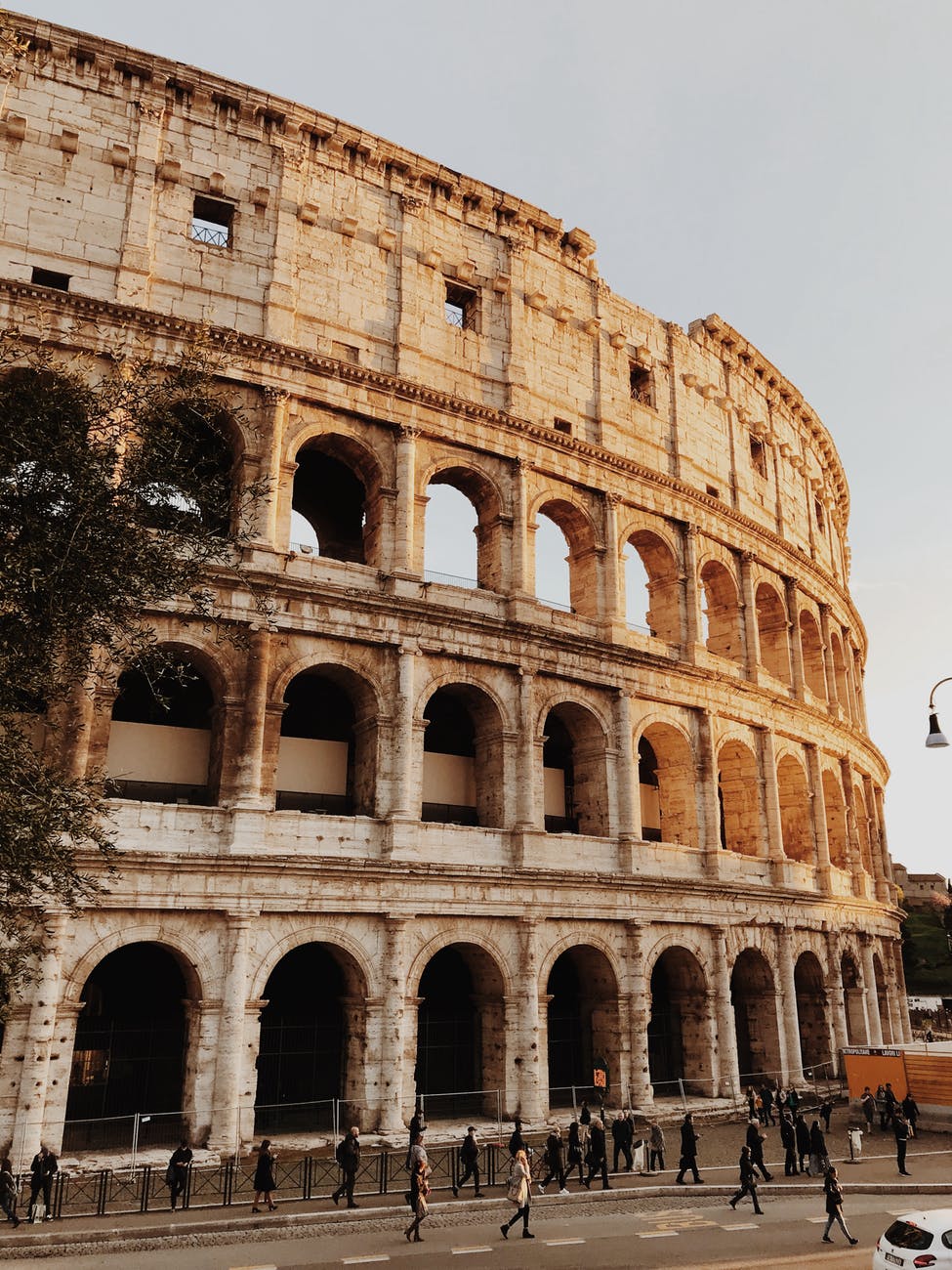
remember what you were

colosseum ruin
Photo by Mark Neal on Pexels.com

Ephesians 2:11-12 (JDV)

Ephesians 2:11 For this reason,1 remember that at one time you were Gentiles in the flesh – called “the uncircumcised” by those called “the circumcised,” which is done in the flesh by human hands.

Ephesians 2:12 At that season you were without Christ, excluded from the citizenship of Israel, and foreigners to the covenants of promise, without hope and without God in the world.

remember what you were

Paul paints a vivid picture of the Ephesians’ former condition—not to shame them, but to magnify the grace that rescued them. Before Christ entered their lives, their spiritual situation could be described in six stark statements, each one highlighting a different kind of separation.

  • They had no sign linking them to God’s promise to Abraham. Israel bore the covenant mark that identified them as God’s chosen people, but the Gentiles had no such sign, no visible connection to the story of redemption God had been writing for centuries.
  • They had no Messiah as their king. Israel lived with the hope of the Anointed One who would rule, rescue, and restore. The Gentiles had no such expectation, no royal figure promised to them, no king who would claim them as His own.
  • They had no citizenship in God’s kingdom. They were outsiders—foreigners to the commonwealth of Israel, without the rights, privileges, or protections that came from belonging to God’s people.
  • They had no covenants connecting them to God’s promises for the future. The great commitments God made—to bless, to redeem, to restore—were unknown to them. They had no anchor in God’s unfolding plan.
  • They had no hope beyond death. Without the promises of God, the future held nothing but the grave. There was no expectation of resurrection, no assurance of eternal life, no destiny shaped by God’s love.
  • They were not connected to God in His world. They lived in the creation He made, breathed the air He provided, and enjoyed the gifts He gave, yet remained estranged from the Creator Himself.
  • This was their past—real, bleak, and spiritually barren. But Paul’s point is not to dwell on the darkness. His point is to celebrate the transformation. All of that changed the moment they accepted Christ. In an instant, they were brought into the story of Abraham, given a Messiah-King, granted citizenship in God’s kingdom, connected to the covenants of promise, filled with hope for eternal life, and reconciled to God Himself.
  • The same grace that transformed the Ephesians continues to transform people today. The same Christ who welcomed them stands ready to welcome anyone who turns to Him in faith. The distance between spiritual emptiness and spiritual fullness is crossed in a single step of trust.
  • Lord, draw more new citizens into your kingdom by introducing them to king Jesus!

1διό

Posted in commitment, Jesus Christ, Uncategorized | Tagged | Leave a comment

what we were recreated for

heart shaped pink and purple flower garden
Photo by SHAHBAZ AKRAM on Pexels.com

Ephesians 2:8-10 (JDV)

Ephesians 2:8 You see,1 you are saved by favor through faith, and this is not from yourselves; it is God’s gift–

Ephesians 2:9 not from achievements,2 so that no one can boast.

Ephesians 2:10 You see, we are his workmanship, created in Christ Jesus for good achievements, which God prepared ahead of time for us to do.

what we were recreated forPaul’s summary of salvation in Ephesians 2:8–10 is not a polite reminder that good works cannot earn eternal life. It is a sweeping description of what God has actually done in those who believe. Salvation is not an achievement; it is a creation. It is not the result of human effort; it is the result of divine craftsmanship. And because it is God’s work from beginning to end, the life that follows is shaped by His power, not by human striving.

A person can never secure salvation by doing good things. Paul insists on that with absolute clarity. Human goodness, however sincere, cannot erase guilt or restore life. The problem is not a lack of effort but a lack of life. Dead people cannot perform the works that please God. That is why salvation must come by God’s favor—His gracious initiative to make the dead alive in Christ. Only after God gives life can genuine good works appear.

Once God has acted, however, everything changes. The door opens to a whole new world of good achievements. These are not attempts to earn God’s approval; they are the natural fruit of being united to Christ. Paul describes believers as God’s workmanship, His handiwork, His new creation. They have been created in Christ Jesus for good works—works that God prepared beforehand, works that flow from the resurrected life now beating within them. Good achievements are not the cause of salvation; they are its evidence.

This is why being in Christ is essential. Good works that arise from human effort alone may appear noble, but they cannot fulfill God’s purpose. Only those who share Christ’s life can share Christ’s works. Only those who have been raised with Him can walk in the path He has prepared. Outside of Christ, even the best intentions fall short of God’s standard. Inside Christ, even the smallest act of love becomes part of God’s eternal design.

So if someone is not in Christ and hopes that doing enough good things will balance out the bad, Paul’s answer is sobering: that will never happen. The scales cannot be tipped by human effort. But if someone is in Christ—if God has made them alive by His grace—then good things can be expected. Not because of human strength, but because God has recreated them for this very purpose.

Believers are not merely forgiven; they are remade. And the life that flows from that new creation is a life filled with the good achievements God delights to bring forth.

Lord, thank you for extending your favor to save us. We commit ourselves to doing good things, in response to your favor. It is what we were recreated for.

1γάρ

2ἔργον

Posted in goodness, grace, Uncategorized, works | Tagged | Leave a comment

raised up and seated

landscape photography of factory during daytime
Photo by Pixabay on Pexels.com

Ephesians 2:6-7 (JDV)

Ephesians 2:6 He also raised us up with him and seated us with him in the sky realms in Christ Jesus,

Ephesians 2:7 so that in the coming ages he might display the immeasurable riches of his favor through his kindness to us in Christ Jesus.

raised up and seatedPaul’s language in Ephesians 2:5–6 is deliberately startling. He does not say that believers will be raised and seated with Christ someday—though that is certainly true. He says that God already raised them with Christ and already seated them with Christ in the heavenly realms. The timing is crucial. According to Paul’s grammar, this happened when God raised and exalted Jesus Himself. The verbs συνεγείρω (“raise together with”) and συγκαθίζω (“seat together with”) each contain the idea of “with Him” inside the verb itself. Paul is not adding a separate prepositional phrase; he is describing a single divine action in which Christ’s resurrection and the believer’s new life are inseparably linked.

This means that the decisive moment for the believer’s spiritual position was not the day of personal conversion but the day Christ walked out of the tomb. God’s act toward Christ included, in God’s intention, His act toward all who would belong to Christ. When Jesus was raised, the future resurrection-life of His people was already secured. When Jesus was enthroned, the future destiny of His people was already established. Believers appropriate this reality “by faith in the working of God, who raised Him from the dead” (Colossians 2:12). Faith does not create the reality; it receives and participates in what God has already done.

Yet Paul is equally clear that this present participation is figurative, not physical. Believers do not yet possess resurrected bodies, nor do they presently sit on heavenly thrones. What they possess now is the status, identity, and power that flow from Christ’s resurrection. They share His life, His victory, and His access to the Father. They are no longer under the dominion of the flesh or the tyranny of the evil one. They live in the overlap of the ages—already raised in spirit, not yet raised in body.

This “pre‑resurrection” shapes the entire Christian life. Because believers have been raised with Christ, they are called to seek the things above (Colossians 3:1). Their conduct, desires, and priorities must align with the new realm to which they already belong. The Christian life becomes a process of learning to live according to this new status—rejecting the patterns of the old world and embracing the life of the risen Christ.

The present resurrection is therefore both a gift and a summons. It assures believers of their future glory and calls them to live now in the power and identity that Christ has already secured.

Lord, when we feel at our lowest, remind us where we are in your sight.

Posted in faith, relationship with God, sanctification | Tagged | Leave a comment

pre-resurrection

woman in orange academic dress
Photo by Feedyourvision on Pexels.com

Ephesians 2:4-5 (JDV)

Ephesians 2:4 But God, who is rich in mercy, because of his great care that he had for us,

Ephesians 2:5 made us alive with Christ even though we were dead in violations. You are saved by favor!

pre-resurrectionPaul portrays conversion with language that reaches far beyond the idea of adopting a new belief system or joining a new religious community. He describes it as a pre‑resurrection, an event in which God brings the spiritually dead to life by sharing with them the very life of the risen Christ. Conversion is not merely intellectual agreement or moral reform. It is the moment when God breathes resurrection life into those who were dead in trespasses and sins. The life believers now possess is not a refurbished version of their old existence; it is Christ’s resurrected life, imparted by grace. To be “made alive with Christ” is to participate already in the life that burst forth from the tomb on Easter morning.

Yet Paul is equally clear that this pre‑resurrection does not replace the final resurrection Jesus promised at the last day. Believers do not yet possess immortal bodies, nor have they entered the fullness of the age to come. The transformation they experience now is real but partial, powerful but incomplete. It is the beginning of resurrection life, not its consummation. The full unveiling of what God has prepared will occur when Christ returns and the dead are raised incorruptible.

The purpose of this present resurrection life is profoundly practical. It is given so that believers will no longer live as “children of disobedience,” trapped in the patterns that once defined them. Before God acted, their lives were shaped by the flesh, dominated by the world’s values, and influenced by the evil one. They lived in a state Paul describes as death—not the absence of activity, but the absence of God’s life. The pre‑resurrection breaks that pattern. It frees believers from the old dominion and enables them to walk in newness of life.

This new life also restores God’s rightful rule over His people. Satan had usurped that dominion through deception and sin, shaping human desires and directing human behavior away from God. But when God makes believers alive with Christ, He reclaims what is His. The resurrected life within them becomes the power by which they resist the old master and live under the lordship of Christ. The pre‑resurrection is therefore both liberation and restoration—liberation from the tyranny of sin and restoration to the reign of God.

Paul’s vision of conversion invites believers to see themselves as people already touched by resurrection power, already living in the light of the age to come, already bearing the life of Christ within. It is the beginning of a story that will end in glory.

Lord, we are ready to live the pre-resurrection life you have given us.

Posted in sanctification | Leave a comment

the living dead

horror crime death psychopath
Photo by Tookapic on Pexels.com

Ephesians 2:1-3 (JDV)

Ephesians 2:1 And you were dead in your violations and sins

Ephesians 2:2 in which you previously lived during the age of this world, according to the ruler of the power of the air, the breath now achieving things among the disobedient sons.

Ephesians 2:3 Among whom we too all previously lived with our fleshly cravings,1 carrying out the preferences of our flesh and thoughts, and we were by nature children under wrath as the others were also.

the living dead

Paul is not sketching a scene from a horror story. He is describing the ordinary, everyday existence of an unbeliever before God’s gracious invitation breaks in and changes everything. It is real life—full of real choices, real emotions, real responsibilities—but it is life lived entirely within the limits of the flesh. It is life animated by desires that cannot lead to God, shaped by patterns that cannot produce righteousness, and directed by impulses that cannot bring true freedom.

Paul calls this life the condition of a child under wrath. Not because unbelievers are uniquely monstrous, but because separation from God places them under the natural consequence of sin. It is life lived outside the sphere of God’s saving presence. It is also life under the sway of the evil one, whose influence distorts human desires and blinds the mind to the truth. This is not dramatic possession but subtle domination—an unseen shaping of values, priorities, and behaviors. The result is predictable: a life that inevitably expresses itself in disobedience. Not because people are trying to be wicked, but because apart from God’s Breath, disobedience is the only path available.

This is the “night of the living dead” Paul describes—a life that moves, thinks, and acts, yet remains cut off from the source of true life. It is existence without resurrection power, motion without spiritual vitality, activity without the life of God.

But Paul’s point is not to condemn. His point is to celebrate the rescue. Believers have been delivered out of that condition. They have been transferred from death to life, from darkness to light, from the dominion of the evil one to the reign of Christ. The same power that raised Jesus from the dead now animates their lives. They are no longer defined by the flesh but empowered by the Spirit.

Because of this, believers can walk in a new way. Their lives can reflect the image of the resurrected Christ. They can embody His character, display His compassion, and participate in His mission. They are not merely individuals trying to improve themselves; they are members of His body, sharing His life and expressing His presence in the world.

The contrast is stark, but it is meant to inspire hope. What once was true no longer defines them. The resurrection life of Christ now shapes their identity, their walk, and their destiny.

What will it be?

1ἐπιθυμία

Posted in obedience, sin, the flesh | Tagged | Leave a comment