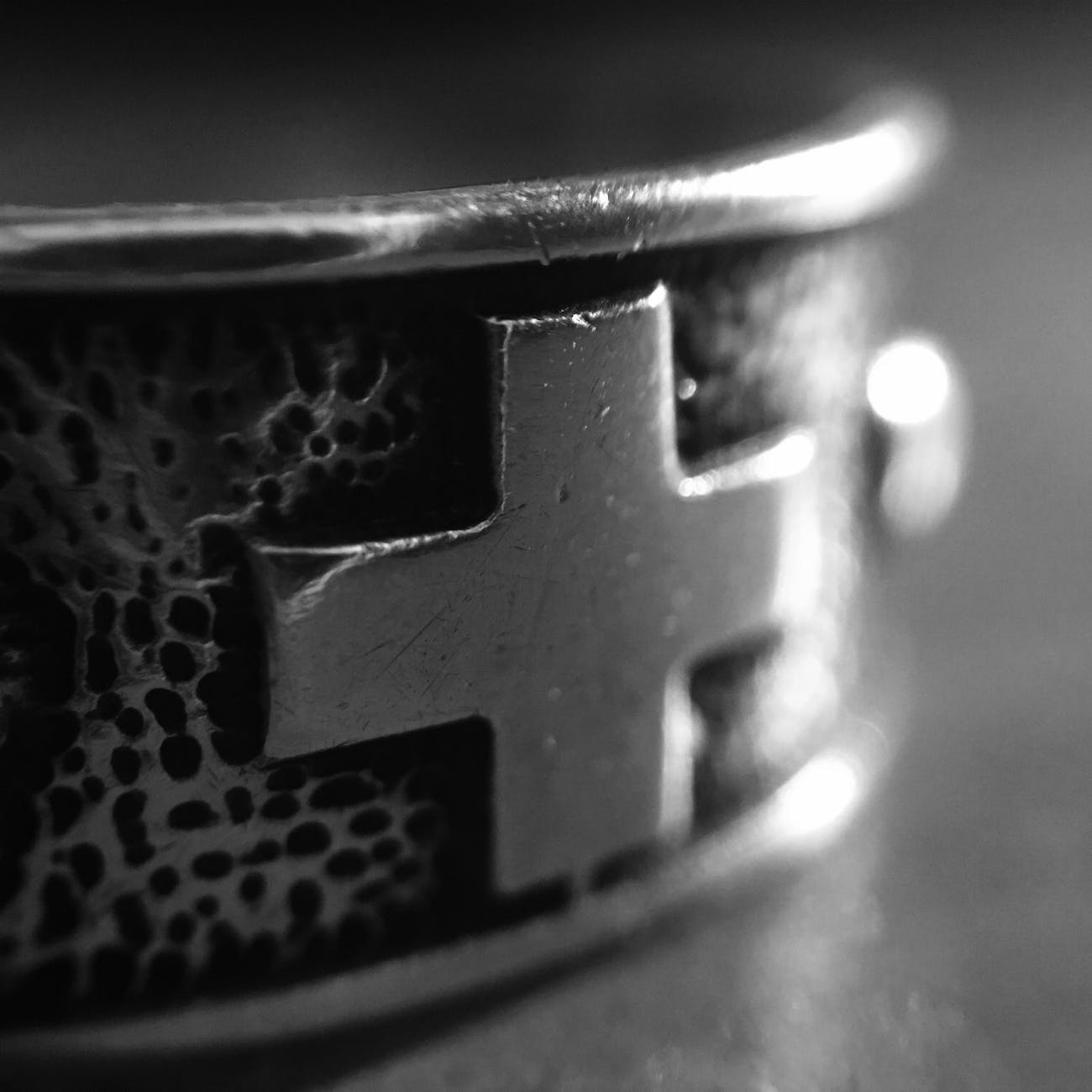
He chose the cross

20230909

Photo by Miczu on Pexels.com

he chose the cross

Hebrews 12:1-2 (JDV)

Hebrews 12:1 It is for that reason since we also have such a large cloud of testifiers around us, let us lay aside every hindrance and the failure that so easily ensnares us. Let us run with endurance the race that lies before us,
Hebrews 12:2 keeping our eyes on Jesus, the source and perfecter of our faith. In exchange for the joy that lay before him, he endured the cross, thinking little of the shame, and sat down at the right hand of the throne of God.

he chose the cross

Our Lord did not go to the cross to gain favor, status, or standing with the Father. He already possessed all of that. From eternity He was the Beloved Son, fully pleasing to the Father, lacking nothing. The cross did not elevate Him; it revealed Him. It did not earn Him joy; it expressed the joy that was already His. Hebrews teaches that He endured the cross “for the joy set before Him,” not because He needed to secure His own future, but because He delighted in accomplishing the Father’s will and redeeming a people for God. His sacrifice was not self‑advancement but self‑giving love.

This becomes the pattern for understanding the race of faith. The Christian life is not a quest to earn God’s approval or to achieve spiritual status. Approval has already been granted in Christ. Standing has already been given. The race is not run to gain something for oneself but to participate in the joy of God’s redeeming work. Just as Christ embraced suffering for the sake of others, believers are called to endure hardship so that others may come to know forgiveness, resurrection, and life.

This perspective reshapes the meaning of endurance. Difficulties are not hurdles to personal achievement but opportunities to reflect the character of Christ. The race is not about accumulating spiritual victories or building a résumé of accomplishments. It is about offering oneself in service, love, and witness. The joy set before believers is not self‑glory but the privilege of seeing others experience the grace that has already been received.

Christ’s example shows that true greatness is found in giving, not gaining. He did not run His race to secure His identity but to bring others into the life He already possessed. In the same way, the race of faith is run with a view toward the good of others. Endurance becomes an act of love. Sacrifice becomes a means of grace. Perseverance becomes a testimony that points beyond the self to the Savior.

The cross teaches that the highest form of obedience is motivated by joy, not ambition. The race is run not to achieve something for oneself but to participate in the joy of God’s redeeming purpose, so that others may come to know the forgiveness and resurrection found in Christ.
Posted in perseverance | Tagged | Leave a comment

not worthy of them

20230908

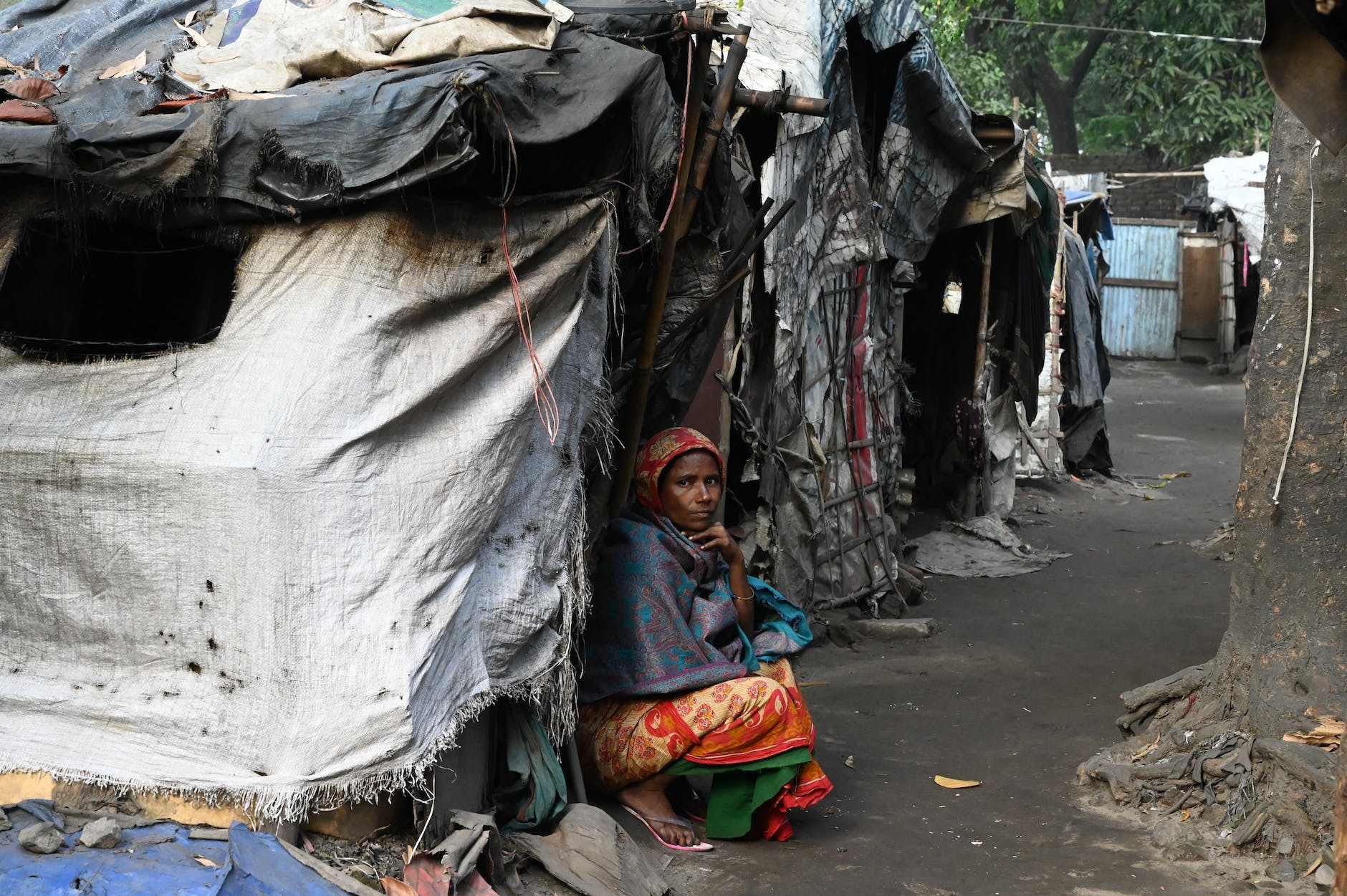
Photo by Mumtahina Tanni on Pexels.com

not worthy of them

Hebrews 11:36-40 (JDV)

Hebrews 11:36 Others experienced mockings and scourgings, as well as chains and imprisonment.
Hebrews 11:37 They were stoned, they were sawed in two, they died by the sword, they wandered about in sheepskins, in goatskins, destitute, afflicted, and mistreated.
Hebrews 11:38 The universe was not worthy of them. They wandered in deserts and on mountains, hiding in caves and holes in the ground.
Hebrews 11:39 All these were approved through their faith, but they did not receive what was promised,
Hebrews 11:40 since God had provided something better for us, so that they would not be made perfect without us.

not worthy of them

The closing section of Hebrews 11 is one of the most beautiful and easily overlooked treasures in the entire chapter. After listing the famous names—Abel, Enoch, Noah, Abraham, Sarah, Moses, Rahab—the writer suddenly shifts. He stops naming names. He stops telling stories. He simply says “others.”

Others who suffered.
Others who were rejected.
Others who were tortured.
Others who wandered.
Others who died without rescue.

And then he says something astonishing:

“The world was not worthy of them.”
“They were approved through their faith.”

These unnamed believers are not second‑class citizens in the kingdom. They are not the “leftovers” of faith history. They are the hidden heroes—the ones heaven celebrates even though earth ignored them. Their names are not written in Hebrews, but they are written in the Lamb’s book of life. Their stories were not preserved in earthly records, but they are preserved in God’s memory. Their victories were not visible, but their faith was.

And you’re right: many of them never saw a Passover.
They never walked through parted waters.
They never watched walls fall.
They never tasted earthly deliverance.

But they were not losers.
They were not forgotten.
They were not less faithful.

They ran the race just as well as Moses or Joshua or David. They simply ran a different leg of the race—one that required endurance rather than triumph, suffering rather than spectacle, perseverance rather than miracles. Their finish line is still ahead, and they will cross it with honor when Christ appears.

This is the comfort Hebrews offers to every believer who feels unseen, uncelebrated, or unrescued:

Victory now or vindication later—faith wins either way.

And when the marriage feast of the Lamb begins, these “others” will not be in the back row. They will be honored guests. For many of them, it will be their first celebration ever.

Let us walk in their footsteps—quiet, steady, unseen, but approved by God.

Posted in faith, future | Tagged | Leave a comment

victory now or vindication later

20230907

Photo by Jordan Benton on Pexels.com

victory now or vindication later

Hebrews 11:32-35 (JDV)

Hebrews 11:32 And what more can I say? Time is too short for me to tell about Gideon, Barak, Samson, Jephthah, David, Samuel, and the prophets,
Hebrews 11:33 who by faith conquered kingdoms, administered justice, obtained promises, shut the mouths of lions,
Hebrews 11:34 quenched the raging of fire, escaped the mouth of the sword, gained strength in weakness, became mighty in battle, and put foreign armies to flight.
Hebrews 11:35 Women received their dead, raised to life again. Other people were tortured, not accepting release so that they might gain a better resurrection.

Hebrews 11 ends with one of the most liberating truths in the entire chapter: faithful people do not all experience the same kind of victory, but they all receive the same verdict from God—“approved.” The world measures success by visible triumphs. God measures it by persevering trust.

Some believers in the chapter overcame
they conquered kingdoms, shut the mouths of lions, escaped the sword, and saw miracles. Their faith produced visible, undeniable victories.

Other believers in the chapter endured
they were mocked, imprisoned, tortured, sawn in two, and killed. Their faith produced no earthly victory at all. Yet Hebrews says they “gained a better resurrection.” Their vindication was not in this life but in the next.

Both groups are called heroes.
Both groups are commended.
Both groups pleased God.

The difference was not their circumstances but their confidence.

That is why your line captures the heart of the passage so well:

victory now or vindication later

If you are not “winning” right now—
if the walls are not falling,
if the seas are not parting,
if the lions are not shutting their mouths,
if the suffering is not lifting—
that does not mean your faith is weak or your story is failing.

It may simply mean you are in the second category:
the category of those who will be vindicated later.

Your troubles do not get the last word.
Your losses do not define your legacy.
Your suffering does not cancel your faith.
Your endurance is seen, remembered, and honored by God.

Stay focused on your faith.
Stay anchored in the unseen.
Stay confident that the God who vindicated the saints of old will vindicate you as well.

Victory now or vindication later—
either way, faith wins.

Posted in faith, second coming | Tagged | Leave a comment

expecting him to overcome

20230906

Photo by Andrea Piacquadio on Pexels.com

expecting him to overcome

Hebrews 11:30-31 (JDV)

Hebrews 11:30 By faith the walls of Jericho fell down after being marched around by the Israelites for seven days.
Hebrews 11:31 By faith Rahab the prostitute welcomed the spies in peace and didn’t perish with those who disobeyed.

expecting him to overcome

The fall of Jericho and the rescue of Rahab stand together as a vivid picture of what it means to live by faith in a world filled with obstacles and opposing powers. The Israelites did not deny the reality of the wall. They walked around it for seven days. They felt its shadow. They knew its strength. But they also knew something greater: the wall was not an obstacle to their God. What looked immovable to human eyes was nothing before the One who had promised the land.

Rahab, on the other hand, saw the danger from the inside. She lived under the authority of a king who would have executed her for treason. She lived in a city whose walls seemed impenetrable. But she had heard the stories—stories of a God who dried up seas, defeated kings, and kept His word. She believed those stories enough to risk everything. Her faith was not blind; it was informed. She expected the God of Israel to prevail, and she aligned herself with Him before the walls ever fell.

That is the pattern for us.

Faith does not ignore obstacles. Faith names them, measures them, and then places them beneath the authority of God.
We see the walls. We see the armies. We see the cultural pressures, the spiritual battles, the personal weaknesses, the sins that cling, the fears that rise. But we also see the God who stands above them.

Our task as believers is not to pretend the obstacles aren’t real. It is to recognize them fully—and then expect our God to overcome them.

Jericho’s walls were real.
Pharaoh’s army was real.
The destroyer in Egypt was real.
The dangers Rahab faced were real.

But God was more real.

And He still is.

Faith is not wishful thinking. It is confidence in the God who has already proven Himself faithful. When we face obstacles, we do what Israel and Rahab did: we acknowledge the challenge, and then we expect our God to act.

Posted in faith | Leave a comment

seeing the invisible

20230905

Photo by Kalpit Khatri on Pexels.com

seeing the invisible

Hebrews 11:27-29 (JDV)

Hebrews 11:27 By faith he left Egypt behind, not being afraid of the king’s anger because Moses persevered as one who sees him who is invisible.
Hebrews 11:28 By faith he instituted the Passover and the sprinkling of the blood so that the destroyer of the firstborn might not touch the Israelites.
Hebrews 11:29 By faith they crossed the Red Sea as if they were on dry land. When the Egyptians attempted to do this, they were drowned.

seeing the invisible

Moses’ life is a masterclass in learning to see what cannot be seen. Twice in Hebrews 11 the writer highlights this theme—first in the Passover, then at the Red Sea. In both moments, the visible world screamed danger, but the invisible God was at work in ways only faith could perceive.

In Egypt, an invisible power moved through the land—real, unstoppable, and deadly. No one could see the destroyer. No one could measure or predict his path. But Moses believed what God said about that unseen threat. And because he believed, he acted. He taught the people what to do. He trusted that the blood of the lamb would shield them. Faith allowed him to see what others could not.

At the Red Sea, the visible world presented an impossible barrier. Water in front. Soldiers behind. No escape. No strategy. No human solution. But Moses saw something else—an invisible power capable of holding back the sea itself. He lifted his staff not because the situation made sense, but because God had spoken. Faith allowed him to see the unseen hand that would open a path where no path existed.

This is the pattern Hebrews wants us to grasp:
Faith is not pretending the visible world isn’t real. Faith is recognizing that the invisible God is more real.

And that possibility is open to us as well.

Seeing the invisible is not a mystical gift reserved for prophets. It is the fruit of trusting a God who delights to reveal Himself to those who believe Him. When you trust Him, you begin to see His fingerprints in places others overlook. You begin to sense His guidance when others feel lost. You begin to recognize His protection when others see only danger. You begin to expect His intervention when others expect defeat.

Faith does not make life easy. It makes God visible.

And the God who proved Himself to Moses is the same God who walks with you today.

Posted in faith, trust | Tagged | Leave a comment

the first lesson in faith

20230904

Photo by Pixabay on Pexels.com

the first lesson in faith

Hebrews 11:23-26 (JDV)

Hebrews 11:23 By faith Moses, after he was born, was hidden by his parents for three months, because they saw that the child was beautiful, and they didn’t fear the king’s edict.
Hebrews 11:24 By faith Moses, when he had grown up, refused to be called the son of Pharaoh’s daughter
Hebrews 11:25 and chose to suffer with the people of God rather than to enjoy the fleeting pleasure of failure.
Hebrews 11:26 You see, he considered reproach for the sake of Christ to be greater wealth than the treasures of Egypt, since he was looking ahead to the payment.

the first lesson in faith

Amram and Jochebed stand as quiet giants in the story of faith. Before Moses ever made a choice, before he ever heard God’s voice from a burning bush, before he ever confronted Pharaoh, his parents had already taken their stand. His life of faith began with their faith. They saw danger clearly, but they saw God more clearly. They saw a helpless infant, but they also saw an invisible Almighty. And that vision shaped everything they did.

Their courage was not reckless. It was rooted in love and anchored in loyalty. They loved their child enough to risk their lives. And they feared God enough to defy the king. Pharaoh’s sword was real, but God’s authority was greater. That is why they hid Moses. That is why they acted. That is why their story is remembered.

This is the calling of every parent and grandparent who walks by faith. Children do not see the dangers that surround them—spiritual dangers, moral dangers, cultural dangers, dangers that threaten their souls long before they threaten their bodies. They cannot discern what they cannot yet understand. So God places faithful adults in their lives to shield them, guide them, and teach them to see the invisible.

Amram and Jochebed did more than protect Moses. They taught him—by their actions—what it means to trust the unseen God. Moses’ first lesson in faith did not come from a burning bush. It came from two parents who feared God more than Pharaoh, who trusted God more than circumstances, and who acted on that trust when it mattered most.

Their story reminds us that faith is often first learned at home. It is caught before it is taught. And the courage of one generation becomes the foundation of the next.

Posted in discipleship, faith | Tagged | Leave a comment

comma, not a period

20230903

Photo by Erik Karits on Pexels.com

comma, not a period

Hebrews 11:20-22 (JDV)

Hebrews 11:20 By faith Isaac blessed Jacob and Esau concerning things to come.
Hebrews 11:21 By faith Jacob, when he was dying, blessed each of the sons of Joseph, and he worshiped, leaning on the top of his staff.
Hebrews 11:22 By faith Joseph, as he was nearing the end of his life, mentioned the exodus of the Israelites and gave instructions concerning his bones.

comma, not a period

These three men—Isaac, Jacob, and Joseph—stand in Hebrews 11 as examples of a faith that looks beyond the moment of death without denying the reality of death. They did not pretend death was an illusion. They did not comfort themselves with the idea that death is a doorway into a conscious heavenly existence. Their confidence was not rooted in escaping death but in what God would do after death.

They faced death with clarity, not denial. They blessed their descendants, spoke of the future, and gave instructions about what would happen long after they were gone. Why? Because they believed that God’s promises extended beyond their lifetimes. They believed that death was not the end of God’s story for them. They believed that the God who had spoken would still be God on the other side of their graves.

Death, for them, was a comma—not a period.

They could see the future because God had revealed it. They could remain confident because God would be there. Their faith was not in their own endurance but in God’s faithfulness. They died, but they died looking forward. They died trusting that the same God who had guided their steps would one day raise them from the dust and fulfill every promise He had made.

This is the kind of faith Hebrews celebrates—not a denial of death, but a defiance of death’s finality. A faith that sees beyond the grave because it sees the God who stands beyond the grave.

Posted in future, sleep of death | Tagged | 1 Comment

resolve to be ridiculous

20230902

Photo by Princess Mijares on Pexels.com

resolve to be ridiculous

Hebrews 11:17-19 (JDV)

Hebrews 11:17 By faith Abraham, when he was tested, offered up Isaac. He received the promises and yet he was offering his one and only son,
Hebrews 11:18 the one to whom it had been said, Your offspring will be called through Isaac.
Hebrews 11:19 He considered God to be able even to raise someone from the dead; therefore, he received him back, figuratively speaking.

resolve to be ridiculous

Abraham’s test looked absurd from every human angle. God asked him to do something that violated instinct, emotion, logic, and even the promise God Himself had made. Nothing about the command made sense—except the character of the One who gave it. That was the hinge. Abraham obeyed not because the command was reasonable, but because the Commander was trustworthy. Faith often looks like that: stepping forward when the path looks impossible, because the God who calls is faithful.

Your observation captures the heart of Hebrews 11. Faith is not a heroic confidence in our own ability. It is the settled conviction that God can be trusted even when His instructions stretch us beyond what seems sensible. Abraham’s test was not about Isaac. It was about whether Abraham believed that God could solve a problem Abraham could not even imagine solving. And Abraham concluded that God could—even if it meant raising the dead.

That is where every test of faith eventually leads: to the end of our ability and the beginning of God’s. When we reach the point where we say, “This makes no sense,” God is often saying, “Now you’re ready to trust Me.” When we reach the point where we say, “I can’t fix this,” God is saying, “Good—now watch what I can do.” Faith is not reckless; it is responsive. It listens for the Father’s voice and obeys, even when obedience feels unreasonable.

You’re right: you cannot create a problem God cannot solve. You cannot walk into a situation where His wisdom is insufficient. You cannot face a test where His power is inadequate. The tests that feel ridiculous to us are often the very places where God intends to reveal His glory.

Abraham’s story is not meant to intimidate us but to invite us. The God who carried him through the impossible is the same God who walks with you today.

Posted in faith, trust | Tagged | Leave a comment

the better place

20230901

Photo by Quang Nguyen Vinh on Pexels.com

the better place

Hebrews 11:13-16 (JDV)

Hebrews 11:13 These all died in faith, although they had not received the promised things. But they saw them from a distance, greeted them, and confessed that they were foreigners and temporary residents on the land.
Hebrews 11:14 Now those who say such things make it clear that they are seeking a homeland.
Hebrews 11:15 If they were thinking about where they came from, they would have had an opportunity to return.
Hebrews 11:16 But they now desire a better place – one from the sky. Therefore, God is not ashamed to be called their God, for he has prepared a city for them.

the better place

The writer of Hebrews is remarkably consistent: the “better place” is not heaven as a disembodied realm, nor is it the destination of believers at death. It is the future world God has promised—a world that will be revealed when Christ appears. The hope of the faithful is not escape from the earth but the arrival of God’s kingdom to the earth.

Abraham understood this. He walked the land of promise as a foreigner, not because the land was unimportant, but because its fulfillment lay in the future. He looked for a city “whose architect and builder is God,” a city that comes down from heaven, not one we ascend to. Daniel saw the Son of Man coming with the clouds of the sky, bringing dominion with him. John saw the holy city descending from the sky, establishing God’s dwelling with humanity. Both visions point forward to the same moment—the appearing of Christ.

None of these visions describe what happens at death. They describe what happens at the return of the King.

That is why Paul calls it “the blessed hope—the glorious appearing of our great God and Savior, Jesus Christ” (Titus 2:13). The hope is not death. The hope is not heaven. The hope is the appearing. That is when the better place arrives. That is when the promises are fulfilled. That is when the inheritance becomes visible. That is when the world is made new.

We walk today in the land our Savior has promised to renew. We wait for the city Abraham longed for. We look for the King Daniel saw. We anticipate the descent John witnessed. And when he appears, the better place will appear with him.

Posted in kingdom of God, second coming | Tagged | 1 Comment

beyond our personal limits

20230831

Photo by Anna Shvets on Pexels.com

beyond our personal limits

Hebrews 11:11-12 (JDV)

Hebrews 11:11 By faith even Sarah herself, when she was unable to have children, received power to conceive offspring, even though she was past the age since she considered that the one who had promised was faithful.
Hebrews 11:12 Therefore, from one man – in fact, from one as good as dead – came offspring as numerous as the stars of the sky and as innumerable as the grains of sand along the seashore.

beyond our personal limits

Sarah’s story is one of Scripture’s clearest reminders that God delights in beginning where human ability ends. The text does not soften her condition. It emphasizes it. She was unable to conceive. Not “unlikely,” not “delayed,” not “struggling”—unable. And even if she had once been able, that season had long passed. She was “past the age.” The window was closed. The opportunity was gone. Humanly speaking, the story was over.

But that is precisely where God writes His best chapters.

Sarah’s womb was not merely weak; it was dead. And God chose that very place to display His power. He waited until every natural possibility had expired so that the child of promise would be unmistakably the work of God. Isaac was not the product of human strength but of divine intervention. Sarah’s faith did not lie in her capacity but in God’s character. She judged Him faithful who had promised.

This is the pattern Paul describes in Ephesians 2. Salvation itself begins where our workmanship ends. We bring nothing but need. We contribute nothing but inability. And God meets us there—not with demands, but with grace. “By grace you are saved through faith… it is the gift of God.” Then, once the limits of our workmanship are exposed, God adds His workmanship. We become His creation, shaped for good works He prepared long before we ever imagined them.

God starts where we stop.

He begins where we break.

He works where we cannot.

When we finally reach the point where we say, “I can’t,” heaven answers, “Now we can begin.” That is the soil in which faith grows. That is the moment when God’s power becomes visible. Sarah’s story is not an exception—it is a pattern. God delights in using the places of our inability as the stage for His glory.

Wherever your limits lie today, that is where faith begins. That is where God is ready to work.

Posted in faith, miracles, trust | Tagged | Leave a comment