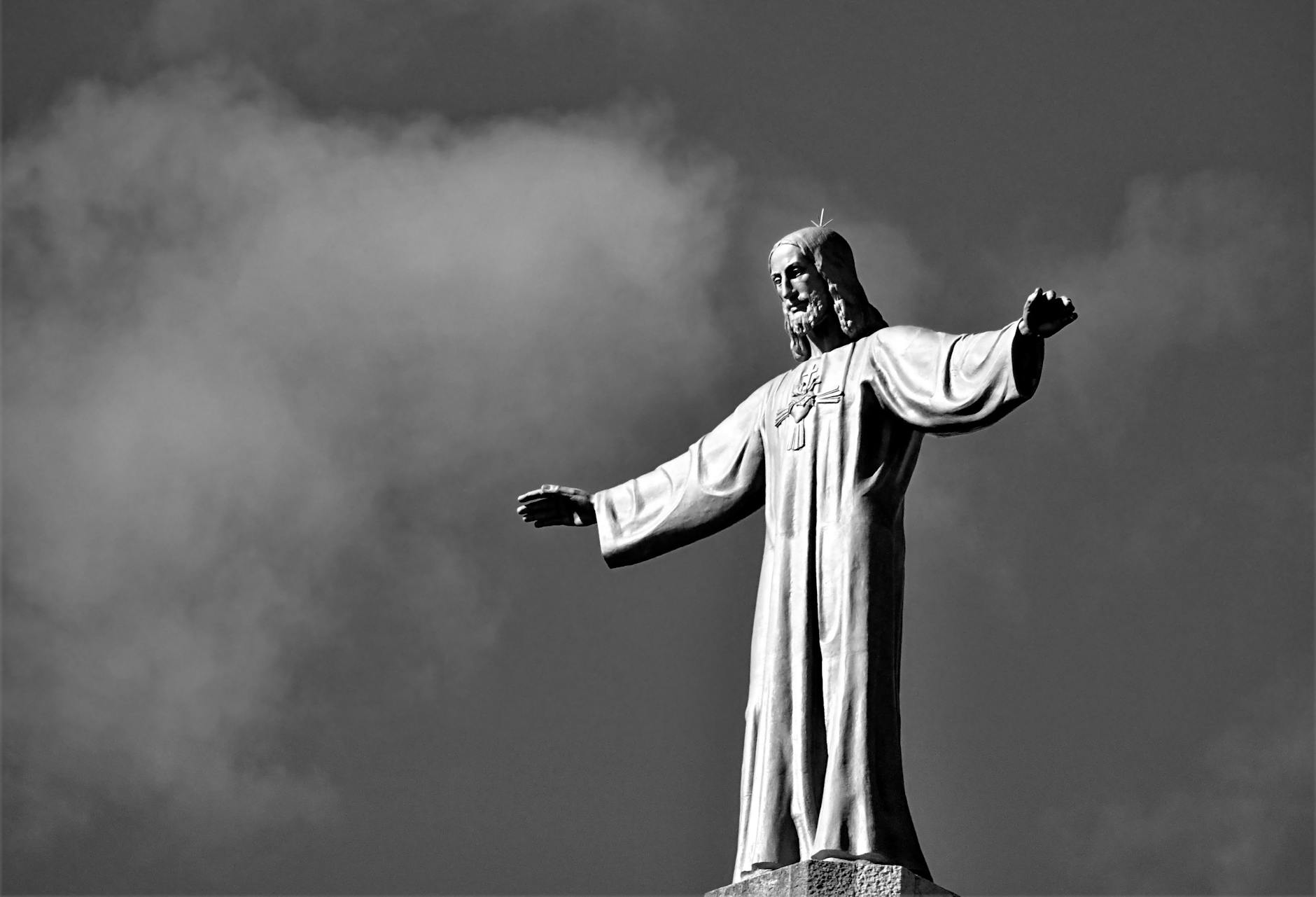
what Mordecai knew

20250519

Photo by Pixabay on Pexels.com

what Mordecai knew

Esther 2:1-23

Esther 2:1 Sometime later, when King Ahasuerus’s rage had cooled down, he remembered Vashti, what she had done, and what was decided against her.
Esther 2:2 The king’s attendants suggested, “Let a search be made for beautiful young virgins for the king.
Esther 2:3 Let the king appoint commissioners in each province of his kingdom so they may gather all the beautiful young virgins to the harem at the fortress of Susa. Put them under the supervision of Hegai, the king’s eunuch and keeper of the women, and give them the required beauty treatments.
Esther 2:4 The young woman who pleases the king will become queen instead of Vashti.” This suggestion pleased the king, and he did accordingly.
Esther 2:5 In the fortress of Susa, there was a Jewish man named Mordecai son of Jair, son of Shimei, son of Kish, a Benjaminite.
Esther 2:6 He had been taken into exile from Jerusalem with the other captives when King Nebuchadnezzar of Babylon took King Jeconiah of Judah into exile.
Esther 2:7 Mordecai was the legal guardian of his cousin Hadassah (Esther) because she had no father or mother. The young woman had a beautiful figure and was extremely good-looking. When her father and mother died, Mordecai had adopted her as his daughter.
Esther 2:8 When the king’s command and edict became public knowledge and when many young women were gathered at the fortress of Susa under Hegai’s supervision, Esther was taken to the palace and placed under the supervision of Hegai, the keeper of the women.
Esther 2:9 The young woman pleased him and gained his favor, so he accelerated the beauty treatments and special diet she received. He assigned her seven hand-picked female servants from the palace and transferred her and her servants to the harem’s best quarters.
Esther 2:10 Esther did not reveal her ethnicity or family background because Mordecai had ordered her not to make them known.
Esther 2:11 Every day, Mordecai walked in front of the harem’s courtyard to learn how Esther was doing and to see what was happening to her.
Esther 2:12 During the year before each young woman’s turn to go to King Ahasuerus, the harem regulation required her to receive beauty treatments with myrrh oil for six months and then with perfumes and cosmetics for another six months.
Esther 2:13 When the young woman would go to the king, she was given whatever she requested to take from the harem to the palace.
Esther 2:14 She would go in the evening, and in the morning, she would return to a second harem under the supervision of the king’s eunuch Shaashgaz, keeper of the concubines. She never went to the king again unless he desired her and summoned her by name.
Esther 2:15 Esther was the daughter of Abihail, the uncle of Mordecai, who had adopted her as his daughter. When her turn came to go to the king, she did not ask for anything except what Hegai, the king’s eunuch, keeper of the women, suggested. Esther gained favor in the eyes of everyone who saw her.
Esther 2:16 She was taken to King Ahasuerus in the palace in the tenth month, Tebeth, in the seventh year of his reign.
Esther 2:17 The king loved Esther more than all the other women. She won more favor and approval from him than did any of the other virgins. He placed the royal crown on her head and made her queen in place of Vashti.
Esther 2:18 The king held a great banquet for all his officials and staff. It was Esther’s banquet. He freed his provinces from tax payments and gave gifts worthy of the king’s bounty.
Esther 2:19 When the virgins were gathered a second time, Mordecai was sitting at the King’s Gate.
Esther 2:20 (Esther had not revealed her family background or ethnicity, as Mordecai had directed. She obeyed Mordecai’s orders, as she always had while he raised her.)
Esther 2:21 During those days, while Mordecai was sitting at the King’s Gate, Bigthan and Teresh, two of the king’s eunuchs who guarded the entrance, became infuriated and planned to assassinate King Ahasuerus.
Esther 2:22 When Mordecai learned of the plot, he reported it to Queen Esther, and she told the king on Mordecai’s behalf.
Esther 2:23 When the report was investigated and verified, both men were hanged on the gallows. This event was recorded in the Historical Record in the king’s presence.

what Mordecai knew

Mordecai knew the sadness and loneliness of a little orphan girl named Hadassah. He loved his niece and made a home for her in his home. Mordecai knew the secret of who queen Esther was. He felt prompted by the LORD not to reveal that secret. Not yet. Mordecai knew that some worthless fellows were plotting to assassinate the king. God had so orchestrated the events so that what Mordecai knew was the most important news in the kingdom.

LORD, you have given us knowledge of how to rescue those doomed to destruction. Help us to share what we know, so that others might live.

Posted in gospel, sovereignty of God | Tagged | Leave a comment

two wrongs

20250518

Photo by RDNE Stock project on Pexels.com

two wrongs

Esther 1:1-22

Esther 1:1 These events took place during the days of Ahasuerus, who ruled 127 provinces from India to Cush.
Esther 1:2 In those days, King Ahasuerus reigned from his royal throne in the fortress at Susa.
Esther 1:3 He held a feast in the third year of his reign for all his officials and staff, the army of Persia and Media, the nobles, and the officials from the provinces.
Esther 1:4 He displayed the glorious wealth of his kingdom and the magnificent splendor of his greatness for a total of 180 days.
Esther 1:5 At the end of this time, the king held a week-long banquet in the garden courtyard of the royal palace for all the people, from the greatest to the least, who were present in the fortress of Susa.
Esther 1:6 White and violet linen hangings were fastened with delicate white and purple linen cords to silver rods on marble columns. Gold and silver couches were arranged on a mosaic pavement of red feldspar, marble, mother-of-pearl, and precious stones.
Esther 1:7 Drinks were served in an array of gold goblets, each with a different design. Royal wine flowed freely, according to the king’s bounty.
Esther 1:8 The drinking was according to royal decree: “There are no restrictions.” The king had ordered every wine steward in his household to serve whatever each person wanted.
Esther 1:9 Queen Vashti also gave a feast for the women of King Ahasuerus’s palace.
Esther 1:10 On the seventh day, when the king was feeling good from the wine, Ahasuerus commanded Mehuman, Biztha, Harbona, Bigtha, Abagtha, Zethar, and Carkas — the seven eunuchs who personally served him–
Esther 1:11 to bring Queen Vashti before him with her royal crown. He wanted to show off her beauty to the people and the officials because she was lovely.
Esther 1:12 But Queen Vashti refused to come at the king’s command, which was delivered by his eunuchs. The king became furious, and his anger burned within him.
Esther 1:13 The king consulted the wise men who understood the times, for it was his standard procedure to confer with experts in law and justice.
Esther 1:14 The most trusted ones were Carshena, Shethar, Admatha, Tarshish, Meres, Marsena, and Memucan. They were the seven officials of Persia and Media who had personal access to the king and occupied the highest positions in the kingdom.
Esther 1:15 The king asked, “According to the law, what should be done with Queen Vashti since she refused to obey King Ahasuerus’s command, which was delivered by the eunuchs?”
Esther 1:16 Memucan said in the presence of the king and his officials, “Queen Vashti has wronged not only the king but all the officials and the peoples in every one of King Ahasuerus’s provinces.
Esther 1:17 For the queen’s action will become public knowledge to all the women and cause them to despise their husbands and say, ‘King Ahasuerus ordered Queen Vashti brought before him, but she did not come.’
Esther 1:18 Before this day is over, the noble women of Persia and Media who hear about the queen’s act will say the same thing to all the king’s officials, resulting in more contempt and fury.
Esther 1:19 “If it meets the king’s approval, he should personally issue a royal decree. Let it be recorded in the laws of Persia and Media so that it cannot be revoked: Vashti is not to enter King Ahasuerus’s presence, and her royal position is to be given to another woman more worthy than she.
Esther 1:20 The decree the king issues will be heard throughout his vast kingdom so that all women will honor their husbands, from the greatest to the least.”
Esther 1:21 The king and his counselors approved the proposal, and he followed Memucan’s advice.
Esther 1:22 He sent letters to all the royal provinces, to each province in its script and each ethnic group in its language, that every man should be master of his own house and speak his people’s language.

two wrongs

This story explains how the vacancy in the Persian royal family came about. Readers today can be tempted to take sides in the dispute between the king and queen, but the truth is that they were both probably both very wrong in what they did. Both were obviously motivated by pride and stubbornness, and too much wine. The point for the biblical author is that although the human beings were acting foolishly, God was behind their actions, making room for his will. Likewise, there are many disappointing and challenging situations that believers will face in this life. While it is often difficult to see God’s hand in those circumstances, he is there. He can take two wrong choices and make something right out of them.

LORD, when we are discouraged and disappointed, help us to trust that you know what you are doing.

Posted in sovereignty of God, trust | Tagged | Leave a comment

watch this

20250517

Photo by Stephan Seeber on Pexels.com

watch this

Haggai 2:1-23

Haggai 2:1 On the twenty-first day of the seventh month, the word of Yahveh came through the prophet Haggai:
Haggai 2:2 “Speak to Zerubbabel son of Shealtiel, governor of Judah, to the high priest Joshua son of Jehozadak, and to the remnant of the people:
Haggai 2:3 ‘Who is left among you who saw this house in its former glory? How does it look to you now? Doesn’t it seem to you like nothing by comparison?
Haggai 2:4 Even so, be strong, Zerubbabel — this is Yahveh’s declaration. Be strong, Joshua son of Jehozadak, high priest. Be strong, all you people of the land — this is Yahveh’s declaration. Work! For I am with you — the declaration of Yahveh of Armies.
Haggai 2:5 This is the promise I made to you when you came out of Egypt, and my Breath is present among you; don’t be afraid.'”
Haggai 2:6 For Yahveh of Armies says this: “Once more, in a little while, I am going to shake the sky and the land, the sea and the dry land.
Haggai 2:7 I will shake all the nations so that the treasures of all the nations will come, and I will fill this house with glory,” says Yahveh of Armies.
Haggai 2:8 “The silver and gold belong to me”– this is the declaration of Yahveh of Armies.
Haggai 2:9 “The final glory of this house will be greater than the first,” says Yahveh of Armies. “I will provide peace in this place” – this is the declaration of Yahveh of Armies.
Haggai 2:10 On the twenty-fourth day of the ninth month, in the second year of Darius, the word of Yahveh came to the prophet Haggai:
Haggai 2:11 “This is what Yahveh of Armies says: Ask the priests for a ruling.
Haggai 2:12 If a man is carrying consecrated meat in the fold of his garment, and it touches bread, stew, wine, oil, or any other food, does it become sacred?” The priests answered, “No.”
Haggai 2:13 Then Haggai asked, “If someone defiled by contact with an unclean throat touches any of these, does it become defiled?” The priests answered, “It becomes defiled.”
Haggai 2:14 Then Haggai replied, “So is this people, and so is this nation before me — this is Yahveh’s declaration. And so is every work of their hands; even what they offer there is defiled.
Haggai 2:15 “Now from this day on, think carefully: Before one stone was placed on another in Yahveh’s temple,
Haggai 2:16 what state were you in? When someone came to a grain heap of twenty measures, it only amounted to ten; when one came to the winepress to dip fifty measures from the vat, it only amounted to twenty.
Haggai 2:17 I struck you – all the work of your hands – with blight, mildew, and hail, but you didn’t turn to me – this is Yahveh’s declaration.
Haggai 2:18 “From this day on, think carefully; from the twenty-fourth day of the ninth month, from the day the foundation of Yahveh’s temple was laid; think carefully.
Haggai 2:19 Is there still seed left in the granary? The vine, the fig, the pomegranate, and the olive tree have not yet produced. But from this day on I will bless you.”
Haggai 2:20 The word of Yahveh came to Haggai a second time on the twenty-fourth day of the month:
Haggai 2:21 “Speak to Zerubbabel, governor of Judah: I am going to shake the sky and the land.
Haggai 2:22 I will overturn royal thrones and destroy the power of the Gentile kingdoms. I will overturn chariots and their riders. Horses and their riders will fall, each by his brother’s sword.
Haggai 2:23 On that day” — this is the declaration of Yahveh of Armies – “I will take you, Zerubbabel son of Shealtiel, my servant” – this is Yahveh’s declaration — “and make you like my signet ring, for I have chosen you.” This is the declaration of Yahveh of Armies.

watch this

Haggai’s instruction was for the people to mark this day on the calendar, and watch what God was going to do. He was going to reverse the curse, and shake the nations until riches and blessing fell upon Israel. He was going to do the impossible and make Holy that which had been defiled. The work on the new temple had already been begun in obedience to the LORD’s words through Haggai. Now, the LORD says, move over, and watch this.

LORD, give us the wisdom to follow your word, and the insight to know when it is you who are working by grace.

Posted in prophecy, sovereignty of God | Tagged | Leave a comment

revival sparked by rebuke

20250516

Photo by Matthew Montrone on Pexels.com

revival sparked by rebuke

Haggai 1:1-15

Haggai 1:1 In the second year of King Darius, on the first day of the sixth month, the word of Yahveh came through the prophet Haggai to Zerubbabel son of Shealtiel, the governor of Judah, and to Joshua son of Jehozadak, the high priest:
Haggai 1:2 “Yahveh of Armies says this: These people say: The time has not come for the house of Yahveh to be rebuilt.”
Haggai 1:3 The word of Yahveh came through the prophet Haggai:
Haggai 1:4 “Is it a time for you yourselves to live in your paneled houses, while this house lies in ruins?”
Haggai 1:5 Now, Yahveh of Armies says this: “Think carefully about your roads:
Haggai 1:6 You have planted much but harvested little. You eat but never have enough to be satisfied. You drink but never have enough to be happy. You put on clothes but never have enough to get warm. The wage earner puts his wages into a bag with a hole in it.”
Haggai 1:7 Yahveh of Armies says this: “Think carefully about your roads.
Haggai 1:8 Go up into the hills, bring down lumber, and build the house; and I will be pleased with it and be glorified,” says Yahveh.
Haggai 1:9 “You expected much but noticed it amounted to little. When you brought the harvest to your house, I ruined it. Why?” This is the declaration of Yahveh of Armies. “Because my house still lies in ruins, while each of you is busy with his own house.
Haggai 1:10 So on your account, the sky has withheld the dew and the land its crops.
Haggai 1:11 I have summoned a drought on the land and the hills, on the grain, new wine, fresh oil, and whatever the ground yields, on man and animal, and on all that your hands produce.”
Haggai 1:12 Then Zerubbabel son of Shealtiel, the high priest Joshua son of Jehozadak, and the entire remnant of the people obeyed Yahveh their God and the words of the prophet Haggai, because Yahveh their God had sent him. So the people feared Yahveh.
Haggai 1:13 Then Haggai, Yahveh ‘s messenger, delivered Yahveh’s message to the people: “I am with you– this is Yahveh’s declaration.”
Haggai 1:14 Yahveh roused the breath of Zerubbabel son of Shealtiel, governor of Judah, the breath of the high priest Joshua son of Jehozadak, and the breath of all the remnant of the people. They began work on the house of Yahveh of Armies, their God,
Haggai 1:15 on the twenty-fourth day of the sixth month, in the second year of King Darius.

revival sparked by rebuke

This revival of interest in the things of God happened because Haggai, the messenger (Mal’ak) dared to confront a complacent people with God’s message (mal’akut), and the people came and worked (mela’kah) on rebuilding the temple. God’s Spirit moved and brought about revival, but it began with a prophet who dared to say what needed to be said.

LORD, give us more Haggais. Forgive us for wanting to say what pleases the crowd, instead of what they need to hear.

Posted in prophecy, revival | Tagged | Leave a comment

glory guarantee

20250515

Photo by Aron Visuals on Pexels.com

glory guarantee

Jude 1:24-25

Jude 1:24 Now to him who can protect you from stumbling and to make you stand in the presence of his glory, without blemish and with great delight,
Jude 1:25 to the only God our Savior, through Jesus Christ our Lord, be glory, majesty, power, and authority before every age, now and for all the ages. Amen.

Jude ends his brief but urgent letter not with fear, nor with a call to greater human effort, but with confidence—confidence rooted entirely in God. After warning about pretenders, corrupters, and those who threaten the stability of the church, he lifts the eyes of his readers away from danger and toward the One who keeps his people. The shift is deliberate. Human vigilance matters, but human vigilance is not the foundation of hope. God himself is.

Jude’s doxology celebrates the God whose infinite glory and power are the very means by which believers will finally stand in his presence. The emphasis is not on the believer’s strength, consistency, or discernment, but on God’s ability. He is the One who keeps from stumbling. He is the One who presents his people blameless. He is the One who brings them into joy. The future of the faithful does not rest on their grip on God, but on God’s grip on them.

This is why Jude can speak with such assurance even after describing such serious threats. The ungodly may infiltrate, deceive, and divide, but they cannot overturn the purposes of the God who saves. His glory is not passive radiance; it is active power. The God whose majesty fills heaven and earth is the same God who guards his people and brings them safely home. His glory guarantees theirs. The radiance of his presence becomes the destiny of those who belong to him.

Jude’s confidence is therefore not naïve optimism. It is worship. It is trust in the God who has acted in Christ, who sustains by the Spirit, and who will complete what he began. The church contends, discerns, and perseveres, but beneath all of that effort lies the unshakable reality of divine keeping.

The final note of Jude’s letter invites the community to rest in this truth. The God who is able will do what he has promised. The glory that belongs to him alone is the same glory into which he will one day bring all who remain in his love.

Posted in confidence | Tagged | Leave a comment

mercy with caution

20250514

Photo by Fernando Arcos on Pexels.com

mercy with caution

Jude 1:22-23

Jude 1:22 Have mercy on those who waver;
Jude 1:23 save others by snatching them from the fire; have mercy on others but with fear, hating even the garment defiled by the flesh.

Jude’s pastoral heart becomes especially clear in his closing exhortations. After describing the danger posed by false teachers and the instability they create, he turns the community’s attention toward those who are wavering. His instruction is not to abandon them or treat them harshly, but to show mercy. Some are doubting, some are drifting, and some are already entangled in destructive patterns. Jude wants the church to move toward them with compassion, not condemnation.

Yet his call to mercy is paired with a sober warning. Sin is not a harmless condition. It stains, spreads, and entangles. Those who attempt to rescue others must do so with spiritual alertness. Jude’s imagery of “snatching them out of the fire” captures both urgency and danger. Fire rescues are never casual. They require courage, clarity, and caution. The one who reaches in must be aware of the heat. The one who pulls another to safety must keep a firm footing. The rescuer is not immune to the flames.

Jude’s realism is striking. He knows that those who minister to the straying are themselves vulnerable. Compassion can easily become compromise if discernment is lacking. Proximity to sin can dull the senses if reverence is not maintained. The church is called to be a community of restoration, but restoration requires both tenderness and vigilance. Mercy must be extended with a deep awareness of the holiness of God and the seriousness of sin.

This balance is essential. A congregation that refuses to show mercy becomes cold and self‑righteous. A congregation that shows mercy without caution becomes careless and easily corrupted. Jude holds both truths together. The church must move toward the wounded, the doubting, and the deceived—but must do so with a holy fear, remembering its own dependence on God’s keeping power.

Jude’s closing vision is of a community shaped by mercy, guarded by discernment, and sustained by the God who is able to keep his people from falling. Those who rescue others must do so with humility, prayerfulness, and a constant awareness of their own need for grace.

Posted in heresies | Tagged | Leave a comment

faith that is building

20250513

Photo by Pixabay on Pexels.com

faith that is building

Jude 1:20-21

Jude 1:20 But you, dear friends, as you build yourselves up in your most sacred faith, praying in the Sacred Breath,
Jude 1:21 keep yourselves in the care of God, waiting expectantly for the mercy of our Lord Jesus Christ for permanent life.

Jude’s concern moves beyond simply protecting the church from schism or heresy. His aim is far more constructive. He wants the believers to grow. His command to them is active and ongoing: build yourselves up on your most holy faith. The image is architectural. Faith is not a static possession but a structure under continual construction. A foundation has been laid in the gospel, but the building must rise. If it does not, it weakens. A faith that is not being strengthened is a faith that is slowly eroding.

Jude ties this growth directly to expectancy. The community is to live in anticipation of the mercy of the Lord Jesus Christ at his appearing. Expectancy is not escapism; it is the posture that keeps faith alive. When hope in Christ’s return fades, spiritual drift begins. The heart settles into the present age, and the urgency of holiness, love, and perseverance diminishes. Jude sees that danger clearly. A stagnant faith is not neutral. It is vulnerable. Without growth, without watchfulness, without hope fixed on the coming of the Lord, faith can be lost.

Jude’s pastoral instinct is therefore twofold. He warns against the destructive influence of false teachers, but he also urges the believers to cultivate the inner life that will keep them steady. Praying in the Holy Spirit, remaining in the love of God, and waiting for Christ’s mercy—these are the practices that strengthen the soul. They form a life that is resilient, discerning, and anchored.

The contrast is sharp. The pretenders Jude describes are driven by instincts, passions, and self‑interest. They tear down. But the faithful are called to build up—first themselves, then one another. Growth is not optional; it is the means by which the community remains alive to God and resistant to corruption.

Jude’s message remains strikingly relevant. Faith must be tended. Hope must be nourished. Expectancy must be kept bright. A church that waits for Christ becomes a church that grows in Christ. And a church that grows in Christ becomes a church that stands firm when pressures arise.

Posted in faith, growth, second coming | Tagged | Leave a comment

they divide

20250512

Photo by Nicole Michalou on Pexels.com

they divide

Jude 1:17-19

Jude 1:17 But you, dear friends, remember what was predicted by the apostles of our Lord Jesus Christ.
Jude 1:18 They told you, “In the end time there will be scoffers living according to their own ungodly desires.”
Jude 1:19 These people create divisions and are worldly, not having the Breath.

Jude’s concern turns toward another mark of the counterfeit teachers troubling the churches: their ability to fracture the community. He warns that these individuals create divisions, not because they are defending truth, but because they are driven by impulses that do not come from God. Their behavior springs from worldliness—life shaped by natural instincts rather than by the Breath of God. Jude’s language is deliberate. Those who cause division reveal that they do not possess the Holy Spirit, for the Spirit produces unity, humility, and mutual submission. Division, by contrast, grows from self‑interest, pride, and a refusal to live under God’s authority.

This warning did not begin with Jude. Jesus had already told the apostles that the age would be marked by deception, betrayal, and fragmentation. He prepared them for a time when false voices would arise from within the community, drawing disciples after themselves and tearing at the fabric of fellowship. The apostles carried that warning forward, teaching the early churches to expect such pressures and to guard their unity with vigilance. Jude’s words stand in that same tradition. He is not surprised by the presence of divisive people; he is concerned that the church recognize them for what they are.

The danger lies in mistaking divisiveness for discernment. Those who fracture the body often present themselves as protectors of purity or defenders of truth. But Jude exposes the deeper reality: their divisions do not arise from the Spirit’s work but from the absence of the Spirit’s character. Their influence pulls believers away from the shared life of the gospel and into camps shaped by personality, preference, or pride.

Jude’s reminder remains vital. Unity is not maintained by ignoring truth, nor is it preserved by tolerating destructive behavior. It is sustained by the Spirit who forms Christlike humility in the community. When that humility is absent, division follows. When the Spirit is present, believers learn to submit to one another, to bear with one another, and to resist the voices that seek to splinter Christ’s body.

Jude’s call is therefore both protective and pastoral. The church must stay alert to those who divide, recognizing that such division is a sign of worldliness, not spirituality. And it must cling to the unity created by the Spirit, the unity that reflects the character of the Lord who prayed that his people would be one.

Posted in divisions, hypocrisy, truth | Tagged | Leave a comment

ungodly pretenders

20250511

Photo by Magda Ehlers on Pexels.com

ungodly pretenders

Jude 1:14-16

Jude 1:14 It was about these that Enoch, in the seventh generation from Adam, prophesied: “Look! The Lord comes with tens of thousands of his devoted ones
Jude 1:15 to execute judgment on all and to convict all the ungodly concerning all the ungodly acts that they have done in an ungodly way and concerning all the harsh things ungodly sinners have said against him.”
Jude 1:16 These people are discontented grumblers, living according to their desires; their mouths utter arrogant words, flattering people for their own advantage.

ungodly pretenders

Jude reaches deep into the ancient story of God’s dealings with humanity, drawing forward a prophecy first fulfilled in the flood. That judgment swept away a world that had given itself over to corruption, violence, and rebellion. Jude now applies that same prophetic warning to a far more subtle threat: hypocritical, ungodly pretenders who have embedded themselves within the church. Their danger is not dramatic wickedness but quiet corrosion. They wear the appearance of belonging while their lives contradict the very faith they profess.

Jude does not leave the church guessing about how to recognize such people. He names the traits that reveal their true character. They are chronic complainers—never content with God’s ways, God’s timing, or God’s people. They follow their own desires, shaping their spirituality around personal preference rather than divine command. They speak arrogantly, using spiritual language to elevate themselves rather than to honor Christ. And they flatter others only when it serves their own advantage. Their relationships are transactional, their words manipulative, their influence corrosive.

These behaviors are not minor flaws. They are indicators of a deeper rebellion. Jude’s point is that such people are not merely difficult personalities; they are spiritual dangers. Their presence distorts the church’s witness, confuses the immature, and undermines the unity Christ intends for his people. They may appear harmless, but their influence spreads quietly, reshaping the congregation’s expectations of what Christian life looks like.

Jude’s message is sober but necessary. The Lord will judge such pretenders at his coming. Their apparent success is temporary; their hidden motives will be exposed. But Jude’s concern is not only future judgment. He urges the church to act now, refusing to allow these patterns to take root and destroy the community from within. Discernment is not suspicion; it is the protection of the flock. The church must cultivate a culture where humility, obedience, and genuine love are the norm—making it difficult for hypocrisy to thrive.

Jude’s ancient warning remains timely. The church must guard its life together, not with fear, but with clarity. Christ will deal with the pretenders in the end. Until then, the community must remain vigilant, nurturing the kind of reverence and integrity that reflects the Lord it serves.

LORD, give us discernment and courage.

Posted in hypocrisy, integrity | Tagged | Leave a comment

irreverence

20250510

An odd pair of shoes by Markus Spiske is licensed under CC-CC0 1.0

irreverence

Jude 1:11-13

Jude 1:11 Tragedy to them! For they have gone the way of Cain, have plunged into Balaam’s error for profit, and have destroyed themselves by Korah’s rebellion.
Jude 1:12 These people are dangerous reefs at your care feasts as they eat with you without reverence. They are shepherds who only look after themselves. They are waterless clouds carried along by winds; trees in late autumn — fruitless, twice dead and uprooted.
Jude 1:13 They are wild waves of the sea, foaming up their shameful deeds; wandering stars for whom the blackness of darkness is reserved permanently.

irreverence

Jude layers image upon image because ordinary language can barely capture the danger he sees. Each metaphor exposes a different angle of the same reality: the presence of false teachers within the congregation is not a minor irritation but a profound threat. They are like hidden reefs—unseen hazards that can wreck a ship without warning. They are like waterless clouds—promising refreshment but delivering nothing. They are like fruitless trees—alive in appearance yet dead at the roots. They are like wild waves—stirring up filth rather than cleansing. They are like wandering stars—bright for a moment but destined for darkness. The accumulation of metaphors is deliberate. Jude wants the church to feel the weight of the danger, not merely acknowledge it.

The core issue he identifies is not intellectual error alone but spiritual posture. These individuals are lost themselves, and their presence among believers creates confusion about what genuine Christian life looks like. Their behavior becomes a counterfeit model of discipleship. When people who lack true devotion occupy positions of influence, the community begins to assume that their irreverent lifestyle is compatible with faith. Jude refuses to let that confusion stand.

The missing ingredient he highlights is reverence. These teachers do not fear the God they claim to serve. They treat holy things lightly. They speak boldly where angels remain silent. They mock what they do not understand. Their confidence is not rooted in truth but in arrogance. Without reverence, doctrine becomes a tool for self‑promotion, and grace becomes an excuse for indulgence. Jude’s metaphors expose this hollowness. Their ministries look substantial from a distance, but up close they are empty, unstable, and dangerous.

Reverence, by contrast, is the posture that recognizes God’s holiness, authority, and judgment. It produces humility, obedience, and carefulness. It guards the heart from presumption and the community from corruption. Jude’s warning is therefore pastoral. He is not trying to create suspicion but to cultivate discernment. The church must recognize that not every voice within its walls reflects the character of Christ. The presence of false teachers is not merely unfortunate; it is spiritually hazardous.

Jude’s vivid imagery calls the church to recover a holy fear—an awareness of God’s majesty that shapes life, doctrine, and leadership. Only in that posture can the community remain faithful amid those who distort the way of Christ.

LORD, forgive us for our past irreverence. We resolve to discipline our lives so that the reverence you deserve is clearly manifested in them.

Posted in hypocrisy, repentance, reverence | Tagged | Leave a comment