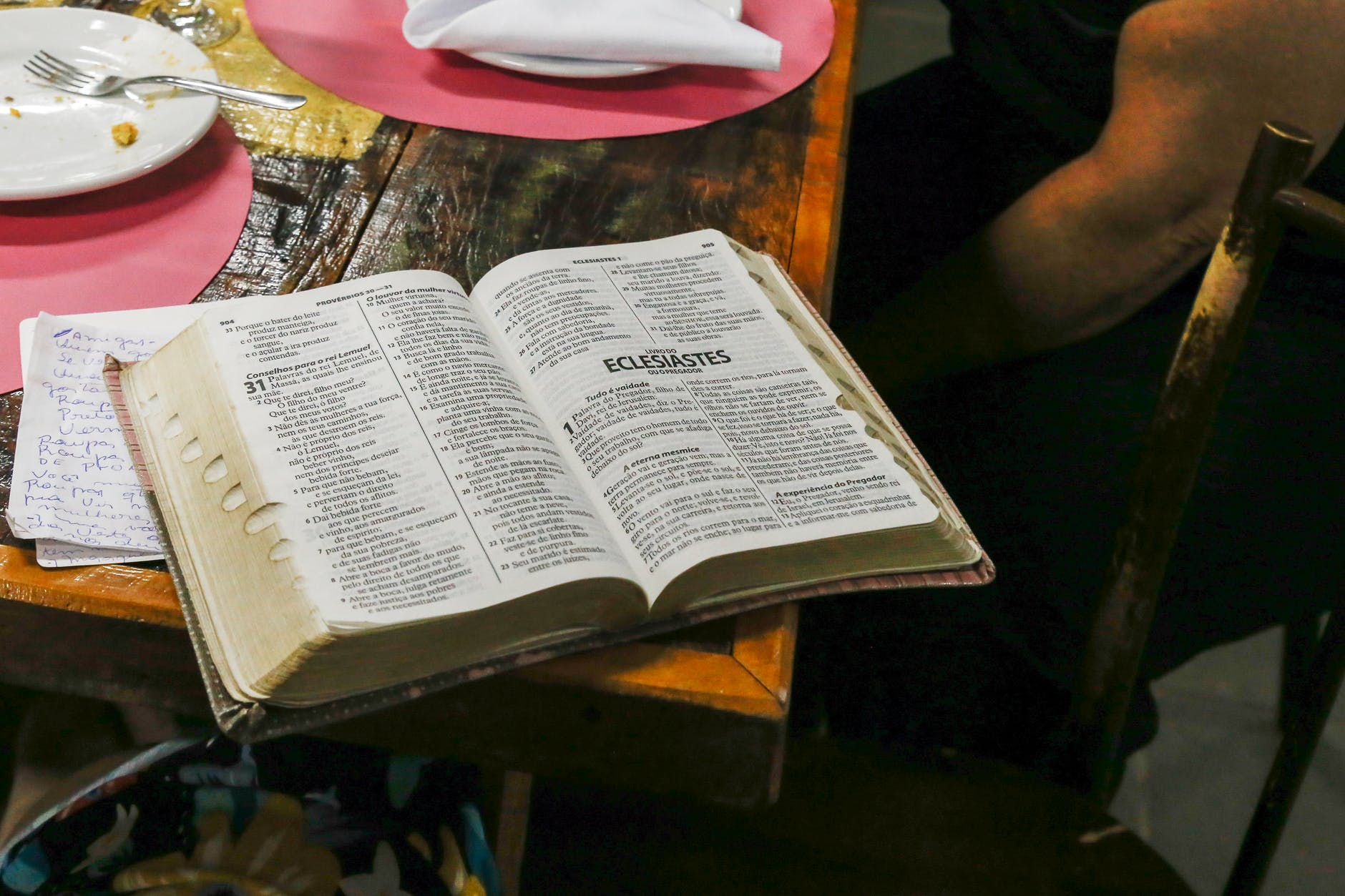
Ruth 1:1 It happened in the days of the judges, there was a famine in the land. A man left Bethlehem in Judah with his wife and two sons to stay in the territory of Moab for a while.
Ruth 1:2 The man’s name was Elimelech, and his wife’s name was Naomi. The names of his two sons were Mahlon and Chilion. They were Ephrathites from Bethlehem in Judah. They came to the fields of Moab and settled there.
Ruth 1:3 Naomi’s husband Elimelech died, and she was left with her two sons.
Ruth 1:4 Her sons took Moabite women as their wives: one was named Orpah and the second was named Ruth. After they lived in Moab about ten years,
Ruth 1:5 both Mahlon and Chilion also died, and Naomi was left without her two children and without her husband.
lost everything?
Upon returning to Delco North Carolina from a vacation/ministry trip last year, I discovered that one of the families in our community had been ravaged by COVID-19, losing several family members in a short time. How dreadful it is to suddenly lose so many loved ones.
Naomi knew that pain. She had gone to Moab because of loss, and all she experienced there was more loss.
But back up the truck a minute. That’s not completely right. In her sorrow, Naomi might have felt like she had lost everything, but she still had Orpah and Ruth. Ruth would make the decision to travel with her “back” to Israel. Her loyalty to Naomi and love for her would be one of the major ways God reveals himself in this book.
LORD, thank you for the kindness and love you show to those who feel like they have lost everything.
1 Timothy 6:20 Timothy, guard what has been entrusted to you, avoiding irreverent and empty speech and contradictions from what is falsely called knowledge.
1 Timothy 6:21 By professing it, some people have missed the faith. Favor be with you all.
what is falsely called knowledge
The knowledge Paul referred to here was probably philosophical Gnosticism — the word in Greek text being γνώσεως. However, there are many types of assumed knowledge today which will derail a person’s pursuit of faith in Christ. If one does not take pains to learn the truth of the Bible, what is falsely called knowledge will destroy any loose threads of belief or religious sentiment.
That knowledge may come from the classroom, but it also may come from the video screen, the radio, or books in all their various forms. Just about the only thing which ties modern media together is its ability to cause doubt and mistrust. That feeds into the devil’s purpose for knowledge. He wants us to know everything about everything — except the gospel.
That is why missions leader Paul instructs his missionary Timothy to guard what had been entrusted to him. Timothy had to censor his own education, staying away from “irreverent and empty speech and contradictions from what is falsely called knowledge.” If he did not do so, those words would no doubt leak into his own cistern, and pollute it. Then he would be leading others away from the faith.
LORD, give us the wisdom to learn everything we need to know, without losing the most important thing: faith in the gospel.
1 Timothy 6:17 Direct those who are rich in the present age not to be arrogant or to set their hope on the uncertainty of wealth, but on God, who richly provides us with all things to enjoy.
1 Timothy 6:18 They are to do good, to be rich in good achievements,1 to be generous and willing to share,
1 Timothy 6:19 storing up treasure for themselves as a good foundation for the coming age, so that they may take hold of what is truly life.
a word to the “masters”
Paul’s shift from addressing slaves to addressing “those who are rich in this present age” is deliberate and pastoral. He has just instructed Timothy on how to guide believers at the lowest end of the social structure—slaves who were to honor their masters, especially believing masters, as brothers in Christ. Now he turns to the other end of the spectrum: the wealthy masters themselves. The gospel speaks to both groups, but it speaks differently because their temptations differ.
Those who were rich in Ephesus lived with a constant temptation toward arrogance. Wealth in the ancient world, as in the modern one, often created a sense of superiority, security, and self‑sufficiency. Paul warns Timothy that the rich will be tempted to “set their hope on the uncertainty of riches.” Wealth feels solid, but it is fragile. It can vanish through disaster, theft, political upheaval, or simple economic change. It is uncertain by nature.
Instead of trusting in their wealth, the rich were to trust in God, who “richly provides us with everything to enjoy.” And instead of using their wealth to elevate themselves, they were to use it to bless others. Their generosity would become a form of spiritual investment—“storing up treasure for themselves as a good foundation for the future.” Paul is not inventing a new idea here. He is echoing the teaching of Jesus.
Jesus had already taught his disciples not to waste their lives accumulating earthly treasure:
“Do not waste your time setting aside valuables for yourselves here on the land, where moth and rust destroy them, and where thieves break in and steal them.” “But invest your valuables in the coming kingdom from the sky, where neither moth nor rust destroys and where thieves do not break in and steal.”
The wealthy in Ephesus understood investment. They knew how to plan for the future, how to allocate resources, how to secure long‑term gain. Paul simply redirects that instinct. The future that matters is not the next decade but the next age. The investment that matters is not in property or goods but in people. The return that matters is not earthly profit but eternal reward.
And where were the needy people the rich were called to invest in? Many of them were right in their own households. Some were the very slaves Paul had just addressed—men and women who served them daily, who lived under their authority, and who were now their brothers and sisters in Christ. The gospel did not erase the social structure overnight, but it transformed the relationships within it. Masters were to see their servants not as tools but as people to love, serve, and support. Their wealth was not a private possession but a trust from God to be used for the good of others.
This teaching remains deeply relevant. Wealth always carries the temptation to self‑reliance and self‑investment. It whispers that security lies in accumulation, that significance lies in possession, that the future can be controlled by careful planning. But the gospel calls believers to a different kind of wealth management—one that measures value not by what is kept but by what is given.
The needy are still all around. Some are in our homes, workplaces, neighborhoods, and congregations. Some are those who serve us quietly. Some are those whose needs are invisible unless we choose to see them. The call is the same: invest in people, not possessions. Use what God has entrusted to build up others. Store up treasure in the only place where treasure lasts.
The prayer that rises from this reflection is simple and searching:
LORD, teach us to store up treasures for ourselves by investing in the needy all around us. Make us generous, attentive, and willing to use what you have given for the good of others. Let our wealth—whatever its size—become a tool for love, a testimony to your grace, and an investment in the kingdom that cannot fade.
1 Timothy 6:11 But you, human of God, flee from these things, and pursue righteousness, godliness, faith, care, endurance, and gentleness.
1 Timothy 6:12 Fight the good fight of the faith. Take hold of the permanent life to which you were invited1 and about which you have made a good declaration2 in the presence of many attestors.
1 Timothy 6:13 In the presence of God, who gives life to all, and of Christ Jesus, who gave a good declaration before Pontius Pilate, I direct you
1 Timothy 6:14 to keep this command without fault or failure until the appearing of our Lord Jesus Christ.
1 Timothy 6:15 God will bring this about in his own season. He is the blessed and only Sovereign, the kings King, and the lord’s Lord,
1 Timothy 6:16 who alone is immortal and who lives in unapproachable light, whom no human has seen or can see, to him be honor and permanent power. Amen.
take hold
Paul’s reference to God’s exclusive immortality in 1 Timothy 6:16 is not an isolated theological statement. It is the culmination of his entire argument in the letter, and it serves a deeply pastoral purpose. By reminding Timothy that only God possesses immortality, Paul is drawing a sharp contrast between what is temporary and what is eternal, between what is merely part of this age and what belongs to the age to come. The point is not abstract doctrine but spiritual orientation. Paul wants Timothy—and the congregations he supervises—to see clearly what truly matters.
God alone is immortal. God alone dwells in unapproachable light. God alone is invisible to human eyes in this present age. These truths emphasize the vast distance between the Creator and the creature. But they also highlight the astonishing promise held out to those who belong to Christ: the God who alone possesses immortality has promised to share that immortality with those who are being saved. Eternal life is not a natural possession; it is a gift. It is not an inherent human quality; it is a future inheritance. It is not something people already have; it is something they hope for.
This is why Paul presses the point so strongly. If immortality belongs to God alone, then the only path to immortality is through God. And if the only path to immortality is through God, then the greatest danger facing believers is not persecution, hardship, or poverty. The greatest danger is distraction—being pulled away from the hope of eternal life by teachings, desires, or controversies that have no lasting value.
False teachings were doing exactly that in Ephesus. They were turning people’s attention away from the promise of the coming age and anchoring them in the concerns of this age. They were stirring up speculation, pride, and greed. They were encouraging believers to chase after things that perish instead of the God who alone is imperishable. Paul’s reminder about God’s immortality is therefore a call to clarity: do not trade the eternal for the temporary.
The promise of sharing God’s immortality is the only thing in this life that carries eternal weight. Everything else—wealth, status, reputation, comfort, even suffering—is temporary. The hope of the next life is the treasure that cannot be taken, cannot be corrupted, and cannot be replaced. To lose sight of that hope is to lose sight of the very reason Christ came.
Paul’s logic is simple but profound:
God alone is immortal.
God has promised to share that immortality with those who belong to Christ.
Therefore, nothing in this life is worth losing that promise.
False teachings threaten that promise by distracting believers from the truth.
Timothy must guard the gospel so that believers do not drift away from the only thing of eternal value.
This is why Paul ends the letter with such urgency. He knows that the human heart is easily captivated by what is immediate and visible. But the immediate and visible are passing away. The invisible God, who dwells in unapproachable light, is the One who offers life that never ends. To be sidetracked by false teaching is not merely to be misinformed; it is to risk missing the very life God intends to give.
The passage therefore becomes a call to spiritual focus. It urges believers to measure everything—every teaching, every desire, every pursuit—by its relationship to the hope of eternal life. Does it strengthen that hope or weaken it? Does it draw the heart toward God or away from him? Does it cultivate longing for the coming age or entangle the soul in the concerns of this one?
The prayer that rises from this reflection is one of longing and vigilance:
LORD, keep our hearts fixed on the hope of eternal life. Guard us from teachings that distract, desires that deceive, and pursuits that perish. Let nothing pull us away from the promise of sharing your immortality. Anchor us in what is eternal, and keep us faithful until the day when the invisible becomes visible and the mortal puts on immortality.
1 Timothy 6:3 If anyone teaches differently and does not agree with the wholesome words of our Lord Jesus Christ and with the teaching that promotes godliness,
1 Timothy 6:4 he is conceited and understands nothing, but has an unhealthy interest in disputes and arguments over words. From these come envy, quarreling, slander, evil suspicions,
1 Timothy 6:5 and constant disagreement among humans whose minds are depraved and deprived of the truth, who imagine that godliness is a way to material gain.
1 Timothy 6:6 But godliness with contentment is great gain.
1 Timothy 6:7 You see, we brought nothing into the world, and we can take nothing out.
1 Timothy 6:8 If we have food and clothing, we will be content with these.
1 Timothy 6:9 But those who want to be rich fall into temptation, into a trap, and many foolish and harmful desires, which plunge humans into ruin and destruction.
1 Timothy 6:10 For the affection for money is a root, producing all kinds of evil things, and by craving it, some have wandered away from the faith and pierced themselves with many griefs.
contentment or controversy
Paul’s concern in this section is not merely about social order but about the reputation of the gospel. He had just instructed Timothy to teach Christian slaves to respect and serve their masters, not because slavery was good, but because the name of God and the teaching of Christ were being dishonored by the behavior of some who claimed to follow him. In the Ephesian congregations, there were evidently teachers encouraging slaves to disregard their masters, perhaps arguing that Christian freedom abolished all earthly obligations. The result was not liberation but scandal. Their teaching produced disrespect, disorder, and resentment, and it gave outsiders reason to dismiss the gospel as socially corrosive.
Paul’s response was not to defend slavery but to defend the witness of the church. Christian slaves were to serve faithfully so that the teaching of Christ would be seen as honorable. Their obedience was not submission to injustice but devotion to Christ. Their service was not capitulation but discipleship. In contrast, the false teachers were stirring up ungodly discontentment, motivated by personal gain, and distracting believers from the pursuit of genuine godliness.
This situation reveals a broader principle: controversy within the church is not automatically a sign of courage or doctrinal purity. Sometimes it is simply a sign of unhealthy teaching, misguided motives, or spiritual immaturity. Paul’s words invite careful discernment whenever disputes arise among believers.
Controversy should make the church cautious. It should prompt self-examination. It should lead to questions about motives, consequences, and alignment with the teaching of Christ. Not every disagreement is harmful, but some disputes do real damage. Some divide the church, distort the gospel, and discredit the name of God. Others are simply differences of opinion that do not threaten the unity or integrity of the faith.
Paul’s description of the false teaching in Ephesus provides a helpful grid for evaluating controversies:
1. This teaching produced ungodly discontentment. It did not lead to peace, gratitude, or humility. It stirred up resentment and dissatisfaction. True teaching produces the fruit of the Spirit; false teaching produces unrest.
2. It was motivated by personal greed. The teachers were using controversy to elevate themselves, gain influence, or secure financial benefit. When personal advantage drives a dispute, the dispute is already corrupted.
3. It distracted believers from the pursuit of godliness. Instead of helping people grow in faith, hope, and love, it pulled them away from the core of Christian life. It replaced spiritual formation with agitation.
These markers help distinguish between necessary correction and harmful controversy. Before entering any dispute, believers should ask:
Is this causing actual harm, or is it simply a disagreement? Some issues require correction because they damage people or distort the gospel. Others are matters of preference or interpretation that do not threaten the faith.
Does this teaching contradict the teaching of Jesus? Christ’s commands—love, humility, service, purity, forgiveness—are the standard. If a teaching leads away from these, it is not from him.
What fruit is this producing? Is it leading to peace, holiness, and love, or to suspicion, anger, and division?
What is motivating the people involved? Are they seeking truth, or are they seeking influence, recognition, or advantage?
Paul’s counsel to Timothy is not a call to avoid all conflict. The church must confront heresy, correct error, and protect the flock. But it must do so with discernment, humility, and a commitment to the teaching of Christ. Not every disagreement is worth fighting. Not every controversy is righteous. And not every loud voice is speaking truth.
The prayer that rises from this reflection is one of caution and dependence:
LORD, keep us from stirring up harm in your church. Give us discernment to recognize when a dispute is destructive, courage to confront what contradicts your teaching, and humility to remain silent when the matter is not ours to fight. Guard our motives, protect our unity, and lead us in the pursuit of true godliness.
1 Timothy 6:1 All who are under the yoke as slaves should regard their own masters as worthy of all respect, so that God’s name and his teaching will not be maligned.
1 Timothy 6:2 Let those who have believing masters not be disrespectful to them because they are brothers, but serve them even better, since those who benefit from their service are believers and dearly cared for. Teach and encourage these things.
obeying our masters
Paul’s instructions to Timothy about slavery must be read with care, because they reveal both the missionary strategy of the early church and the pastoral wisdom required to shepherd congregations living within deeply broken social structures. Timothy was not shaping a theoretical community; he was supervising real congregations in a real city, and those congregations included both slaves and masters. The Roman world was built on slavery. It was woven into the economy, the household, and the legal system. No congregation in a major city like Ephesus would have been free from its influence.
Paul had already made his theological position clear in Galatians: “There is neither slave nor free… for you are all one in Christ Jesus.” That statement does not endorse slavery; it undermines it at its deepest level. It declares that the categories that define social status in the world do not define identity in Christ. But Paul also understood that the gospel does not advance by social revolution. It advances by transformed hearts living faithfully within the structures they inhabit, bearing witness to a kingdom that will one day overturn every injustice.
So Paul, the missionary, instructs Timothy, the missionary, on how to shepherd believers who live under the shadow of slavery. He does not tell slaves to rebel, nor does he tell masters to release all their slaves immediately. Instead, he gives Timothy a command rooted in the teaching of Jesus: teach the slaves to respect and serve their masters. This is not an endorsement of slavery; it is an application of the command to love and serve one another. It is a call to live out the gospel in the very place where the world’s brokenness is most visible.
For the slaves in the Ephesian congregations, this teaching was not a call to passive acceptance but a call to active discipleship. By serving their masters with integrity, they were serving Christ. Their obedience was not ultimately to a human master but to the Lord who had redeemed them. Their work became worship. Their service became a testimony. Their faithfulness became a quiet but powerful witness to the transforming grace of God.
Paul’s instruction also protected the reputation of the gospel. If slaves who professed Christ became known for disrespect or rebellion, the message of Christ would be dismissed as socially disruptive rather than spiritually renewing. But if they became known for integrity, diligence, and respect, the gospel would gain credibility in the eyes of those who watched their lives. Paul was not asking them to affirm the justice of slavery; he was asking them to adorn the gospel with their conduct.
This passage also reveals something important about the nature of Christian service. The call to serve is not limited to those in positions of power or freedom. It extends to every believer, regardless of circumstance. Service is not defined by social status but by obedience to Christ. The slaves in Ephesus had little control over their external situation, but they had complete control over the posture of their hearts. They could choose to serve in a way that honored Christ, and in doing so, they became missionaries within their own households.
Paul’s instructions to Timothy also remind modern readers that the call to serve others is not optional. It is central to the life of discipleship. The people God places in our lives—employers, coworkers, neighbors, family members—are not obstacles to spiritual growth but opportunities for obedience. Service is not a lesser calling; it is the way of Christ. He came “not to be served but to serve,” and those who follow him walk the same path.
The prayer that rises from this reflection is one of gratitude and surrender: “LORD, thank you for those you have called us to serve. Help us to care for them in obedience to your command.” It is a recognition that service is a gift, not a burden. It is a confession that the heart needs continual shaping to serve with joy rather than resentment. It is a desire to reflect the character of Christ in every relationship, whether easy or difficult.
This prayer asks for the grace to see people not as tasks but as those entrusted to our care. It asks for the humility to serve without seeking recognition. It asks for the strength to obey Christ even when obedience is costly. It asks for the love that transforms ordinary acts of service into expressions of worship.
It is a prayer that trusts the God who sees every act of service and receives it as an offering.
1 Timothy 5:17 The elders who are effective leaders are to be considered worthy of double honor, especially those who work hard at preaching and teaching.
1 Timothy 5:18 You see, the Scripture says: Do not muzzle an ox while it is treading out the grain, and the worker is worthy of his wages.
1 Timothy 5:19 Don’t accept an accusation against an elder unless it is supported by two or three attestors.1
1 Timothy 5:20 Publicly rebuke those who are failing,2 so that the rest will be afraid.
1 Timothy 5:21 I solemnly charge you before God and Christ Jesus and the elect angels to observe these things without prejudice, doing nothing out of favoritism.
1 Timothy 5:22 Don’t be too quick to appoint anyone as an elder, and don’t share in the failures3 of others. Keep yourself pure.
1 Timothy 5:23 Don’t continue drinking only water, but use a little wine because of your stomach and your frequent illnesses.
1 Timothy 5:24 Some human failures are obvious, preceding them to judgment, but those of others surface later.
1 Timothy 5:25 Likewise, good achievements are obvious, and those that are not obvious cannot stay hidden for long.
supervising well
Paul’s instructions to Timothy regarding leadership in Ephesus are often misunderstood because they are frequently read through the lens of modern church structures. The common assumption is that Timothy functioned as the “pastor” of a single congregation, responsible for developing leaders within that one local church. But the situation in Ephesus was far more complex. The city contained multiple congregations meeting in various homes, and many leaders had already emerged long before Timothy arrived. Paul’s words in this passage make it clear that Timothy was not the sole leader of a single church but a missionary delegate overseeing a network of congregations.
Timothy had been placed in Ephesus by Paul for a specific apostolic purpose. His role was missionary, supervisory, and developmental. He was not replacing local leaders but equipping them, guiding them, and ensuring that the gospel remained central in their teaching and practice. His task included identifying new leaders, evaluating existing ones, and appointing qualified individuals to shepherd the congregations. This was not a simple pastoral assignment; it was a strategic mission role within a rapidly expanding movement.
For Timothy to supervise well, he needed to honor those leaders who were faithfully laboring in preaching and teaching. Paul emphasized that such leaders were worthy of double honor because their work was demanding, spiritually weighty, and essential to the health of the congregations. Honoring them publicly affirmed their calling, strengthened their credibility, and encouraged the congregations to receive their ministry with gratitude.
But supervision also required the courage to address failure. Some leaders would inevitably fall short—whether through negligence, doctrinal error, or moral compromise. Timothy was instructed to rebuke such leaders publicly when necessary, not to shame them but to protect the flock and uphold the integrity of the gospel. Leadership carries responsibility, and accountability is part of that responsibility. A leader who is failing cannot be quietly ignored; the health of the church depends on clarity and truth.
Timothy’s authority, however, was not independent. The congregations were still under the apostolic leadership of Paul. Timothy was acting as Paul’s representative, carrying out instructions that had been entrusted to him. His work of developing and appointing leaders was not based on personal preference but on apostolic criteria. He was to evaluate character, teaching, reputation, and conduct. He was to avoid both prejudice and favoritism—two dangers that distort judgment and undermine trust. Prejudice blinds a leader to the gifts and calling of those who do not fit personal expectations. Favoritism elevates individuals for reasons unrelated to their qualifications. Both are destructive.
Timothy’s mission required a steady hand, a clear mind, and a pure heart. He was shaping the future leadership of the Ephesian congregations, and the decisions he made would influence the spiritual health of the region for years to come. His work was not glamorous. It involved difficult conversations, careful evaluations, and the willingness to make decisions that might not please everyone. But it was essential to the mission of God in Ephesus.
This passage reminds modern readers that supervision in ministry is not merely administrative. It is spiritual work. It requires discernment, humility, courage, and fairness. It requires honoring those who labor faithfully and confronting those who do not. It requires resisting the pull of personal bias and the temptation to elevate individuals for reasons other than calling and character. It requires remembering that leadership in the church is not about power but about service, not about status but about stewardship.
The prayer that rises from this reflection is simple and necessary: “LORD, give us the wisdom to supervise well.” It is a recognition that leadership oversight is sacred work. It is a confession that human judgment is limited and easily swayed. It is a plea for the kind of wisdom that sees clearly, evaluates fairly, and acts courageously. It is a desire to honor those who serve faithfully and to protect the mission from harm. It is a request for the grace to lead in a way that reflects the character of Christ, who shepherds his people with truth, justice, and compassion.
This prayer acknowledges that supervision is not about control but about care. It asks for the strength to uphold integrity, the humility to listen, and the discernment to recognize God’s work in others. It seeks the wisdom that comes from above—pure, peaceable, gentle, and full of mercy. It trusts the God who appoints leaders, equips them, and sustains the mission through the faithful oversight of those he calls.
1 Timothy 5:9 No widow is to be enrolled on the list for support unless she is at least sixty years old, has been the wife of one husband,
1 Timothy 5:10 and is well known for good achievements – that is, if she has brought up children, shown hospitality, washed the devotees’1 feet, helped the afflicted, and devoted herself to every good work.
1 Timothy 5:11 But refuse to enroll younger widows, because when they are drawn away from Christ by desire, they want to marry
1 Timothy 5:12 and will receive condemnation because they have renounced their original pledge.
1 Timothy 5:13 At the same time, they also are discipled in being idle, going from house to house; they are not only idle, but are also gossips and busybodies, saying things they shouldn’t say.
1 Timothy 5:14 That is why I plan for younger women to marry, have children, manage their households, and give the adversary no opportunity to accuse us.
1 Timothy 5:15 You see, some have already turned away to follow Satan.
1 Timothy 5:16 If any believing woman has widows in her family, let her help them. Let the congregation not be burdened, so that it can help real widows.
weeding out the wrong widows
Paul’s instructions about the care of widows reveal how deeply he understood the human side of ministry. He was not only concerned with doctrine, preaching, or public worship; he was equally concerned with the quiet, often unseen work of managing people—especially those who were vulnerable. In the early congregations, some widows had no family, no income, and no social safety net. The church became their household, and in return, some of these women were entrusted with a ministry of prayer, service, and support. Their role was not merely charitable; it was spiritual and essential.
But not every widow qualified for this ministry. Paul gave Timothy a careful set of criteria because he knew that motives vary, circumstances differ, and the health of the church depends on wise discernment. Some widows were truly alone, godly, and devoted to prayer. Others had family members who should have taken responsibility for them. Still others might have seen the church’s support as an opportunity rather than a calling. Paul wanted Timothy to distinguish between these situations with clarity and compassion.
This is where the messy work of people management enters the picture. Missions and ministry are not abstract ideals; they are lived out among real people with real needs, real weaknesses, and real motives. In any non-profit or ministry setting, volunteers and workers surface for many reasons. Some come with sincere hearts, eager to serve. Others come seeking belonging, recognition, or even financial help. Still others may come with mixed motives—part devotion, part self-interest. Sorting through these realities requires wisdom, patience, and a steady commitment to the mission.
Paul’s instructions acknowledge that managing people is one of the most challenging aspects of leadership. It requires the ability to see beyond appearances, to discern character, and to anticipate potential problems before they grow. It requires the courage to say “yes” when someone is truly called and “no” when someone is not. It requires the humility to recognize that leadership decisions affect not only the mission but the reputation of the Lord whose name the mission bears.
At the same time, Paul’s words remind those in leadership that their own motives must remain pure. It is possible to make personnel decisions out of convenience, favoritism, fear, or personal preference. It is possible to avoid difficult conversations because they are uncomfortable. It is possible to accept volunteers simply because help is needed, without considering whether their involvement will strengthen or weaken the work. These shortcuts may seem harmless in the moment, but they can dishonor the Lord and damage the mission over time.
Paul’s counsel to Timothy therefore carries a double weight: discern the motives of others, and examine the motives of the heart. The work of managing people is not merely administrative; it is spiritual. It requires prayerful dependence on God, a commitment to fairness, and a willingness to protect the integrity of the ministry even when the decisions are difficult.
This is why Paul’s instructions about widows are not just ancient guidelines for a specific situation. They illustrate a broader principle: the mission of God must be staffed by people whose lives reflect the character of God. Those who serve must be honored, supported, and encouraged. Those who are not ready or not suited for certain roles must be guided with grace and clarity. And those who lead must do so with clean hands and a pure heart.
The world often evaluates organizations by their efficiency, their growth, or their public image. But the Lord evaluates his people by their faithfulness. A ministry that manages its people well—honoring the vulnerable, discerning motives, and maintaining integrity—becomes a testimony to the character of the God it serves. A ministry that neglects these things risks undermining its own message.
The prayer that rises from this reflection is both humble and earnest: “LORD, help us to make right decisions about the people who minister among us. May we honor them and be careful not to dishonor you.” It is a recognition that leadership requires more than skill; it requires wisdom from above. It is a confession that motives are not always clear, and that the heart needs continual guidance. It is a desire to steward people well, to protect the mission, and to reflect the holiness of the One who called his church into being.
This prayer asks for discernment to recognize genuine servants, courage to make difficult decisions, and humility to lead without pride. It asks for the grace to honor those who serve faithfully and the strength to guard the ministry from harm. It asks for the kind of leadership that brings joy to the people, stability to the mission, and glory to the Lord.
It is a prayer that trusts the God who sees every heart and guides every faithful leader.
1 Timothy 5:1 Don’t lash out1 at an older man, but seek his help like a father, younger men like brothers,
1 Timothy 5:2 older women like mothers, and the younger women like sisters with all purity.
1 Timothy 5:3 Support widows who are really widows.
1 Timothy 5:4 But if any widow has children or grandchildren, let them be discipled in practicing godliness toward their own family first and to repay their parents, because this pleases God.
1 Timothy 5:5 The real widow who is left all alone has put her hope in God and continues night and day in her petitions and prayers;
1 Timothy 5:6 but she who is self-indulgent is dead even while she is still living.
1 Timothy 5:7 Direct them about these things also, so that they will be blameless.
1 Timothy 5:8 But if anyone does not provide for his own, especially for his own household members, he has denied the faith and is worse than an unbeliever.
unfair fighting
Paul’s charge to Timothy to “fight the good fight of faith” was never an invitation to win at any cost. It was a summons to a kind of struggle that reflects the character of the God whose gospel Timothy proclaimed. Paul understood that ministry involves conflict—conflict with false teaching, conflict with spiritual darkness, conflict with the pressures of culture, and conflict with the weaknesses of human nature. But he also understood that the way this conflict is carried out must itself be shaped by the gospel. The fight is real, but it must be fought with integrity.
Some within the congregations Timothy oversaw would be tempted to fight in ways that contradicted the very faith they claimed to defend. They would use their positions to take advantage of others, especially those who were vulnerable. They would confuse authority with entitlement, and responsibility with opportunity. Paul therefore urged Timothy to resist that temptation with vigilance. The gospel does not permit the strong to exploit the weak. It calls the strong to protect the weak.
Paul begins with the elderly. In a world where age often brought vulnerability, he insisted that older men and women be treated with dignity. They were not obstacles to be managed or burdens to be endured. They were to be honored as fathers and mothers within the household of God. Their weaknesses were not opportunities for manipulation but occasions for respect. The church was to be a place where age was not exploited but esteemed.
Paul then turned to the treatment of women, especially younger women. Timothy was to interact with them “in all purity,” meaning with motives that were clean, transparent, and free from any hint of impropriety. The church was not to become a place where spiritual authority could be used to blur boundaries or take advantage of trust. Purity in relationships was not optional; it was essential to the credibility of the gospel. The way Timothy treated women would either adorn the message he preached or undermine it.
Paul also addressed the care of widows, a group particularly vulnerable in the ancient world. The church had a responsibility to support those who were truly alone and without resources. But Paul insisted that this support be given wisely. Not every widow was a “true widow” in the sense of having no family to care for her. If a widow had children or grandchildren, those family members were to take responsibility for her. This was not merely a practical arrangement; it was an expression of godliness. Caring for one’s own family was a way of honoring God. To neglect that duty and shift the burden onto the church was to misunderstand both family and faith.
By insisting that families care for their own, Paul protected the church from being overwhelmed by responsibilities that did not belong to it. He also protected the integrity of the church’s witness. A congregation that cared for the vulnerable with discernment and fairness would stand out in a world accustomed to exploitation. A congregation that allowed people to shirk their responsibilities would send the opposite message.
Paul’s instructions reveal a deep awareness that the world is always watching. The church does not live out its life in private. Its conduct is visible. Its treatment of the weak, the elderly, the young, and the vulnerable becomes a testimony—either to the truth of the gospel or to the hypocrisy of those who claim to believe it. Fighting the good fight means fighting fairly, fighting cleanly, fighting in a way that reflects the character of Christ.
The temptation to seek victory at the expense of integrity is not limited to the first century. It remains a danger in every generation. It appears whenever authority is used for personal gain, whenever influence is used to manipulate, whenever responsibility is used to avoid responsibility. It appears whenever the weak are treated as tools, whenever the vulnerable are treated as opportunities, whenever the church’s resources are treated as a substitute for personal duty. It appears whenever the fight for truth becomes detached from the character of the One who is the truth.
Paul’s counsel to Timothy therefore remains a needed word. The fight of faith is not won by cleverness, force, or advantage. It is won by faithfulness. It is won by treating people with dignity, purity, and fairness. It is won by honoring responsibilities rather than shifting them. It is won by refusing shortcuts that compromise the soul. It is won by remembering that the gospel is not only the message proclaimed but the life displayed.
The prayer that rises from this reflection is simple and searching: “LORD, keep us from seeking victory at the price of our own integrity.” It is a confession that the heart is prone to justify questionable actions in the name of good outcomes. It is an acknowledgment that the temptation to win unfairly is real. It is a plea for the kind of strength that refuses to separate truth from character. It is a desire to fight the right battles in the right way.
This prayer asks for protection from the subtle forms of self-deception that can creep into ministry and community life. It asks for the courage to treat every person—elderly, young, vulnerable, or strong—with the dignity God has given them. It asks for the wisdom to discern true need from misplaced expectation. It asks for the grace to carry out responsibilities faithfully rather than shifting them onto others. It asks for the humility to remember that the world is watching, and that the credibility of the gospel is tied to the integrity of its people.
It is a prayer that trusts the God who calls his people not only to fight but to fight faithfully.
1 Timothy 4:6 If you point these things out to the brothers and sisters, you will be a good servant of Christ Jesus, nourished by the words of the faith and the good teaching that you have followed.
1 Timothy 4:7 But have nothing to do with pointless and silly myths. Rather, train yourself in godliness
1 Timothy 4:8 because the training of the body has limited benefit, but godliness is beneficial in every way, since it holds promise for the present life and also for the life which is about to come.
1 Timothy 4:9 This saying is reliable and deserves full acceptance.
1 Timothy 4:10 For this reason we labor and strive, because we have put our hope in the living God, who is the Savior of all humans, especially of those who believe.
1 Timothy 4:11 Direct and teach these things.
1 Timothy 4:12 Don’t let anyone despise your youth, but set an example for the believers in speech, in conduct, in care, in faith, and in purity.
1 Timothy 4:13 Until I come, give your attention to public reading, exhortation, and teaching.
1 Timothy 4:14 Don’t neglect the gift that is in you; it was given to you through prophecy, with the laying on of hands by the council of elders.
1 Timothy 4:15 Practice these things; be committed to them, so that your progress may be evident to all.
1 Timothy 4:16 Pay close attention to yourself and what you have been taught; persevere in these things, because in doing this you will rescue both yourself and your hearers.
true godliness
Paul’s warning to Timothy about the rise of false teachers was not a theoretical concern but a pastoral alert rooted in the realities of life within the early congregations. He understood that danger would not only come from outside pressures—persecution, cultural hostility, or philosophical opposition—but also from within the community itself. The most subtle and destructive threats would arise from those who claimed to speak for God while redirecting the people of God toward a distorted vision of holiness.
These teachers would not deny the value of godliness. They would champion it. They would speak often of devotion, discipline, and spiritual seriousness. Yet their understanding of godliness would be fundamentally flawed because it would be built on the wrong foundation. They would teach that holiness is achieved through rigorous self-denial—abstaining from foods, rejecting marriage, and withdrawing from the ordinary joys of life. Their message would sound demanding, sacrificial, and deeply committed. But it would be a commitment rooted in human effort rather than divine grace.
Paul recognized that this approach to godliness is attractive because it offers a sense of control. It allows people to measure their progress, compare themselves to others, and feel spiritually superior based on visible practices. It creates a form of religion that looks impressive but leaves the heart unchanged. It replaces the transforming power of the gospel with the exhausting burden of self-improvement.
True godliness, however, is of a different kind. It does involve training, discipline, and intentionality, but these are not the foundation. They are the fruit. True godliness begins with faith—trusting in the truth of God’s word, resting in the promises of God’s deliverance, and depending on the Spirit’s work rather than personal strength. It grows through hope—anchoring life in the certainty of God’s future renewal rather than in the fragile achievements of the present. And it expresses itself through the practice of the gifts God has given—serving, teaching, encouraging, leading, showing mercy, and building up the body of Christ through the Spirit’s power.
This kind of godliness does not reject the good things God created. It receives them with gratitude. Marriage is not an obstacle to holiness but a context in which holiness is lived out. Food is not a threat to spiritual purity but a reminder of God’s daily provision. Work, rest, relationships, and community are not distractions from devotion but arenas in which devotion is displayed. True godliness does not flee from the world but lives faithfully within it, trusting that God’s grace is sufficient to sustain and sanctify.
The contrast between false and true godliness ultimately rests on the question of who is doing the transforming. False godliness is self-made. It begins with human effort and ends in human pride or human despair. It tries to make the old self behave better rather than receiving the new life God gives. It focuses on external restrictions rather than internal renewal. It produces people who look devout but remain unchanged.
True godliness is God-made. It begins with the work of Christ, continues through the power of the Spirit, and results in a life that reflects the character of the Father. It does not attempt to make oneself better but trusts in the One who promised, “Behold, I am making all things new.” It is rooted in grace, shaped by truth, and sustained by hope. It produces humility, gratitude, and love—qualities that cannot be manufactured by human discipline.
Paul’s concern for Timothy was not merely doctrinal accuracy but pastoral protection. He knew that false teaching about godliness would lead people into bondage, fear, and spiritual exhaustion. He wanted the church to be grounded in the freedom of the gospel, where holiness is not a burden to carry but a life to receive. He wanted believers to understand that the path to godliness is not paved with self-denial for its own sake but with trust in the God who saves, renews, and empowers.
This understanding of godliness also shapes the mission of the church. A community marked by true godliness becomes a living testimony to the power of the gospel. When people see lives transformed by grace rather than by human effort, they encounter something that cannot be explained by natural means. When they see hope that endures, faith that perseveres, and love that serves, they witness the reality of God at work. True godliness becomes a beacon that draws others toward the only source of holiness—the living God.
The prayer that rises from this reflection is both humble and missional: “LORD, help us to live truly godly lives so that others will come to know you—the only source of godliness.” It is a recognition that godliness cannot be manufactured. It must be received. It is a confession that the heart is prone to drift toward self-reliance and needs continual reorientation toward grace. It is a desire not only for personal transformation but for a witness that leads others to the God who alone can make people new.
This prayer acknowledges that the church’s credibility does not rest on impressive disciplines or ascetic practices but on the quiet, steady work of the Spirit producing Christlike character. It asks for the kind of godliness that cannot be faked, measured, or displayed for applause. It seeks the godliness that flows from communion with God, dependence on his word, and participation in his mission.
It is a prayer that trusts the God who begins the work, sustains the work, and completes the work.