
Galatians 6:1-5 (JDV)
Galatians 6:1 Brothers, if a human is overtaken in any violation,1 you who are spiritual, restore such a person with a gentle spirit, watching out for yourselves so that you also won’t be tempted.
Galatians 6:2 Carry one another’s weights; in this way you will fulfill the law of Christ.
Galatians 6:3 You see, if anyone considers himself to be something when he is nothing, he cheats his own mind.2
Galatians 6:4 Let each person evaluate3 his own achievement, and then he can take pride in himself alone, and not compare himself with someone else
Galatians 6:5 because each person will have to carry his own load.
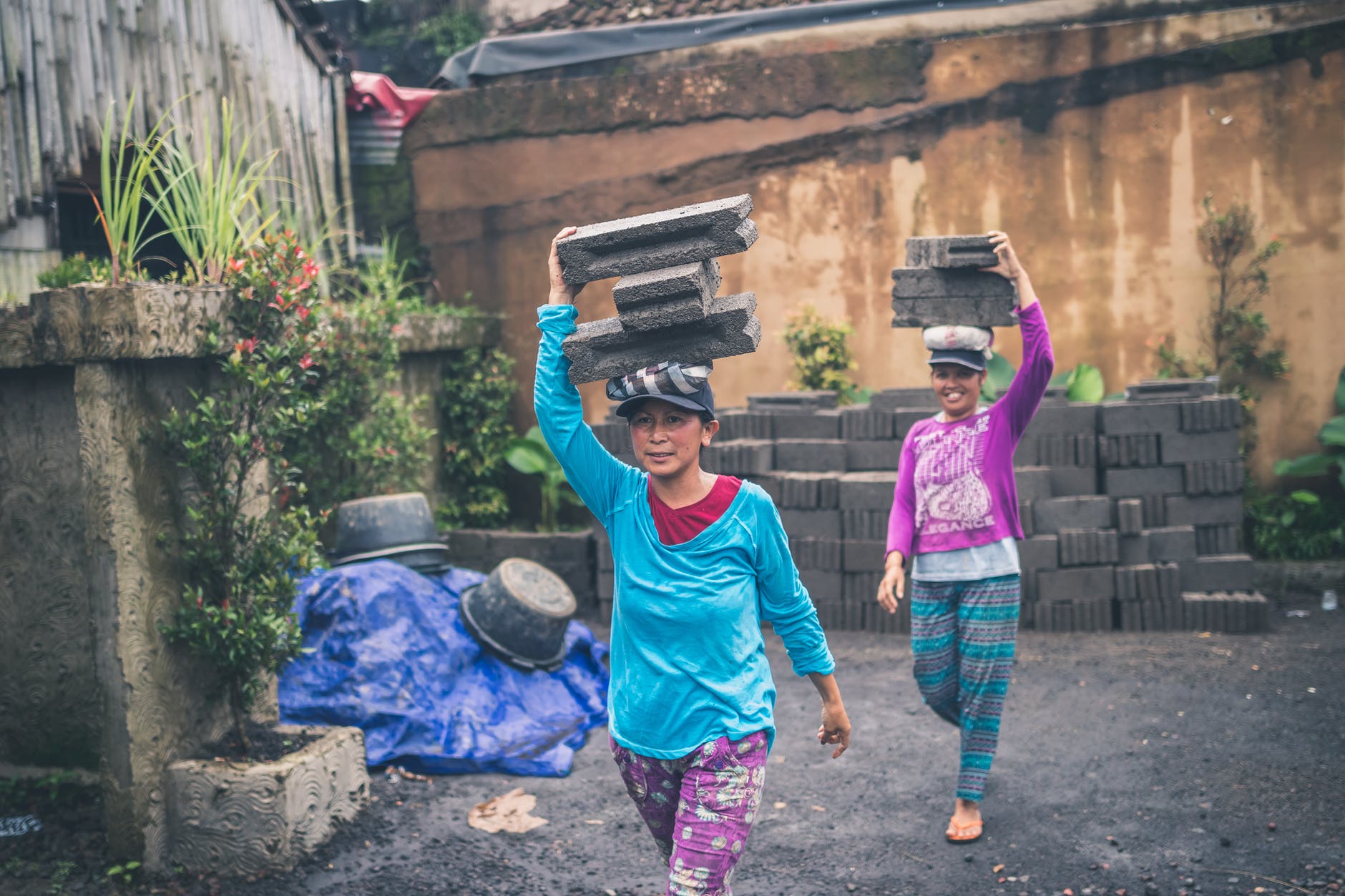
weight lifting
The story about helping with those bins of crushed rock captures the heart of Paul’s metaphor better than an abstract explanation ever could. The job was too heavy for one person, yet the willingness to help made the strain worth it. The weight itself wasn’t the mistake; the love behind the effort gave it meaning. That is exactly the dynamic Paul is describing in Galatians 6. Some burdens are simply too heavy for one person to carry alone. They require shared strength, shared effort, and shared compassion.
A few yearsago, my son-in-law undertook a major household renovation, and I offered to help. He needed to bring large bins of crushed rock onto the back deck for a new foundation. The bins were heavy, so I suggested using a wheelbarrow. The toughest part was moving the bins from the car to the wheelbarrow, which strained my left knee. A co-worker later said I made a mistake by helping, but I don’t see it that way. I appreciate my son-in-law and want to assist him.
Paul’s imagery of weight‑lifting can seem contradictory at first. In one breath he urges believers to “carry one another’s burdens,” and in the next he insists that “each will have to carry his own load.” But the tension dissolves when the distinction becomes clear. Every person has a personal load—responsibilities, calling, daily obedience—that cannot be transferred to someone else. No one can believe for another, repent for another, or obey for another. That is the load each must carry.
Yet life also brings burdens that crush. These are the weights that exceed personal capacity: grief, temptation, failure, fear, confusion, weakness. These are not meant to be carried alone. When Paul calls the Galatians to bear one another’s burdens, he is calling them to step into the kind of mutual support that makes perseverance possible. The Christian life is not an individual race run in isolation. It is a shared journey in which the strength of one becomes the help of another.
This is why Paul’s metaphor matters so deeply in the context of Galatia. The heretical teachers were not helping anyone carry anything. They were adding weight—rules, rituals, expectations, judgments. Instead of lifting burdens, they were increasing them. Instead of strengthening the weary, they were weakening the willing. Paul’s vision is the opposite. A community shaped by the gospel becomes a place where burdens are shared, where no one collapses alone, and where the finish line is reached together.
The image of two people lifting a weight that neither could manage alone is exactly the picture Paul wants the Galatians to see. The load remains real, but the shared effort transforms it. That is how the church is meant to function: each carrying what is uniquely theirs, all helping with what is too heavy, and everyone finishing well because no one is left to struggle in isolation.
Lord, open our eyes to the ways we can help each other live free from the heavy burdens we have to carry.
1παράπτωμα
2φρεναπατάω
3δοκιμάζω


