my submarine

20181109

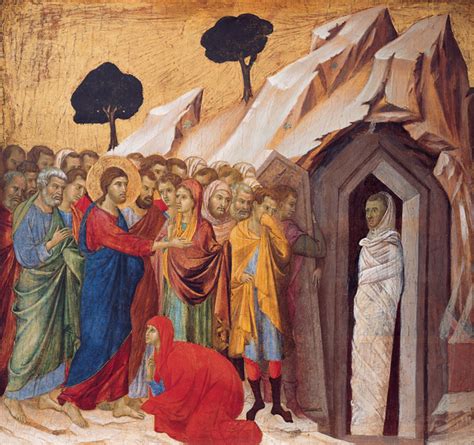
John 8:33-36

33 They answered him, “We are a seed from Abraham, and none have ever been enslaved to anyone. How can you say, ‘You will become free’?”
34 Jesus answered, “I honestly tell you, every sinner is a slave of the sin.
35 A slave does not stay in the household permanently, but a son does stay permanently.
36 That is why if the Son liberates you, you really will be free.

my submarine

Here is your reflection with all second‑person language removed, while preserving the tone, structure, and devotional movement you’ve been using throughout this series:


Does anyone out there long to be liberated from sin? That longing remains strong in my own life. After forty‑seven years as a Christian, the effects of the bondage I was born into still make themselves felt. Slaves throughout history have committed desperate acts—even murder or suicide—in an attempt to gain freedom. That kind of desperation is understandable.

But a better way has been found to deal with inherited slavery. The first step was refusing to deny it. Many—like the “seed of Abraham” in this passage—tried to deny the reality of their own sinfulness. That denial did not work for them, and it did not work for me. Only when I confessed my inability to make myself good did I find help in Jesus.

Jesus explains here what He can do for the one who comes in repentance and trusts Him for liberation. He is God’s only Son, and when He declares a person free, that declaration stands. The rest is living a life of faith in the Son who has set me free. It is like living inside a submarine. Water surrounds on every side, but drowning is impossible. When my Savior returns, He will rid this universe of sin completely. Until then, He remains my submarine.

LORD, set more people free today.

Posted in freedom, sin, slavery, Uncategorized | Tagged | Leave a comment

20181108

Psalms 18:8-9

8 Smoke rose from his nose, and consuming fire came from his mouth; coals were set on fire by it. 9 He bent the sky and came down, its total darkness was beneath his feet.

Darkness and consuming fire are words that describe God’s final punishment of the wicked. The psalmist uses these words to describe the passion with which God responds to his prayer. The nose is often used for Hebrew expression of emotion. A long nose equals patience, but a smoking nose equals anger.

Posted in written on the Appalachian Trail | Tagged | Leave a comment

20181107

Psalms 18:6-7

6 I called to Yahveh in my distress, and I cried to my God for help. From his temple he heard my voice, and my cry to him reached his ears. 7 Then the earth shook and quaked; the foundations of the mountains trembled; they shook because he burned with anger.

The psalmist describes the Lord’s reaction to his prayer as a violent earthquake. He does not say how long the period was between his prayer and God’s reaction. Perhaps we can be more patient if we realize how much pressure has to build before a seismic eruption happens.

Posted in written on the Appalachian Trail | Tagged | Leave a comment

20181106

Psalms 18:3-5

3 I called to Yahveh, who is worthy of praise, and I was delivered from my enemies. 4 The weeds of death were wrapped around me; the torrents of destruction terrified me. 5 The weeds of Sheol entangled me; the snares of death confronted me.

The psalmist pictures a terrifying death of getting pulled down into the sea and trapped there by entangling weeds. If the disaster is not abated, then Sheol (the state of being dead) would be the result. But God comes to the rescue and prevents that terrible death.

Posted in written on the Appalachian Trail | Tagged | Leave a comment

20181105

Psalms 18:1-2

1 I love you, Yahveh, my strength. 2 Yahveh is my rock, my fortress, and my deliverer, my God, my rock in which I seek refuge, my shield and the horn of my deliverance, my stronghold.

The psalmist knows the danger he faced all too well. But he also knows deliverance. His praise comes from personal experience. His testimony stands as a basis for further prayer.

Posted in written on the Appalachian Trail | Tagged | Leave a comment

20181104

Psalms 17:13-15

13 Rise up, Yahveh! Confront him; bring him down. Using your sword, save me from the wicked. 14 With your hand, Yahveh, save me from men, from men of the world whose allocation is in this life: You fill their bellies with what you have in store; their sons are satisfied, and they leave their excess to their children. 15 But I am going to see your face in righteousness; when I awake, I will be satisfied with your presence.

The psalmist is assured that he will be raised from death’s sleep and satisfied by his Lord’s presence. But he does not cease to pray for God to act in his life today. His enemies are feeding their children, with enough left over to pass on to the next generation.

He knows God will prove himself faithful in the future. His prayers aim at showing that God is faithful today.

Posted in written on the Appalachian Trail | Tagged | Leave a comment

20181103

Psalms 17:10-12

10 They have closed their hearts; their mouths speak arrogantly. 11 They advance against me; now they surround me. They are determined to push me to the dirt. 12 They are like a lion eager to tear, like a young lion lurking in ambush.

I wish I could say that true Christians never have enemies like this. But I know we do. If you feel surrounded by lions today, remember you are not the first. Trust God, like this psalmist did— like Daniel did.

Posted in written on the Appalachian Trail | Tagged | Leave a comment

20181102

Psalms 17:8-9

8 Protect me as if I were the pupil of your eye; hide me in the shadow of your wings 9 from the wicked who treat me brutally, my deadly enemies who surround me.

The psalmist captures the care and precautions of someone who needs to protect his delicate eyes from danger, or a large bird, protecting her young from predators. Both images are about hiding from danger. The danger is enemies surrounding him. He finds protection only in God.

Posted in written on the Appalachian Trail | Tagged | Leave a comment

20181101

Psalms 17:6-7

6 I call to you, God, because you will answer me; point your ear towards me; hear what I say. 7 Display the wonders of your faithful love, Savior of all who seek refuge from those who rebel against your right hand.

The psalmist knows that God does not have ears or hands. But he knows that God listens, and God provides safe refuge. That is what he wants. He uses the best words he can to pray. They are inadequate. But God listens like a parent, hanging on our every babble.

Posted in written on the Appalachian Trail | Tagged | Leave a comment

20181031

Psalms 17:4-5

4 when it comes to what people do: because of the words from your lips I have avoided the ways of the violent. 5 My steps are on your paths; my feet have not slipped.

These words express the appreciation of a person who has paid attention to what God has instructed, and that discipline has kept him from becoming a violent person. He talks about not having strayed from the path. As a hiker, I know that if I don’t pay attention to the white blazes, I can get seriously lost very quickly. The blazes are there to mark the trail. God’s word marks the path we Christians should take. We only harm ourselves if we choose to deviate from what it teaches.

Posted in written on the Appalachian Trail | Tagged | Leave a comment