open eyes to the present

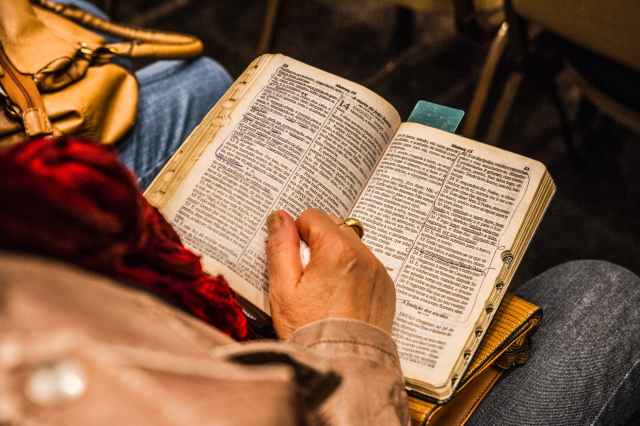
person holding opened book

Photo by Eduardo Braga on Pexels.com

John 13:25-27

Joh 13:25 That was why that one leaned close beside Jesus saying to him, “Lord, which is it?”

Joh 13:26 Jesus answers, “He’s the one to whom I give the piece of bread after I have dipped it.” That was why, after he had dipped the bread, he gave it to Judas, of Simon Iscariot.

Joh 13:27 After the piece of bread, Satan entered that one. So Jesus told him, “Do what you’re doing quickly.”

open eyes to the present

Only John was close enough to Jesus during that meal to grasp the full weight of what was unfolding. He was the one leaning against Jesus, the one positioned to hear the quiet words, to see the subtle expressions, to sense the spiritual atmosphere in the room. And because of that closeness, John alone understood the significance of Judas’ movements.

John not only heard Jesus identify the betrayer—he witnessed the very moment when Judas’ inward decision hardened into outward resolve. He describes it with chilling simplicity: “Satan entered him.” Not in the sense of possession as much as domination—Judas’ will aligning with darkness, his heart crossing a line from which he would not return.

John’s insight here is profound. It is one thing to be shown the future. It is another thing entirely to be shown the present. The future can be overwhelming, but the present can be unbearable. To see what is happening beneath the surface—to discern motives, to recognize spiritual realities, to understand the weight of a moment—this is a heavier burden than knowing what is to come.

Jesus knew what Judas would do. John knew when Judas resolved to do it. And both realities carried sorrow.

There are moments when God grants a deeper awareness—an understanding of what is happening in the heart of a situation, a relationship, a community, or a culture. That kind of knowledge is not given for curiosity. It is given for faithfulness. It is given so that prayer can be shaped, decisions can be wise, and hearts can be steady.

But it is a weight.
A holy weight.
A necessary weight.

And it requires strength—not the strength of self‑confidence, but the strength that comes from God’s presence and God’s peace.

Lord, give the strength to bear the weight of the knowledge You call us to bear—awareness of Your plan for today.

Posted in knowledge, responsibility | Tagged | Leave a comment

The Judas point

assemble challenge combine creativity

Photo by Pixabay on Pexels.com

John 13:21-24

Joh 13:21 After saying these things, Jesus was agitated in his spirit and testified, “I am honestly telling you, one from among you will hand me over.”

Joh 13:22 The disciples were looking into one another– perplexed about which one he was speaking about.

Joh 13:23 One of his disciples, the one Jesus loved, was reclining close beside Jesus.

Joh 13:24 Simon Peter signaled him to find out who it was he was talking about.

The Judas point

It is striking that when Jesus announces that one of the Twelve will betray Him, none of the disciples reacts with disbelief. No one says, “Surely none of us would ever do such a thing.” Instead, the question that rises from every heart is, “Who is it?” That response reveals something deeper than confusion. It reveals conscience.

Each disciple, in that moment, recognizes the frightening truth about the human heart. Each knows that betrayal is not an impossibility. Each knows that weakness, fear, or temptation could push him further than he ever imagined. The very fact that they must ask the question shows that each one has, even if only for a fleeting moment, imagined the unthinkable.

This is not a flaw in the narrative. It is a mirror held up to the soul.

Deep within every believer lies the capacity to drift, to deny, to abandon loyalty. Deep within every bride of Christ lies the frightening possibility of unfaithfulness. The disciples’ question is not simply historical—it is universal. It is the question every believer must face with humility: What am I capable of if left to myself?

This is why mutual encouragement is not optional. It is essential. No one knows which believer is nearing the “Judas point”—that quiet, dangerous place where discouragement, disappointment, or sin begins to harden into betrayal. Fellowship is not a luxury; it is a safeguard. Isolation is not neutral; it is perilous.

Even when frustrations arise within a local church, even when certain practices or personalities irritate or disappoint, the call remains: stay connected. Stay known. Stay encouraged. Others need the strength that comes from your presence, and you need the strength that comes from theirs. The Christian life is not designed to be lived alone. It is sustained by reciprocal encouragement, shared burdens, and honest fellowship.

Lord, help us to encourage one another regularly.

Posted in commitment, discernment, encouragement, freedom | Tagged | Leave a comment

Identifying with Jesus — good or bad

art cathedral christ christian
Photo by Pixabay on Pexels.com

John 13:18-20

Joh 13:18 “It is not about all of you that I am saying this; I know those whom I have chosen. But it is so the Scripture can be fulfilled: The one who gnaws my bread has raised his heel against me.
Joh 13:19 I am telling you just now before it happens, so that you will believe when it does happen that I am he.
Joh 13:20 I honestly tell you, whoever takes anyone I send takes me, and the one who takes me takes him who sent me.”

Identifying with Jesus — good or bad

Here is the revised reflection with all second‑person references removed, while keeping the devotional tone and theological clarity:


This narrative highlights how easily the significance of a word can be obscured when translators render it differently each time it appears. The Greeks approached Philip requesting an audience with Jesus, addressing Philip with the honorific title “Lord” (12:21). Most English translations soften it to “Sir.” Later, Jesus refers to Himself as “Lord and Teacher” (13:13–14). Then He adds that a slave is not greater than his lord—often translated “master” (13:16). John uses the same word (κύριος) in each of these verses.

John 13:16 also reveals a related issue. The word δοῦλος (“slave”) is frequently translated “servant,” and so is the word διάκονος (“manager,” “attendant,” “minister”). Both can be translated “servant,” but they should not be when they are being contrasted with one another.

John’s point—and Jesus’—is that believers may hold many different leadership roles and responsibilities, but all share one identity: slaves of one Lord. And that Lord has provided a model of sacrificial service that defines true greatness in His kingdom.

Lord, grant the wisdom to live as faithful slaves of one Lord, shaped by the example of Your sacrificial servant‑hood.

Posted in discipleship, evangelism, persecution | Tagged | Leave a comment

Sacrificial servanthood

20181223

John 13:15

Joh 13:15 Because I have given you a model, that you also should do just as I have done for you.
Joh 13:16 “I am honestly telling you, a slave is not greater than his lord, and a messenger is not greater than the one who sent him.
Joh 13:17 If you have known these things, you are blessed if you do them.

Sacrificial servanthood.

John is not careless with his vocabulary. He chooses his words with precision, and when we flatten those words in translation, we risk flattening the theology behind them.

1. The Honorific “Lord” (κύριος)

Three times in this section of John’s Gospel, the same Greek word appears:

  • The Greeks call Philip κύριε—“Lord” (12:21). Most English translations soften it to “Sir.”
  • Jesus calls Himself “Lord and Teacher” (13:13–14).
  • Jesus says a slave is not greater than his κύριος—often rendered “master” (13:16).

Same word. Three different English renderings.

The result?
Readers miss the thread John is weaving.

John wants us to see that Jesus is the true Lord, the One who deserves the honor the Greeks instinctively give, the One whose authority surpasses every earthly master, the One whose lordship is defined not by domination but by self‑giving love.

When translations scatter the meaning, the theological force is diluted.

2. The Problem of “Servant”

The same issue appears with the words:

  • δοῦλος — slave
  • διάκονος — manager, attendant, minister

Both are often translated “servant,” but they are not the same.

A δοῦλος has no rights, no autonomy, no claim to status.
A διάκονος has responsibility, agency, and delegated authority.

When Jesus contrasts the two in 13:16, He is making a point about rank and allegiance.
We may have leadership roles, gifts, and responsibilities in the body of Christ—some of us may function as διάκονοι, managers or ministers—but we are all, without exception, δοῦλοι to one Lord.

We are slaves to Christ.
He is the only true κύριος.
And He has shown us what His lordship looks like—kneeling with a towel.

3. John’s Point: Leadership Without Lordship Is Impossible

John is showing us that:

  • We may have different roles.
  • We may have different gifts.
  • We may have different responsibilities.

But we all share one identity: slaves of one Lord.

And that Lord has given us a model—not of power, but of sacrificial service.
Not of status, but of humility.
Not of being served, but of serving.

The towel is not beneath the Lord.
Therefore, the towel is never beneath His slaves.

This is the heart of discipleship.

We do not lead from above.
We lead from below.
We do not cling to titles.
We cling to the towel.
We do not demand honor.
We imitate the One who laid His honor aside.

Lord, make us faithful slaves to one Lord, and shape our leadership into the likeness of Your sacrificial servant‑hood.

Posted in ministry, servanthood | Tagged | Leave a comment

Worship by washing

20181223

John 13:11-14

Joh 13:11 Because he had known his betrayer. This is why he said, “Not all of you are clean.”

Joh 13:12 When he had washed their feet and put on his outer clothes, he reclined again and said to them, “Do you know what I was doing for you?

Joh 13:13 You are calling me the Teacher and the Lord– and you are speaking accurately, since that is what I am.

Joh 13:14 So if I, the Lord and Teacher, have washed your feet, you also should wash one another’s feet.

Worship by washing

Jesus’ act of washing His disciples’ feet was never meant to become a ritual centerpiece of the church. There is nothing wrong with the practice itself—many believers throughout history have used it as a powerful symbol of humility and love. You’ve done it yourself with interns, and you know how deeply it can communicate the heart of Christ.

But Jesus’ intention in John 13 goes far deeper than the act. He is not establishing a ceremony; He is revealing a way of life.

The disciples were stunned because the One they called Lord and Teacher was doing the work of a servant. But Jesus wanted them to understand that this is what greatness looks like in His kingdom. The best way to honor Him is not by building rituals around Him, but by imitating His posture toward one another.

He is teaching them—and us—that worship is not confined to a sanctuary, a song, or a Sunday. Worship is expressed in the way we treat the people who belong to Him. When we show kindness, patience, forgiveness, and sacrificial love to another believer, we are not merely being nice—we are worshiping Christ. We are honoring the One who took the towel.

Foot‑washing is a picture. The reality is a life of humble service.

Jesus is saying:
If you want to show Me how much you love Me, love each other the way I have loved you.
If you want to honor Me, take up the towel in your daily relationships.
If you want to worship Me, serve My people.

This expands worship beyond the walls of the church. It pushes worship into kitchens, hospital rooms, workplaces, classrooms, and quiet conversations. It turns every act of Christlike love into an offering.

Lord, expand the parameters of our worship.

Posted in servanthood, worship | Tagged | Leave a comment

emotional roller coaster

white and yellow roller coaster
Photo by Min An on Pexels.com

John 13:7-10

Joh 13:7 Jesus answered and said to him, “You don’t know what I’m doing just now, but after these things you will come to know.”

Joh 13:8 Peter said to him, “You will certainly not wash my feet, and that is permanent.” Jesus answered him, “If I don’t wash you, you don’t have a part with me.”

Joh 13:9 Simon Peter said to him, “Lord, not only my feet, but also my hands and my head.”

Joh 13:10 Jesus told him, “One who has bathed doesn’t need to wash anything except his feet, but he is entirely clean. You are clean, but not all of you.”

emotional roller coaster

This little scene really is a swirl of emotion—almost like watching the expressions on the faces of Jesus and Peter shift in real time.

Peter’s first reaction is pure shock. You can almost see his eyebrows knit together, his body stiffen, his mind racing to catch up with what his eyes are seeing. Jesus—his Master, his Rabbi, the One he believes is the Messiah—is kneeling at his feet with a basin of water. It is unthinkable. It violates every instinct Peter has about honor, hierarchy, and holiness. So he blurts out the only thing that makes sense to him in that moment: No. Absolutely not. This will never happen.

John uses the word aiōnios—a permanent refusal. Peter is not just startled; he is adamant.

Then Jesus looks at him. Not with anger. Not with frustration. But with a steady, gentle seriousness. “If I do not wash you, you have no part with Me.” It is not a threat; it is an invitation. Jesus is telling Peter that this act of cleansing is not optional—it is essential. Without it, Peter cannot share in Jesus’ life, His mission, or His future.

And suddenly Peter’s whole face changes. The frown melts. The resistance collapses. A smile breaks through. If washing is what it takes to stay with Jesus, then wash everything. Hands, head, whatever Jesus wants. Peter swings from refusal to eagerness in a heartbeat.

Jesus smiles too. There is affection in His voice as He reminds Peter that he has already bathed. He does not need a full cleansing—only his feet. Jesus is teaching him that salvation is complete, but daily cleansing is still necessary.

But then the mood shifts again. Jesus’ smile fades as He adds, “Not all of you are clean.” In the same breath that He affirms Peter, He grieves over Judas. The room holds both joy and sorrow, both devotion and betrayal, both love received and love rejected.

It is a reminder that Jesus feels deeply. He rejoices over faith, and He mourns over unbelief. He delights in obedience, and He aches over rebellion. In one verse, He smiles over Peter and frowns over Judas.

And that brings the passage home to us. Our decisions matter. Our posture toward Jesus matters. Our willingness to receive His cleansing matters. We can bring Him joy, or we can bring Him sorrow.

Lord, give us the wisdom to make decisions that bring You joy, and not sorrow.

Posted in discipleship | Leave a comment

he took the towel

20181223

John 13:4-6

Joh 13:4 He was roused up from the meal, and put aside his outer clothes, took a towel, and tied it around himself.

Joh 13:5 He poured water into a receptacle and began to wash his disciples’ feet and to dry them with the towel tied around him.

Joh 13:6 That was why he came to Simon Peter, who said to him, “Lord, are you washing my feet?”

he took the towel

Peter’s reaction really does leap off the page. One moment he is simply sitting at the table, perhaps half‑lost in the conversation or the meal, and the next moment he is jolted awake by the shocking sight of his Master kneeling at his feet with a basin of water. It is as if his mind snaps into full awareness: What is happening? Why is Jesus doing this? And out comes the question that reveals his heart.

And behind that question, as you noted, there are at least two possible motivations—both deeply human, both deeply common, and both deeply dangerous to the life of faith.

1. The impulse toward stubborn self‑reliance

Peter is the same man who stepped out of the boat to walk on water. The same man who drew a sword in the garden. The same man who always wanted to be the strong one, the capable one, the one who could handle things. It is not hard to imagine him thinking, If there is any washing to be done, I can do it myself. I don’t need Jesus to stoop for me.

That instinct still keeps people from Christ.
The belief that we can clean ourselves up.
The belief that we can fix our own sin.
The belief that we can make ourselves worthy.

Self‑reliance is a subtle form of pride, and pride always resists grace.

2. The impulse toward unworthiness

But there is another possibility. Peter may have felt the opposite: I am not worthy of this. Jesus should not be doing this for me. I should be the one holding the towel. That instinct also keeps people from Christ. The belief that we are too stained, too broken, too unworthy to be served by Him. The belief that grace is for others, not for us.

But unworthiness, when it becomes a barrier to receiving grace, is simply pride wearing a different mask.

Both impulses—self‑reliance and self‑condemnation—keep people from Christ

One says, I don’t need saving.
The other says, I’m not worth saving.
Both are lies.
Both keep people from accepting the grace Jesus offers.
Both must be rejected.

Because in the upper room, Jesus does not hand Peter the towel.
He takes it.
He insists on taking it.
He kneels.
He serves.
He washes.

And that is the gospel.

We do not wash ourselves.
We do not make ourselves worthy.
We do not climb up to God.
God kneels down to us.

The basin and the towel are a picture of the cross.
Jesus does for us what we cannot do for ourselves.
He cleanses what we cannot cleanse.
He restores what we cannot repair.
He saves those who cannot save themselves.

And the only right response is to let Him.

Lord, thank You for taking the towel.

Posted in dependence upon God, grace | Tagged | Leave a comment

Exit hour

black and white photo of clocks

Photo by Andrey Grushnikov on Pexels.com

John 13:1-3

Joh 13:1 Before the Passover Festival, Jesus, having known that his hour came to exit from this world to the Father. Having loved his own who were in the world, he loved them to the last.

Joh 13:2 Now when the meal was happening, the slanderer had already put it into the heart of Judas, of Simon Iscariot, to hand him over.

Joh 13:3 Jesus knew that the Father had given everything into his hands, that he had come from God, and that he was going back to God.

Exit hour

John lets us overhear something sacred in those opening lines of chapter 13. Before Jesus ever rises from the table, before He ever ties the towel around His waist, before He ever kneels at the feet of His disciples, John tells us what was happening inside Him.

Twice John says that Jesus knew something.

He knew who He was.
He knew where He came from.
He knew where He was going.
And He knew that His hour had come.

Jesus enters the foot‑washing not as a confused victim of circumstance, but as the Son who has come from the Father and is returning to the Father. He knows this Passover will be His last before the cross. He knows the betrayal is already in motion. He knows the suffering is hours away. He knows the exit door of His earthly life is opening.

And what does He do with that knowledge?

He serves.

He bends down.
He washes feet.
He loves “to the end.”

John wants us to see that Jesus’ self‑understanding—His identity, His mission, His destiny—shaped His actions. Knowing His hour had come did not make Him frantic, fearful, or self‑protective. It made Him focused. It made Him intentional. It made Him pour Himself out in love.

And that raises the question John wants us to feel:

What would I do differently if I knew I was in my exit hour?

Would I speak more gently?
Would I forgive more quickly?
Would I reconcile with someone I’ve avoided?
Would I pray more earnestly?
Would I waste less time on trivial things?
Would I love more boldly?
Would I serve more freely?
Would I finally do the thing I’ve been postponing for years?

The truth is, none of us knows how close we are to our own exit hour. But we do know this: our time is limited, and our calling is clear. Jesus shows us that the way to live well is to live with the end in view—not in fear, but in focus. Not in panic, but in purpose. Not in self‑preservation, but in self‑giving love.

When we remember that our days are numbered, our priorities sharpen. Our hearts soften. Our choices matter. And our lives begin to look a little more like the One who washed feet on the night before He died.

Lord, help us to stay focused – to make each moment count, because our time is limited.

Posted in mortality, time | Tagged | Leave a comment

judgment criteria

close up court courthouse hammer

Photo by Pixabay on Pexels.com

John 12:47-50

Joh 12:47 If anyone hears my statements and doesn’t keep them, I am not judging him; because I did not come to judge the world but to rescue the world.

Joh 12:48 The one who rejects me and doesn’t receive my statements has this as his judge: The word I have spoken will judge him on the last day.

Joh 12:49 Because I have not spoken on my own, but my Father/Sender himself has given me a command which I should say and which I should speak.

Joh 12:50 And I know that his command is permanent life. That is why I am speaking the things that I am speaking just as the Father has said to me.”

judgment criteria

Jesus makes it clear that His mission is not to condemn but to reveal the Father’s plan—and to carry it out through obedience, even unto the cross. Yet the very gospel He proclaims becomes the dividing line of judgment. The same message that brings permanent life to those who trust Him becomes the standard by which unbelief is exposed. Light gives life to those who walk in it; the same light reveals the darkness of those who refuse it.

This creates a tension for anyone who shares the gospel. The message is life‑giving, but it can feel weighty. It is difficult to speak of salvation without feeling the shadow of judgment for those who reject it. Christians do not always navigate that tension well. Sometimes the urgency of the message comes across as harshness. Sometimes fear of sounding judgmental leads to silence. Yet the gospel remains the most important news ever given, and it must be spoken—even imperfectly—because it is God’s appointed means of life.

The task, then, is not to soften the gospel or to wield it as a weapon, but to speak it with wisdom, humility, and love. The message itself carries the power. The Spirit carries the conviction. The believer carries the responsibility to speak.

A prayer rises naturally from this truth:

Lord, give all who trust You the wisdom to share the gospel of permanent life with those around them.

Posted in evangelism, gospel, judgment | Tagged | Leave a comment

Obeying the light

man kneeling in front of cross

Photo by Pixabay on Pexels.com

John 12:44-46

Joh 12:44 Jesus screamed out, “The believer in me believes not in me, but in my sender.

Joh 12:45 And the one who experiences me experiences my sender.

Joh 12:46 I have come as light into the world, so that every believer in me would not stay in the darkness.

Obeying the light

The darkness Jesus describes is not merely moral confusion or ethical failure. It is the inability to perceive the Father’s heart, the Father’s plan, and the Father’s presence. Jesus came as the Light precisely to reveal those things. Many in His day claimed closeness to God, but only those who trusted Christ were actually walking in the light and encountering the One who sent Him.

The gospel is often spoken of as the way to God—and rightly so. Jesus died for sins so that the barrier between humanity and the Father could be removed. But His mission was also to show the way with God: a life shaped by obedience, trust, and alignment with the Father’s will. These are not two separate missions but one seamless purpose. Those who trust in the cross are also drawn to follow the teachings of the One who died upon it. Obedience becomes the natural fruit of faith.

And that obedience does more than shape character. It produces joy—“happy in Jesus”—and it strengthens confidence that the permanent life He promised truly belongs to those who walk in His light. Faith and obedience are not competing ideas; they are companions on the same path toward the Father.

A prayer rises naturally from this truth:

Lord, give all who trust You the courage to obey You.

Posted in gospel, obedience, the cross | Tagged | Leave a comment