
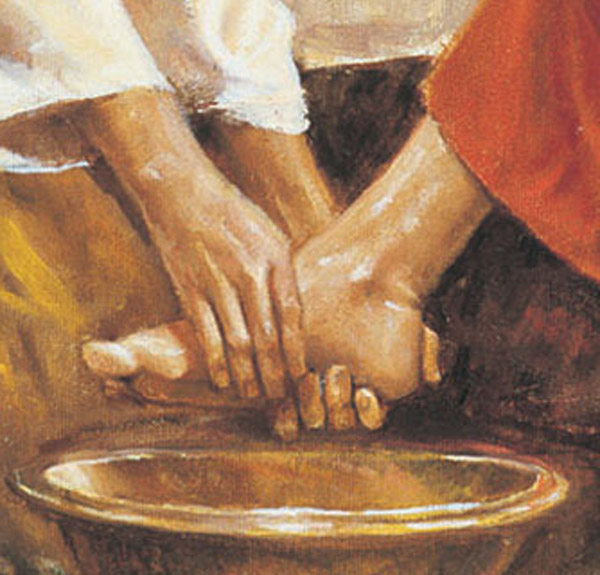
John 13:15
Joh 13:15 Because I have given you a model, that you also should do just as I have done for you.
Joh 13:16 “I am honestly telling you, a slave is not greater than his lord, and a messenger is not greater than the one who sent him.
Joh 13:17 If you have known these things, you are blessed if you do them.
Sacrificial servanthood.
John is not careless with his vocabulary. He chooses his words with precision, and when we flatten those words in translation, we risk flattening the theology behind them.
1. The Honorific “Lord” (κύριος)
Three times in this section of John’s Gospel, the same Greek word appears:
- The Greeks call Philip κύριε—“Lord” (12:21). Most English translations soften it to “Sir.”
- Jesus calls Himself “Lord and Teacher” (13:13–14).
- Jesus says a slave is not greater than his κύριος—often rendered “master” (13:16).
Same word. Three different English renderings.
The result?
Readers miss the thread John is weaving.
John wants us to see that Jesus is the true Lord, the One who deserves the honor the Greeks instinctively give, the One whose authority surpasses every earthly master, the One whose lordship is defined not by domination but by self‑giving love.
When translations scatter the meaning, the theological force is diluted.
2. The Problem of “Servant”
The same issue appears with the words:
- δοῦλος — slave
- διάκονος — manager, attendant, minister
Both are often translated “servant,” but they are not the same.
A δοῦλος has no rights, no autonomy, no claim to status.
A διάκονος has responsibility, agency, and delegated authority.
When Jesus contrasts the two in 13:16, He is making a point about rank and allegiance.
We may have leadership roles, gifts, and responsibilities in the body of Christ—some of us may function as διάκονοι, managers or ministers—but we are all, without exception, δοῦλοι to one Lord.
We are slaves to Christ.
He is the only true κύριος.
And He has shown us what His lordship looks like—kneeling with a towel.
3. John’s Point: Leadership Without Lordship Is Impossible
John is showing us that:
- We may have different roles.
- We may have different gifts.
- We may have different responsibilities.
But we all share one identity: slaves of one Lord.
And that Lord has given us a model—not of power, but of sacrificial service.
Not of status, but of humility.
Not of being served, but of serving.
The towel is not beneath the Lord.
Therefore, the towel is never beneath His slaves.
This is the heart of discipleship.
We do not lead from above.
We lead from below.
We do not cling to titles.
We cling to the towel.
We do not demand honor.
We imitate the One who laid His honor aside.
Lord, make us faithful slaves to one Lord, and shape our leadership into the likeness of Your sacrificial servant‑hood.


