2 Chronicles 14:1 Abijah rested with his fathers and was buried in the city of David. His son Asa became king in his place. During his reign the land experienced peace for ten years. 2 Chronicles 14:2 Asa did what was good and right in the sight of Yahveh his God. 2 Chronicles 14:3 He removed the pagan altars and the high places. He shattered their sacred pillars and chopped down their Asherah poles. 2 Chronicles 14:4 He told the people of Judah to seek Yahveh God of their ancestors and to carry out the instruction and the commands. 2 Chronicles 14:5 He also removed the high places and the shrines from all the cities of Judah, and the kingdom experienced peace under him. 2 Chronicles 14:6 Because the land experienced peace, Asa built fortified cities in Judah. No one made war with him in those days because Yahveh gave him rest. 2 Chronicles 14:7 So he said to the people of Judah, “Let’s build these cities and surround them with walls and towers, with doors and bars. The land is still ours because we sought Yahveh our God. We sought him and he gave us rest on every side.” So, they built and succeeded. 2 Chronicles 14:8 Asa had an army of three hundred thousand from Judah bearing large shields and spears, and two hundred eighty thousand from Benjamin bearing regular shields and drawing the bow. All these were mighty warriors. 2 Chronicles 14:9 Then Zerah the Cushite came against them with one million mighty men and three hundred chariots. They came as far as Mareshah. 2 Chronicles 14:10 So Asa marched out against him and lined up in battle formation in Zephathah Valley at Mareshah. 2 Chronicles 14:11 Then Asa cried out to Yahveh his God: “Lord, there is no one besides you to help the mighty and those without strength. Help us, Lord our God, for we depend on you, and in your name, we have come against this large army. Lord, you are our God. Do not let a mere mortal hinder you.” 2 Chronicles 14:12 So Yahveh routed the Cushites before Asa and before Judah, and the Cushites fled. 2 Chronicles 14:13 Then Asa and the people who were with him pursued them as far as Gerar. The Cushites fell until they had no survivors, for they were crushed before Yahveh and his army. So, the people of Judah carried off a great supply of loot. 2 Chronicles 14:14 Then they attacked all the cities around Gerar because the terror of Yahveh was on them. They also plundered all the cities since there was a great deal of plunder in them. 2 Chronicles 14:15 They also attacked the tents of the herdsmen and captured many sheep and camels. Then they returned to Jerusalem.
a million mighty men
Asa used his period of rest from war to root out idolatry from Judah, and to build fortified cities. He was wise enough to know that the time of rest was a blessing, but that rest is not a given. Danger lurks from enemies within and without. So, the freedom and energy during peaceful times should be spent preparing for and preventing times of trouble.
When war came, they were ready, but they were still outnumbered against the Ethiopians. Fortunately, since they had rid themselves of the other gods, Yahveh crushed a million mighty warriors for them and rescued them.
Yahveh, give us wisdom to rid ourselves of wrong allegiances, and to build up our defenses, so that in the time of battle, we can be confident of your rescue.
2 Chronicles 13:1 In the eighteenth year of Israel’s King Jeroboam, Abijah became king over Judah, 2 Chronicles 13:2 and he reigned three years in Jerusalem. His mother’s name was Micaiah daughter of Uriel; she was from Gibeah. There was a war between Abijah and Jeroboam. 2 Chronicles 13:3 Abijah set his army of warriors in order with four hundred thousand fit young men. Jeroboam arranged his mighty army of eight hundred thousand chosen mighty warriors in battle formation against him. 2 Chronicles 13:4 Then Abijah stood on Mount Zemaraim, which is in the hill country of Ephraim, and said, “Jeroboam and all Israel, hear me. 2 Chronicles 13:5 Don’t you know that Yahveh, God of Israel, gave the kingship over Israel to David and his descendants forever by a covenant of salt? 2 Chronicles 13:6 But Jeroboam, son of Nebat, a servant of Solomon, son of David, rose up and rebelled against his lord. 2 Chronicles 13:7 Then worthless and wicked men gathered around him to resist Rehoboam, son of Solomon, when Rehoboam was young, inexperienced, and unable to assert himself against them. 2 Chronicles 13:8 “And now you are saying you can assert yourselves against Yahveh’s kingdom, which is in the hand of one of David’s sons. You are a vast number and have with you the golden calves that Jeroboam made for you as gods. 2 Chronicles 13:9 Didn’t you banish the priests of Yahveh, the descendants of Aaron and the Levites, and make your own priests like the peoples of other lands do? Whoever comes to ordain himself with a young bull and seven rams may become a priest of what are not gods. 2 Chronicles 13:10 “But as for us, Yahveh is our God. We have not abandoned him; the priests ministering to Yahveh are descendants of Aaron, and the Levites serve at their tasks. 2 Chronicles 13:11 They offer a burnt offering and fragrant incense to Yahveh every morning and every evening, and they set the rows of the Bread of the Presence on the ceremonially clean table. They light the lamps of the gold lampstand every evening. We are carrying out the requirements of Yahveh our God, while you have abandoned him. 2 Chronicles 13:12 Look, God, and his priests are with us at our head. The trumpets are ready to sound the charge against you. Israelites, don’t fight against Yahveh God of your ancestors, for you will not succeed.” 2 Chronicles 13:13 Now Jeroboam had sent an ambush around to advance from behind them. So, they were in front of Judah, and the ambush was behind them. 2 Chronicles 13:14 Judah turned and discovered that the battle was in front and behind them, so they cried out to Yahveh. Then the priests blew the trumpets, 2 Chronicles 13:15 and the men of Judah raised the battle cry. When the men of Judah raised the battle cry, God routed Jeroboam and all Israel before Abijah and Judah. 2 Chronicles 13:16 So the Israelites fled before Judah, and God handed them over to them. 2 Chronicles 13:17 Then Abijah and his people struck them with a mighty blow, and five hundred thousand fit young men of Israel were killed. 2 Chronicles 13:18 The Israelites were subdued at that time. The Judahites succeeded because they depended on Yahveh, the God of their ancestors. 2 Chronicles 13:19 Abijah pursued Jeroboam and captured some cities from him: Bethel, Jeshanah, and Ephron, along with their surrounding villages. 2 Chronicles 13:20 Jeroboam no longer retained his power during Abijah’s reign; ultimately, Yahveh struck him, and he died. 2 Chronicles 13:21 However, Abijah grew strong, acquired fourteen wives, and fathered twenty-two sons and sixteen daughters. 2 Chronicles 13:22 The rest of the events of Abijah’s reign, along with his ways and his sayings, are written in the Writing of the Prophet Iddo.
civil war
It took only 18 years for the kingdom to go from one divided to become one engaged in civil war. Abijah’s army was outnumbered two to one, and he, himself was not entirely faithful to the LORD. But he knew that the LORD had made a covenant with David, he knew that Jeroboam had angered God by his expulsion of his priests and Levites, replacing them with impostors. He knew that the Jerusalem temple worship was legitimate, whereas Jeroboam’s cult was not. The armies of Judah knew to cry out to the Lord when they were in trouble. Half a million Israelites died that day, another monument to man’s attempt to undo God’s will. When will we learn that he is sovereign?
LORD, as we fight life’s battles, give us the good sense not to fight against you.
2 Chronicles 12:1 When Rehoboam had established his sovereignty and royal power, he abandoned the law of Yahveh — he and all Israel with him. 2 Chronicles 12:2 Because they were unfaithful to Yahveh, in the fifth year of King Rehoboam, King Shishak of Egypt went to war against Jerusalem 2 Chronicles 12:3 with 1,200 chariots, 60,000 cavalrymen, and countless people who came with him from Egypt– Libyans, Sukkiim, and Cushites. 2 Chronicles 12:4 He captured the fortified cities of Judah and came as far as Jerusalem. 2 Chronicles 12:5 Then the prophet Shemaiah went to Rehoboam and the leaders of Judah who were gathered at Jerusalem because of Shishak. He said to them: “This is what Yahveh says: ‘You have abandoned me; therefore, I have abandoned you to Shishak.'” 2 Chronicles 12:6 So the leaders of Israel and the king humbled themselves and said, “Yahveh is righteous.” 2 Chronicles 12:7 When Yahveh saw that they had humbled themselves, Yahveh’s message came to Shemaiah: “They have humbled themselves; I will not destroy them but will grant them a little deliverance. My wrath will not be poured out on Jerusalem through Shishak. 2 Chronicles 12:8 However, they will become his servants so they may recognize the difference between serving me and serving the kingdoms of other lands.” 2 Chronicles 12:9 So King Shishak of Egypt went to war against Jerusalem. He seized the treasuries of Yahveh’s temple and the treasuries of the royal palace. He took everything. He took the gold shields that Solomon had made. 2 Chronicles 12:10 King Rehoboam made bronze shields to replace them and committed them to the care of the captains of the guards who protected the entrance to the king’s palace. 2 Chronicles 12:11 Whenever the king entered Yahveh’s temple, the guards would carry the shields and take them back to the armory. 2 Chronicles 12:12 When Rehoboam humbled himself, Yahveh’s anger turned away from him, and he did not destroy him completely. Besides that, conditions were good in Judah. 2 Chronicles 12:13 King Rehoboam established his royal power in Jerusalem. Rehoboam was forty-one years old when he became king, and he reigned seventeen years in Jerusalem, the city Yahveh had chosen from all the tribes of Israel to put his name. Rehoboam’s mother’s name was Naamah the Ammonite. 2 Chronicles 12:14 Rehoboam did what was evil because he did not determine in his heart to seek Yahveh. 2 Chronicles 12:15 Rehoboam’s reign, from beginning to end, are written in the Events of the Prophet Shemaiah and of the Seer Iddo concerning genealogies. There was war between Rehoboam and Jeroboam throughout their reigns. 2 Chronicles 12:16 Rehoboam rested with his fathers and was buried in the city of David. His son Abijah became king in his place.
feet in both worlds
After abandoning the LORD, Rehoboam was humbled by a foreign invasion, but not completely destroyed. The LORD wanted him to know the difference between serving him and serving other gods. The difference was that Rehoboam and his people enjoyed a measure of peace and a measure of war. They had their feet in both worlds, and considered it normal.
LORD, may we never settle for our feet in both worlds. We seek your kingdom and your righteousness alone.
2 Chronicles 11:1 When Rehoboam arrived in Jerusalem, he mobilized the house of Judah and Benjamin — one hundred eighty thousand fit young soldiers — to fight against Israel to restore the reign to Rehoboam. 2 Chronicles 11:2 But the word of Yahveh came to Shemaiah, the man of God: 2 Chronicles 11:3 “Say to Rehoboam son of Solomon, king of Judah, to all Israel in Judah and Benjamin, and to the rest of the people: 2 Chronicles 11:4: ‘This is what Yahveh says: You are not to march up and fight against your brothers. Each of you return home, for this incident has come from me.'” So, they listened to what Yahveh said and turned back from going against Jeroboam. 2 Chronicles 11:5 Rehoboam stayed in Jerusalem, and he fortified cities in Judah. 2 Chronicles 11:6 He built up Bethlehem, Etam, Tekoa, 2 Chronicles 11:7 Beth-zur, Soco, Adullam, 2 Chronicles 11:8 Gath, Mareshah, Ziph, 2 Chronicles 11:9 Adoraim, Lachish, Azekah, 2 Chronicles 11:10 Zorah, Aijalon, and Hebron, which are fortified cities in Judah and in Benjamin. 2 Chronicles 11:11 He strengthened their fortifications and put leaders in them with supplies of food, oil, and wine. 2 Chronicles 11:12 He also put large shields and spears in each and every city to make them very strong. So Judah and Benjamin were his. 2 Chronicles 11:13 The priests and Levites from all their regions throughout Israel took their stand with Rehoboam, 2 Chronicles 11:14 for the Levites left their pasturelands and their possessions and went to Judah and Jerusalem, because Jeroboam and his sons refused to let them serve as priests of Yahveh. 2 Chronicles 11:15 Jeroboam appointed his own priests for the high places, the goat-demons, and the golden calves he had made. 2 Chronicles 11:16 Those from every tribe of Israel who had determined in their hearts to seek Yahveh their God followed the Levites to Jerusalem to sacrifice to Yahveh, the God of their ancestors. 2 Chronicles 11:17 So they strengthened the kingdom of Judah and supported Rehoboam son of Solomon for three years, because they walked in the ways of David and Solomon for three years. 2 Chronicles 11:18 Rehoboam married Mahalath, daughter of David’s son Jerimoth and of Abihail daughter of Jesse’s son Eliab. 2 Chronicles 11:19 She bore sons to him: Jeush, Shemariah, and Zaham. 2 Chronicles 11:20 After her, he married Maacah daughter of Absalom. She bore Abijah, Attai, Ziza, and Shelomith to him. 2 Chronicles 11:21 Rehoboam loved Maacah, daughter of Absalom, more than all his wives and concubines. He acquired eighteen wives and sixty concubines and was the father of twenty-eight sons and sixty daughters. 2 Chronicles 11:22 Rehoboam appointed Abijah, son of Maacah, as chief, leader among his brothers, intending to make him king. 2 Chronicles 11:23 Rehoboam also showed discernment by dispersing some of his sons to all the regions of Judah and Benjamin and to all the fortified cities. He gave them plenty of provisions and sought many wives for them.
this incident has come from me
God told Rehoboam not to engage in battle against his relatives because “this incident has come from me.” The rebellion, the division, all of it was the working out of God’s ultimate plan. Often or tendency is to react to what is going on around us, and God wants us to concentrate of living lives of integrity amidst the turmoil. He has control over the circumstances that we think need to be changed. He is more concerned that we change.
LORD, give us the courage to trust you, even when things do not change the way we want.
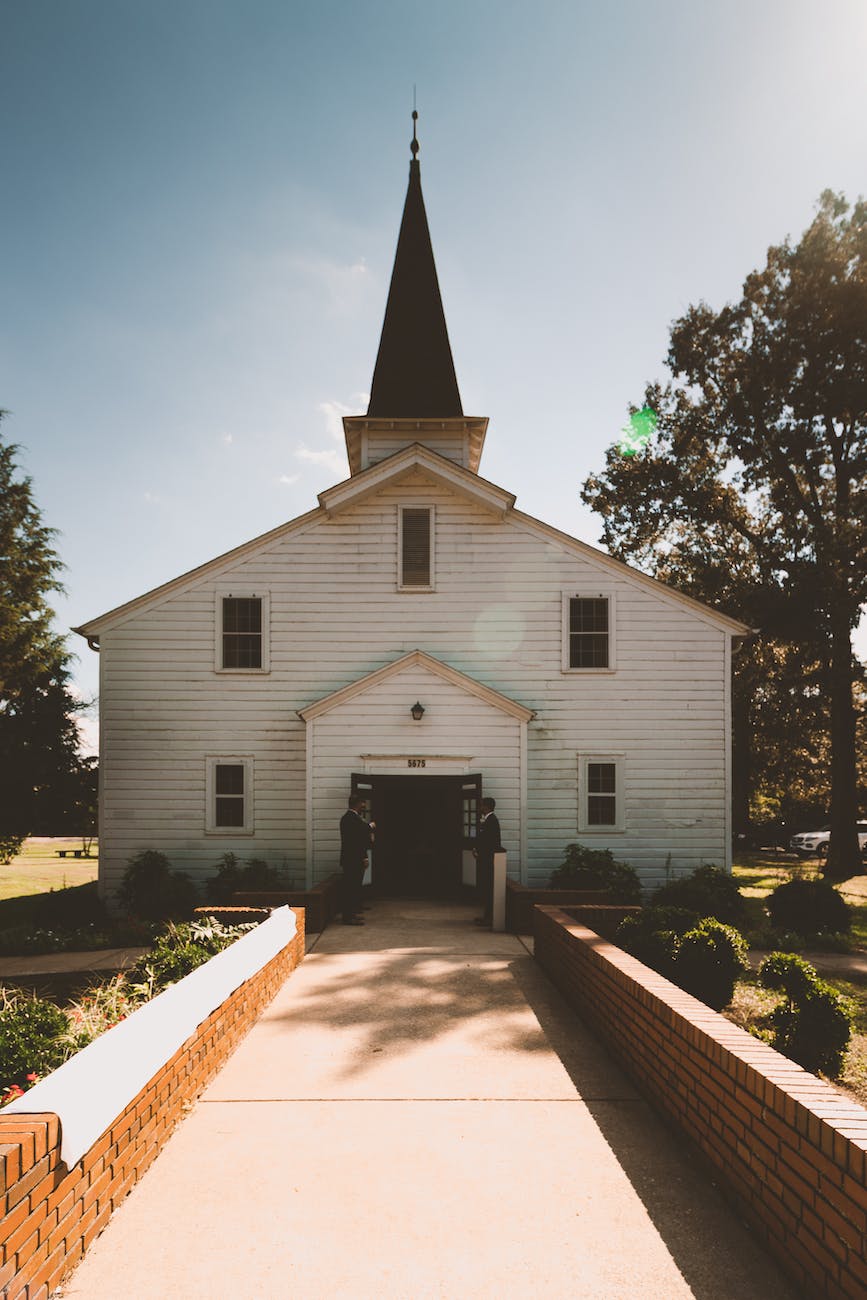
Photo by Miguel u00c1. Padriu00f1u00e1n on Pexels.com
the single brick
2 Chronicles 10:1-19
2 Chronicles 10:1 Then Rehoboam went to Shechem, for all Israel had gone to Shechem to make him king. 2 Chronicles 10:2 When Jeroboam son of Nebat heard about it — for he was in Egypt where he had fled from King Solomon’s presence — Jeroboam returned from Egypt. 2 Chronicles 10:3 So they summoned him. Then Jeroboam and all Israel came and spoke to Rehoboam: 2 Chronicles 10:4 “Your father made our yoke harsh. Therefore, lighten your father’s harsh service and the heavy yoke he put on us, and we will serve you.” 2 Chronicles 10:5 Rehoboam replied, “Return to me in three days.” So, the people left. 2 Chronicles 10:6 Then King Rehoboam consulted with the elders who had attended his father Solomon when he was alive, asking, “How do you advise me to respond to this people?” 2 Chronicles 10:7 They replied, “If you will be kind to this people and please them by speaking kind words to them, they will be your servants forever.” 2 Chronicles 10:8 But he rejected the advice of the elders who had advised him, and he consulted with the young men who had grown up with him, the ones attending him. 2 Chronicles 10:9 He asked them, “What message do you advise we send back to this people who said to me, ‘Lighten the yoke your father put on us’?” 2 Chronicles 10:10 Then the young men who had grown up with him told him, “This is what you should say to the people who said to you, ‘Your father made our yoke heavy, but you, make it lighter on us! ‘ This is what you should say to them: ‘My little finger is thicker than my father’s waist! 2 Chronicles 10:11 Now therefore, my father burdened you with a heavy yoke, but I will add to your yoke; my father disciplined you with whips, but I, with barbed whips.'” 2 Chronicles 10:12 So Jeroboam and all the people came to Rehoboam on the third day, just as the king had ordered, saying, “Return to me on the third day.” 2 Chronicles 10:13 Then the king answered them harshly. King Rehoboam rejected the elders’ advice 2 Chronicles 10:14 and spoke to them according to the young men’s advice, saying, “My father made your yoke heavy, but I will add to it; my father disciplined you with whips, but I, with barbed whips.” 2 Chronicles 10:15 The king did not listen to the people because the turn of events came from God, in order that Yahveh might carry out his word that he had spoken through Ahijah the Shilonite to Jeroboam son of Nebat. 2 Chronicles 10:16 When all Israel saw that the king had not listened to them, the people answered the king: What share do we have in David? We have no inheritance in the son of Jesse. Israel, each to your tent; David, look after your own house now! So, all Israel went to their tents. 2 Chronicles 10:17 But as for the Israelites living in the cities of Judah, Rehoboam reigned over them. 2 Chronicles 10:18 Then King Rehoboam sent Hadoram, who was in charge of the forced labor, but the Israelites stoned him to death. However, King Rehoboam managed to get into his chariot to flee to Jerusalem. 2 Chronicles 10:19 Israel is in rebellion against the house of David until today.
the single brick
It was one decision that Rehoboam made that led to division and rebellion and the dissolution of Israel. He decided to listen to the wrong counselors. They encouraged him to make the heavy yoke even heavier. The older men had advised Rehoboam that if he only listened and responded to the appeal of his people he could keep the nation together. But the king’s choice was with the younger men, his own peers. Spiritual leadership is like that too. We must be very careful to make wise choices, because some mistakes cannot be easily mended with a simple apology. An entire house can be destroyed by the removal of a single brick.
LORD, help us to make right decisions. May we take the needs of everyone into consideration before we choose.
2 Chronicles 9:1 The queen of Sheba heard of Solomon’s fame, so she came to test Solomon with difficult questions at Jerusalem with a very large entourage, with camels bearing spices, gold in abundance, and precious stones. She came to Solomon and spoke with him about everything that was on her mind. 2 Chronicles 9:2 So Solomon answered all her questions; nothing was too difficult for Solomon to explain to her. 2 Chronicles 9:3 When the queen of Sheba observed Solomon’s wisdom, the palace he had built, 2 Chronicles 9:4 the food at his table, his servants’ residence, his attendants’ service and their attire, his cupbearers and their attire, and the burnt offerings he offered at Yahveh’s temple, it took her breath away. 2 Chronicles 9:5 She said to the king, “The report I heard in my own country about your words and about your wisdom is true. 2 Chronicles 9:6 But I didn’t believe their reports until I came and saw with my own eyes. Indeed, I was not even told half of your great wisdom! You far exceed the report I heard. 2 Chronicles 9:7 How happy are your men. How happy are these servants of yours, who always stand in your presence hearing your wisdom. 2 Chronicles 9:8 Blessed be Yahveh your God! He delighted in you and put you on his throne as king for Yahveh your God. Because your God loved Israel enough to establish them permanently, he has set you over them as king to carry out justice and righteousness.” 2 Chronicles 9:9 Then she gave the king four and a half tons of gold, a great quantity of spices, and precious stones. There never were such spices as those the queen of Sheba gave to King Solomon. 2 Chronicles 9:10 In addition, Hiram’s servants and Solomon’s servants who brought gold from Ophir also brought algum wood and precious stones. 2 Chronicles 9:11 The king made the algum wood into walkways for Yahveh’s temple and for the king’s palace and into lyres and harps for the singers. Never had anything like them been seen in the land of Judah. 2 Chronicles 9:12 King Solomon gave the queen of Sheba her every desire, whatever she asked — far more than she had brought the king. Then she, along with her servants, returned to her own country. 2 Chronicles 9:13 The weight of gold that came to Solomon annually was twenty-five tons, 2 Chronicles 9:14 besides what was brought by the merchants and traders. All the Arabian kings and governors of the land also brought gold and silver to Solomon. 2 Chronicles 9:15 King Solomon made two hundred large shields of hammered gold; 15 pounds of hammered gold went into each shield. 2 Chronicles 9:16 He made three hundred small shields of hammered gold; 7 1/2 pounds of gold went into each shield. The king put them in the House of the Forest of Lebanon. 2 Chronicles 9:17 The king also made a large ivory throne and overlaid it with pure gold. 2 Chronicles 9:18 The throne had six steps; there was a footstool covered in gold for the throne, armrests on either side of the seat, and two lions standing beside the armrests. 2 Chronicles 9:19 Twelve lions were standing there on the six steps, one at each end. Nothing like it had ever been made in any other kingdom. 2 Chronicles 9:20 All of King Solomon’s drinking cups were gold, and all the utensils of the House of the Forest of Lebanon were pure gold. There was no silver, since it was considered as nothing in Solomon’s time, 2 Chronicles 9:21 because the king’s ships kept going to Tarshish with Hiram’s servants, and once every three years the ships of Tarshish would arrive bearing gold, silver, ivory, apes, and peacocks. 2 Chronicles 9:22 King Solomon surpassed all the kings of the world in riches and wisdom. 2 Chronicles 9:23 All the kings of the world wanted an audience with Solomon to hear the wisdom God had put in his heart. 2 Chronicles 9:24 Each of them would bring his own gift — items of silver and gold, clothing, weapons, spices, and horses and mules — as an annual tribute. 2 Chronicles 9:25 Solomon had four thousand stalls for horses and chariots, and twelve thousand horsemen. He stationed them in the chariot cities and with the king in Jerusalem. 2 Chronicles 9:26 He ruled over all the kings from the Euphrates River to the land of the Philistines and as far as the border of Egypt. 2 Chronicles 9:27 The king made silver as common in Jerusalem as stones, and he made cedar as abundant as sycamore in the Judean foothills. 2 Chronicles 9:28 They were bringing horses for Solomon from Egypt and from all the countries. 2 Chronicles 9:29 The remaining events of Solomon’s reign, from beginning to end, are written in the Events of the Prophet Nathan, the Prophecy of Ahijah the Shilonite, and the Visions of the Seer Iddo concerning Jeroboam son of Nebat. 2 Chronicles 9:30 Solomon reigned in Jerusalem over all Israel for forty years. 2 Chronicles 9:31 Solomon rested with his fathers and was buried in the city of his father David. His son Rehoboam became king in his place.
evident blessings
The queen of Sheba examined all the aspects of Solomon’s rule and life and concluded that God loved Israel, so set him up as their king. Her evaluation of Solomon’s leadership was a reflection not on his power or wealth as much as it was his being a symbol of the Yahveh’s blessing.
We should learn to lead in such a way that people look at us and our relationships and see the Holy Spirit inside us. That is the kind of leaders that the world needs.
Father, make us leaders who reflect your grace. May your blessings be evident in our lives.
2 Chronicles 8:1 At the end of twenty years during which Solomon had built Yahveh’s temple and his own palace — 2 Chronicles 8:2 Solomon had rebuilt the cities Hiram gave him and settled Israelites there — 2 Chronicles 8:3 Solomon went to Hamath-zobah and seized it. 2 Chronicles 8:4 He built Tadmor in the wilderness along with all the storage cities he built in Hamath. 2 Chronicles 8:5 He built Upper Beth-horon and Lower Beth-horon — fortified cities with walls, gates, and bars — 2 Chronicles 8:6 Baalath, all the storage cities that belonged to Solomon, all the chariot cities, the cavalry cities, and everything Solomon desired to build in Jerusalem, Lebanon, or anywhere else in the land of his dominion. 2 Chronicles 8:7 As for all the peoples who remained of the Hethites, Amorites, Perizzites, Hivites, and Jebusites, who were not from Israel — 2 Chronicles 8:8 their descendants who remained in the land after them, those the Israelites had not wholly destroyed — Solomon imposed forced labor on them; it is this way today. 2 Chronicles 8:9 But Solomon did not consign the Israelites to be slaves for his work; they were soldiers, commanders of his captains, and commanders of his chariots and his cavalry. 2 Chronicles 8:10 These were King Solomon’s deputies: 250 who supervised the people. 2 Chronicles 8:11 Solomon brought the daughter of Pharaoh from the city of David to the house he had built for her, for he said, “My wife must not live in the house of King David of Israel because the places the ark of Yahveh has come into are holy.” 2 Chronicles 8:12 At that time Solomon offered burnt offerings to Yahveh on Yahveh’s altar he had made in front of the portico. 2 Chronicles 8:13 He followed the daily requirement for offerings according to the commandment of Moses for Sabbaths, New Moons, and the three annual appointed festivals: the Festival of Unleavened Bread, the Festival of Weeks, and the Festival of Shelters. 2 Chronicles 8:14 According to the ordinances of his father David, he appointed the divisions of the priests over their service, of the Levites over their responsibilities to offer praise and to minister before the priests following the daily requirement, and of the gatekeepers by their divisions with respect to each temple gate, for this had been the command of David, the man of God. 2 Chronicles 8:15 They did not turn aside from the king’s command regarding the priests and the Levites concerning any matter or concerning the treasuries. 2 Chronicles 8:16 All of Solomon’s work was carried out from the day the foundation was laid for Yahveh’s temple until it was finished. So Yahveh’s temple was completed. 2 Chronicles 8:17 At that time Solomon went to Ezion-geber and to Eloth on the seashore in the land of Edom. 2 Chronicles 8:18 So Hiram sent ships to him by his servants along with crews of experienced seamen. They went with Solomon’s servants to Ophir, took from there seventeen tons of gold, and delivered it to King Solomon.
serve Him first
The seeming implication of this chapter is that Solomon was successful in his other building projects because he had prioritized the temple. It is OK to bring our plans to Yahveh as long as we have been considerate enough of his plans to obey them first. Often, however, we make bargains with Yahveh that start out from our perspective. We say, “Lord, if you straighten me out, then I will serve you.” God blesses those who make up their minds to serve Him first. If we wait around for God to do something for us first, we are choosing to serve out of gratitude. God wants us to serve out of faith.
Jesus, we commit to build your temple – your kingdom. We expect you to bless us, but we are not waiting for the blessing before we put our hands to the task.
2 Chronicles 7:1 When Solomon finished praying, fire fell from the sky and consumed the burnt offering and the sacrifices, and the glory of Yahveh filled the temple. 2 Chronicles 7:2 The priests were not able to enter Yahveh’s temple because the glory of Yahveh filled the temple of Yahveh. 2 Chronicles 7:3 All the Israelites were watching when the fire fell and the glory of Yahveh came on the temple. They bowed down on the pavement with their faces to the ground. They worshiped and praised Yahveh because he is good, because his faithful love lasts permanently. 2 Chronicles 7:4 The king and all the people were offering sacrifices in Yahveh’s presence. 2 Chronicles 7:5 King Solomon offered a sacrifice of twenty-two thousand cattle and one hundred twenty thousand sheep and goats. In this manner the king and all the people dedicated God’s temple. 2 Chronicles 7:6 The priests and the Levites were standing at their stations. The Levites had the musical instruments of Yahveh, which King David had made to give thanks to Yahveh — “because his faithful love lasts permanently” — when he offered praise with them. Across from the Levites, the priests were blowing trumpets, and all the people were standing. 2 Chronicles 7:7 Since the bronze altar that Solomon had made could not accommodate the burnt offering, the grain offering, and the fat of the fellowship offerings, Solomon first consecrated the middle of the courtyard that was in front of Yahveh’s temple and then offered the burnt offerings and the fat of the fellowship offerings there. 2 Chronicles 7:8 So Solomon and all Israel with him — a very large gathering, from the entrance to Hamath to the Brook of Egypt — observed the festival at that time for seven days. 2 Chronicles 7:9 On the eighth day they held a sacred assembly, because the dedication of the altar lasted seven days and the festival seven days. 2 Chronicles 7:10 On the twenty-third day of the seventh month he sent the people home, rejoicing and with happy hearts for the goodness Yahveh had done for David, for Solomon, and for his people Israel. 2 Chronicles 7:11 So Solomon finished Yahveh’s temple and the royal palace. Everything that had entered Solomon’s heart to do for Yahveh’s temple and for his own palace succeeded. 2 Chronicles 7:12 Then Yahveh appeared to Solomon at night and said to him: I have heard your prayer and have chosen this place for myself as a temple of sacrifice. 2 Chronicles 7:13 If I shut the sky so there is no rain, or if I command the grasshopper to consume the land, or if I send pestilence on my people, 2 Chronicles 7:14 and my people, who bear my name, humble themselves, pray and seek my face, and turn from their evil ways, then I will hear from heaven, forgive their sin, and heal their land. 2 Chronicles 7:15 My eyes will now be open and my ears attentive to prayer from this place. 2 Chronicles 7:16 And I have now chosen and consecrated this temple so that my name may be there forever; my eyes and my heart will be there at all times. 2 Chronicles 7:17 As for you, if you walk before me as your father David walked, doing everything I have commanded you, and if you keep my statutes and ordinances, 2 Chronicles 7:18 I will establish your royal throne, as I promised your father David: You will never fail to have a man ruling in Israel. 2 Chronicles 7:19 However, if you turn away and abandon my statutes and my commands that I have set before you and if you go and serve other gods and bow in worship to them, 2 Chronicles 7:20 then I will uproot Israel from the soil that I gave them, and this temple that I have sanctified for my name I will banish from my presence; I will make it an object of scorn and ridicule among all the peoples. 2 Chronicles 7:21 As for this temple, which was exalted, everyone who passes by will be appalled and will say: Why did Yahveh do this to this land and this temple? 2 Chronicles 7:22 Then they will say: Because they abandoned Yahveh God of their ancestors who brought them out of the land of Egypt. They clung to other gods and bowed in worship to them and served them. Because of this, he brought all this ruin on them.
keeping the blessing
Before we jump to claim 2 Chronicles 7:14 as our life verse– we should look again at the context of the verse. Solomon has just prayed to dedicate the temple. Yahveh appeared to him at night, and promised that he would at times bring drought, locusts, and pestilence to his land. He will do that because he expects his people to respond with humble prayer. He, in turn, promises to forgive and restore the land. But, if his people forsake his law and turn to idols, he promises to cast them out of his sight, so that the nations would know how God treats those who abandon him. God is faithful to all of his promises.
Yahveh responded to Solomon’s prayer and dedicated the temple to himself. He promised that he would be available, but the rescue associated with his presence was a conditional promise. If Solomon and his people turned to other gods, God would give them over to that choice. Staying true to God meant more than merely claiming allegiance to him. It means obeying his statutes and commandments. The prosperity that David and Solomon had known was a gift from God’s grace. Maintaining that blessing would require integrity. They would be tested by drought, locusts, and pestilence. If they responded by seeking Yahveh’s presence, he would respond to their response.
LORD, give us eyes to see you and courage to seek you in the hard times, so that we keep the blessing.
2 Chronicles 6:1 Then Solomon said: Yahveh said he would dwell in total darkness, 2 Chronicles 6:2 but I have built an exalted temple for you, a place for your residence forever. 2 Chronicles 6:3 Then the king turned and blessed the entire congregation of Israel while they were standing. 2 Chronicles 6:4 He said: Blessed be Yahveh God of Israel! He spoke directly to my father David, and he has fulfilled the promise by his power. He said, 2 Chronicles 6:5 “Since the day I brought my people Israel out of the land of Egypt, I have not chosen a city to build a temple in among any of the tribes of Israel, so that my name would be there, and I have not chosen a man to be ruler over my people Israel. 2 Chronicles 6:6 But I have chosen Jerusalem so that my name will be there, and I have chosen David to be over my people Israel.” 2 Chronicles 6:7 My father David had his heart set on building a temple for the name of Yahveh, the God of Israel. 2 Chronicles 6:8 However, Yahveh said to my father David, “Since it was your desire to build a temple for my name, you have done well to have this desire. 2 Chronicles 6:9 Yet, you are not the one to build the temple, but your son, your own offspring, will build the temple for my name.” 2 Chronicles 6:10 So Yahveh has fulfilled what he promised. I have taken the place of my father David and I sit on the throne of Israel, as Yahveh promised. I have built the temple for the name of Yahveh, the God of Israel. 2 Chronicles 6:11 I have put the ark there, where Yahveh’s covenant is that he made with the Israelites. 2 Chronicles 6:12 Then Solomon stood before the altar of Yahveh in front of the entire congregation of Israel and spread out his hands. 2 Chronicles 6:13 For Solomon had made a bronze platform five cubits long, five cubits wide, and three cubits high and put it in the court. He stood on it, knelt in front of the entire congregation of Israel, and spread out his hands toward the sky. 2 Chronicles 6:14 He said: Lord God of Israel, there is no God like you in the sky or on the land, who keeps his gracious covenant with your servants who walk before you with all their heart. 2 Chronicles 6:15 You have kept what you promised to your servant, my father David. You spoke directly to him, and you fulfilled your promise by your power, as it is today. 2 Chronicles 6:16 Therefore, Yahveh God of Israel, keep what you promised to your servant, my father David: “You will never fail to have a man to sit before me on the throne of Israel, if only your sons guard their way to walk in my Law as you have walked before me.” 2 Chronicles 6:17 Now, Yahveh God of Israel, please confirm what you promised to your servant David. 2 Chronicles 6:18 But will God indeed live on the land with humans? Even heaven, the highest heaven, cannot contain you, much less this temple I have built. 2 Chronicles 6:19 Listen to your servant’s prayer and his petition, Lord my God, so that you may hear the cry and the prayer that your servant prays before you, 2 Chronicles 6:20 so that your eyes watch over this temple day and night, toward the place where you said you would put your name; and so that you may hear the prayer your servant prays toward this place. 2 Chronicles 6:21 Hear the petitions of your servant and your people Israel, which they pray toward this place. May you hear in your dwelling place in heaven. May you hear and forgive. 2 Chronicles 6:22 If a man sins against his neighbor and is forced to take an oath and he comes to take an oath before your altar in this temple, 2 Chronicles 6:23 may you hear in heaven and act. May you judge your servants, condemning the wicked man by bringing what he has done on his own head and providing justice for the righteous by rewarding him according to his righteousness. 2 Chronicles 6:24 If your people Israel are defeated before an enemy, because they have sinned against you, and they return to you and praise your name, and they pray and plead for mercy before you in this temple, 2 Chronicles 6:25 may you hear in heaven and forgive the sin of your people Israel. May you restore them to the land you gave them and their ancestors. 2 Chronicles 6:26 When the skies are shut and there is no rain because they have sinned against you, and they pray toward this place and praise your name, and they turn from their sins because you are afflicting them, 2 Chronicles 6:27 may you hear in heaven and forgive the sin of your servants and your people Israel, so that you may teach them the good way they should walk in. May you send rain on your land that you gave your people for an inheritance. 2 Chronicles 6:28 When there is famine in the land, when there is pestilence, when there is blight or mildew, locust, or grasshopper, when their enemies besiege them in the land and its cities, when there is any plague or illness, 2 Chronicles 6:29 every prayer or petition that any person or that all your people Israel may have — they each know their own affliction and suffering — as they spread out their hands toward this temple, 2 Chronicles 6:30 may you hear in heaven, your dwelling place, and may you forgive and give to everyone according to all their ways, since you know each heart, for you alone know the human heart, 2 Chronicles 6:31 so that they may fear you and walk in your ways all the days they live on the land you gave our ancestors. 2 Chronicles 6:32 Even for the foreigner who is not of your people Israel but has come from a distant land because of your great name and your strong hand and outstretched arm: when he comes and prays toward this temple, 2 Chronicles 6:33 may you hear in heaven in your dwelling place and do all the foreigner asks you. Then all the peoples of the land will know your name, to fear you as your people Israel do and know that this temple I have built bears your name. 2 Chronicles 6:34 When your people go out to fight against their enemies, wherever you send them, and they pray to you in the direction of this city you have chosen and the temple that I have built for your name, 2 Chronicles 6:35 may you hear their prayer and petition in heaven and uphold their cause. 2 Chronicles 6:36 When they sin against you — for there is no one who does not sin — and you are angry with them and hand them over to the enemy, and their captors deport them to a distant or nearby country, 2 Chronicles 6:37 and when they come to their senses in the land where they were deported and repent and petition you in their captors’ land, saying: “We have sinned and done wrong; we have been wicked,” 2 Chronicles 6:38 and when they return to you with all their mind and all their heart in the land of their captivity where they were taken captive, and when they pray in the direction of their land that you gave their ancestors, and the city you have chosen, and toward the temple I have built for your name, 2 Chronicles 6:39 may you hear their prayer and petitions in heaven, your dwelling place, and uphold their cause. May you forgive your people who sinned against you. 2 Chronicles 6:40 Now, my God, please let your eyes be open and your ears attentive to the prayer of this place. 2 Chronicles 6:41 Now therefore: Arise, Yahveh God, come to your resting place, you and your powerful ark. May your priests, Yahveh God, be clothed with salvation, and may your faithful people rejoice in goodness. 2 Chronicles 6:42 Yahveh God, do not reject your anointed one; remember the promises to your servant David.
In essence, Solomon is calling on Yahveh to be faithful to his promises to Israel – and his threatening when the nation rebels. His prayer highlights the real presence of God in the land, a presence that will be felt – and is available to resident and foreigner alike. Solomon is asking for the religious traditions of his people to always have a basis in the reality of a true relationship with Yahveh. In dedicating the temple, he dedicates himself and his people to living out that reality. It will not always mean blessing. It must sometimes entail judgment.
Yahveh, we dedicate ourselves to a real relationship with you, and we understand that it will not always result in blessing. Judge us we need it, but stay with us!
2 Chronicles 5:1 So all the work Solomon did for Yahveh’s temple was completed. Then Solomon brought the consecrated things of his father David — the silver, the gold, and all the utensils — and put them in the treasuries of God’s temple. 2 Chronicles 5:2 At that time Solomon assembled at Jerusalem the elders of Israel — all the tribal heads, the ancestral chiefs of the Israelites — in order to bring the ark of the covenant of the Lord up from the city of David, that is, Zion. 2 Chronicles 5:3 So all the men of Israel were assembled in the king’s presence at the festival; this was in the seventh month. 2 Chronicles 5:4 All the elders of Israel came, and the Levites picked up the ark. 2 Chronicles 5:5 They brought up the ark, the tent of meeting, and the holy utensils that were in the tent. The priests and the Levites brought them up. 2 Chronicles 5:6 King Solomon and the entire congregation of Israel who had gathered around him were in front of the ark sacrificing sheep, goats, and cattle that could not be counted or numbered because there were so many. 2 Chronicles 5:7 The priests brought the ark of Yahveh’s covenant to its place, into the inner sanctuary of the temple, to the most holy place, beneath the wings of the cherubim. 2 Chronicles 5:8 And the cherubim spread their wings over the place of the ark so that the cherubim formed a cover above the ark and its poles. 2 Chronicles 5:9 The poles were so long that their ends were seen from the holy place in front of the inner sanctuary, but they were not seen from outside; they are still there today. 2 Chronicles 5:10 Nothing was in the ark except the two tablets that Moses had put in it at Horeb, where the Lord had made a covenant with the Israelites when they came out of Egypt. 2 Chronicles 5:11 Now all the priests who were present had consecrated themselves regardless of their divisions. When the priests came out of the holy place, 2 Chronicles 5:12 the Levitical singers dressed in fine linen and carrying cymbals, harps, and lyres were standing east of the altar, and with them were 120 priests blowing trumpets. The Levitical singers were descendants of Asaph, Heman, and Jeduthun and their sons and relatives. 2 Chronicles 5:13 The trumpeters and singers joined together to praise and thank the Lord with one voice. They raised their voices, accompanied by trumpets, cymbals, and musical instruments, in praise to the Lord: For he is good; his faithful love endures forever. The temple, Yahveh’s temple, was filled with a cloud. 2 Chronicles 5:14 And because of the cloud, the priests were not able to continue ministering, because the glory of the Lord filled God’s temple.
present and accounted for
There are times when everybody has to be present, because something significant is happening. The glorious entrance of the ark into the newly built temple was such a time. You get that impression as you read this chapter. It was a time for all the men… all the elders …all the priests… It was all hands on deck. Perhaps God wants to do something significant in our lives and in his church today. Will we be too busy with our own things to come together as a body to recognize his movement among us?
LORD, do something great, and keep us awake and unified so we do not miss it.





 Devotions